

Rain can change a cricket match in just a few minutes. A team may be batting well, but suddenly the players have to leave the field. After that, the pitch, playing time, and match plans may all change.
In cricket, rain delays are common, especially during outdoor matches. However, rain does not always mean the match is over. Sometimes play starts again after a short break. In other cases, the match may have fewer overs or may even be abandoned.
Let's understand how a rain delay affects a cricket match and why it matters to players and fans.
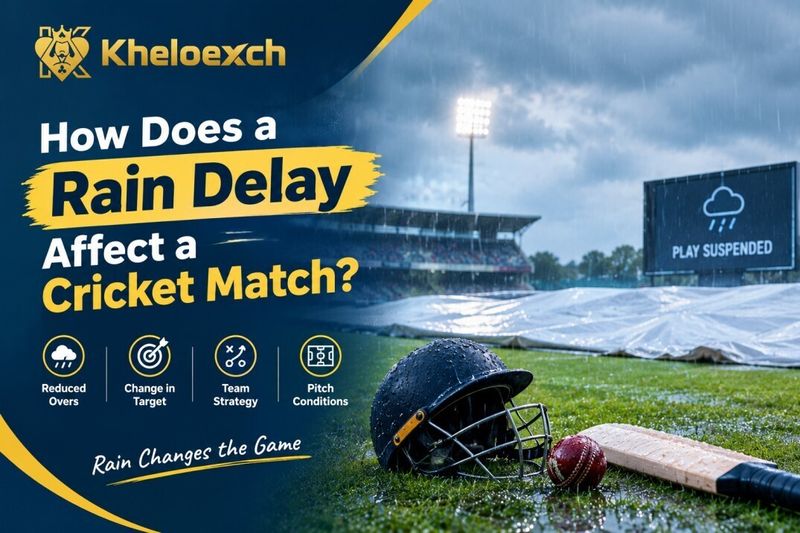
- Why Does Rain Stop a Cricket Match? Cricket needs a safe and suitable playing surface. When heavy rain makes the ground wet, players may slip while running, batting, or bowling. Therefore, the umpires can stop the match if the conditions are unsafe. Rain can affect several parts of the ground: Pitch: Water can make the surface wet and affect how the ball moves. Outfield: Wet grass can make it harder for fielders to run and stop the ball. Visibility: Heavy rain can make it difficult for players to see the ball clearly. Even after the rain stops, the match may not restart immediately. The ground staff needs time to check and prepare the field.
- What Happens During a Rain Delay? When rain interrupts a match, players usually leave the field. Meanwhile, the ground staff work to remove water and make the playing area safe. The umpires check the conditions before allowing the game to continue. However, the length of the delay depends on the weather and the condition of the ground. For example, light rain may cause only a short break. On the other hand, heavy rain can keep players off the field for a long time.
- How Does Rain Change the Number of Overs? One major effect of rain is that it can reduce the number of overs in a match. In a normal T20 match, each team gets a maximum of 20 overs. However, if rain takes away too much playing time, the match may be shortened. Match Situation Possible Effect Short rain delay Play may continue without losing overs Long rain delay The number of overs may be reduced Rain during the first innings Both teams may get fewer overs Rain during the second innings The target or overs may change under competition rules No time to restart The match may be abandoned
The exact result depends on the format and the competition's playing conditions.
- What Is the DLS Method? The Duckworth-Lewis-Stern method, also called the DLS method, is used in many limited-overs matches affected by rain. It helps adjust the target when a team loses playing time. The method considers the overs remaining and the wickets available. For example, imagine Team A scores 160 runs in its innings. Rain then interrupts Team B's chase. If the match can restart with fewer overs, the target may be changed using the DLS method. As a result, the second team may not need to chase the original target. However, DLS calculations are more complex than simply reducing the target based on the number of overs lost. The official match rules determine how the target is set.
- Rain Can Change the Pitch Conditions Rain does not only affect the number of overs. It can also change how the pitch and ball behave. After rain, the ground may remain damp. As a result, bowlers and batters may face different conditions when play restarts. A wet outfield can also make the ball move more slowly after it lands. Meanwhile, the ball may become harder to grip if it gets wet. Therefore, teams may need to adjust their plans after a delay.
- How Captains Change Their Game Plans A rain delay can force captains to rethink their strategies. For example, a team that planned to build its innings slowly may need to score faster if fewer overs remain. Similarly, bowlers may have to change their approach when the match restarts. Here are some changes teams may consider: Batting faster: A shorter innings may require more attacking shots. Changing bowlers: Captains may choose bowlers who suit the new conditions. Adjusting field placements: Fielders may move to protect areas where batters are scoring. Managing wickets: Batters need to balance scoring quickly with avoiding unnecessary dismissals. Still, the right plan depends on the score, wickets, overs, and match conditions.
- What Happens If Rain Does Not Stop? Sometimes, rain continues for too long, and the match cannot restart. In that case, the game may be abandoned or declared a no-result, depending on the competition rules and how much play has taken place. In some tournaments, teams may share points. In others, a reserve day or another rule may apply. Therefore, fans should check the official match regulations instead of assuming every rain-affected game ends in the same way.
- What Should Fans Watch After a Rain Delay? When a cricket match restarts, the situation may be very different from before the break. Fans can check the revised number of overs, the updated target, and the number of wickets remaining. They can also watch how the teams change their plans. For people following matches through the KheloExch platform, understanding these details can make match updates easier to follow. The KheloExch app may provide sports-related information, but users should check the current platform terms and applicable local laws. Anyone accessing an account should use the official Kheloexch login route and avoid unknown links. Final Thoughts A rain delay can change almost every part of a cricket match. It can reduce the number of overs, affect the pitch, change the target, and force teams to rethink their plans. However, rain does not always end the game. If conditions become safe and enough time remains, play may continue. Most importantly, understanding rain delays helps fans follow the match more clearly. A game that looks simple before the rain may become a very different contest after it. FAQ
- Why is a cricket match stopped because of rain? Umpires stop play when rain or wet ground conditions make it unsafe or difficult to continue.
- Can a cricket match restart after rain? Yes. If the weather improves and the ground is safe, the umpires may allow the match to restart.
- Does rain always reduce the number of overs? No. A short delay may not affect the overs. A longer delay may lead to a shorter match.
- What is the DLS method in cricket? It is a method used in many limited-overs matches to adjust targets when rain reduces playing time.
- Can rain affect the pitch? Yes. Rain can leave the pitch and outfield wet, which may affect batting, bowling, and fielding.
- What happens if a match cannot restart? The match may be abandoned or declared a no-result, depending on the competition rules.
- Can a team still win after a rain delay? Yes. If enough play takes place, a team can still win under the match's rules, including any revised target.
- Does every tournament use the same rain rules? No. Playing conditions can differ between tournaments and formats.






Top comments (0)