
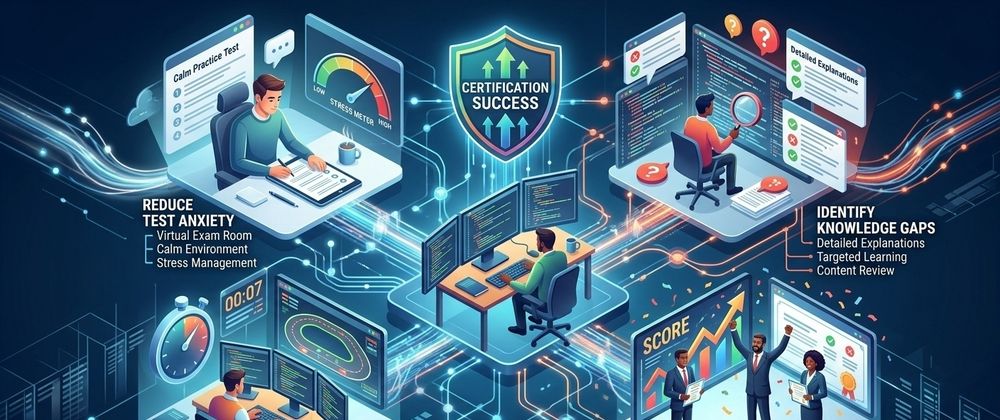

Preparing for an IT certification involves much more than reading textbooks or watching training videos. Modern certification exams increasingly evaluate practical understanding, scenario-based thinking, and the ability to apply technical concepts under time pressure. As a result, many candidates include exam simulators in their study plans to recreate the testing experience before exam day.
Exam simulators have become common preparation tools for certifications from providers such as Microsoft, AWS, Cisco, CompTIA, Google Cloud, Salesforce, and many others. These platforms typically combine timed mock exams, practice questions, score reports, and detailed explanations to help candidates measure their readiness.
But are exam simulators actually worth using? This guide explores their benefits, limitations, and how they fit into an effective certification preparation strategy.
What Is an Exam Simulator?
An exam simulator is a software-based learning tool designed to imitate the structure and timing of a real certification exam. While features vary between providers, most simulators include realistic question formats, countdown timers, scoring systems, and performance tracking.
Rather than serving as a replacement for learning, exam simulators help candidates apply knowledge gained through official documentation, training courses, and hands-on practice.
Why Many Candidates Use Exam Simulators
One of the biggest challenges during certification exams is managing time while making accurate technical decisions. A realistic exam simulator helps candidates adapt to timed exam conditions, track performance, identify weaker areas, practice scenario-based questions, and improve pacing. Detailed answer explanations also reinforce key concepts, allowing candidates to strengthen both their technical knowledge and overall exam readiness.
Advantages of Exam Simulators
Realistic Testing Experience
Certification exams often feel stressful because candidates are unfamiliar with the pace and structure. Practicing under timed conditions helps reduce anxiety by making the exam format feel more familiar.
Better Self-Assessment
Exam simulators provide objective feedback on your current level of preparation. Performance reports often reveal which exam objectives require additional study, allowing you to focus your revision more efficiently.
Improved Time Management
Many candidates know the material but struggle to finish within the allotted time. Regular practice with timed assessments helps develop pacing strategies and improves confidence during the actual exam.
Reinforcement Through Explanations
High-quality simulators include detailed explanations for every answer. Reviewing these explanations strengthens understanding, clarifies misconceptions, and encourages concept-based learning instead of simple answer recognition.
Limitations to Consider
Although exam simulators provide valuable practice, they should not become your only preparation resource.
Certification providers regularly update exam objectives, introduce new technologies, and revise question styles. A simulator that is not maintained may contain outdated content or fail to reflect current objectives.
In addition, simulators cannot replace hands-on experience. Many modern IT certifications evaluate practical decision-making, troubleshooting, and implementation skills that are best developed through real labs and projects.
Building a Balanced Study Plan
The most successful candidates combine several learning methods throughout their preparation.
A well-rounded approach typically includes:
Official certification objectives.
Vendor documentation.
Instructor-led or self-paced training.
Hands-on labs.
Practical projects.
Practice questions.
Timed exam simulations.
Each resource supports a different aspect of learning, creating a stronger overall understanding than relying on a single study method.
How to Get the Most from an Exam Simulator
To maximize the educational value of an exam simulator:
Complete at least one full timed assessment after studying each major domain.
Review every explanation, including correct answers.
Identify patterns in incorrect responses.
Revisit official documentation for weaker topics.
Repeat practice exams until you consistently understand the reasoning behind your answers.
Using simulators as diagnostic tools rather than memorization exercises leads to deeper learning and better long-term retention.
Many learners also strengthen their preparation using realistic exam simulators, updated practice questions, downloadable PDF study resources, and structured revision material available through Cert Empire, while relying on official vendor documentation, published exam objectives, hands-on labs, and practical experience as the primary foundation of their studies.
Are Exam Simulators Worth It?
For most candidates, yes.
A quality exam simulator provides a realistic environment for practicing time management, evaluating technical knowledge, and identifying areas that need additional attention. It helps bridge the gap between studying concepts and applying them under exam conditions.
The greatest value comes when simulators are combined with official learning resources and practical experience. Candidates who focus on understanding explanations instead of memorizing answers are generally better prepared for certification exams and real-world technical responsibilities.
Conclusion
Exam simulators remain one of the most useful supplementary tools for IT certification preparation when they are accurate, regularly updated, and aligned with current exam objectives. They help candidates become familiar with the testing environment, measure readiness, and reinforce knowledge through realistic practice.
When used alongside official study materials, hands-on labs, and practical projects, exam simulators can improve confidence and support a more effective learning experience. A balanced preparation strategy that emphasizes both conceptual understanding and practical application offers the strongest foundation for certification success.
FAQs
Are exam simulators good for IT certification preparation?
Yes. Exam simulators help candidates practice under timed conditions, assess readiness, improve time management, and reinforce concepts when used with official study materials and practical experience.
Can an exam simulator replace hands-on labs?
No. Hands-on labs develop practical implementation and troubleshooting skills, while exam simulators primarily evaluate knowledge through realistic assessment scenarios. Both resources complement each other.
How often should I use an exam simulator?
Use exam simulators after completing major study topics and again before scheduling your exam. Review every explanation carefully and revisit weaker objectives before taking another assessment.
What should I look for in an exam simulator?
Choose a simulator that aligns with current exam objectives, includes detailed answer explanations, offers realistic question formats, provides performance reports, and receives regular content updates.
Do exam simulators improve confidence?
Yes. Practicing in a realistic exam environment helps candidates become familiar with time limits, question styles, and pacing, which can reduce anxiety and improve overall exam readiness.
Read More: Is Network+ or Security+ Better First? A Complete CompTIA Certification Roadmap







Top comments (0)