
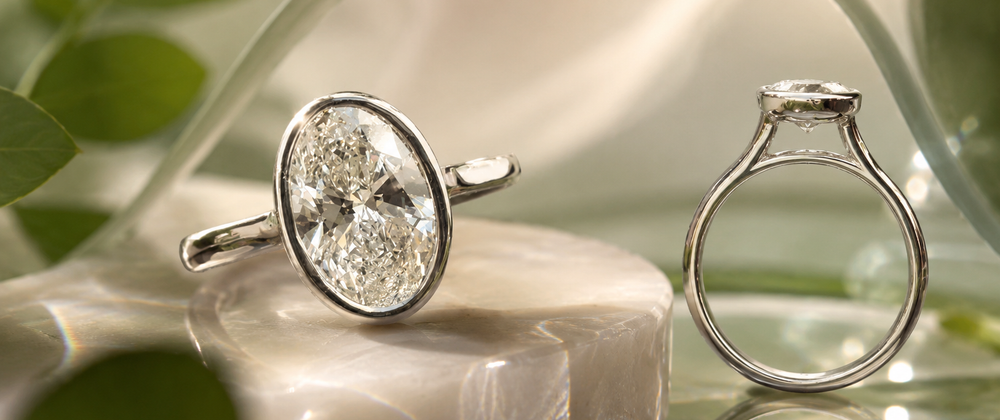

When choosing a diamond, carat weight is only one part of the picture. Two diamonds with the same weight can look noticeably different when placed next to each other. An oval diamond engagement ring can often appear larger than its actual carat weight because of its elongated shape and the way its surface area is distributed.
This visual effect makes oval diamonds appealing to shoppers who want a larger-looking center stone without automatically moving into a much higher carat weight. Understanding proportions, depth, length-to-width ratio, and the amount of diamond visible from above can help buyers make a more informed choice.
Why Does an Oval Diamond Look Bigger?
The main reason an oval diamond can look larger is its shape. Unlike round diamonds, which have a more compact outline, an oval diamond has an elongated form. This gives the stone a greater visible length across the finger.
When you look at a diamond from the top, what matters visually is its spread—the amount of surface area that appears across the face of the stone. An oval can use its weight in a way that creates a broad outline while maintaining a relatively light visual feel.
For example, a 2-carat oval and a 2-carat round diamond do not necessarily cover the same amount of visible finger space. The oval may appear longer and larger because of its outline. You can explore now oval diamond engagement ring to understand how various settings and cuts influence overall appearance.
The Importance of Length-to-Width Ratio
The length-to-width ratio is one of the most important factors affecting how large an oval diamond appears.
This ratio compares the diamond's length with its width. A higher ratio creates a longer and narrower appearance, while a lower ratio produces a wider and more rounded oval shape.
For example:
Length-to-Width Ratio General Appearance
Around 1.25 Wide and rounded
Around 1.35 Balanced oval
Around 1.45 Noticeably elongated
Around 1.50+ Long and narrow
These numbers are not strict rules for beauty or value. Personal preference matters greatly. Some shoppers prefer a broad oval because it can create more visible surface area, while others like a longer outline.
The key point is that two diamonds with equal carat weights can have different dimensions. Those measurements can change how large each stone looks on the finger.
Surface Area Matters More Than Carat Weight Alone
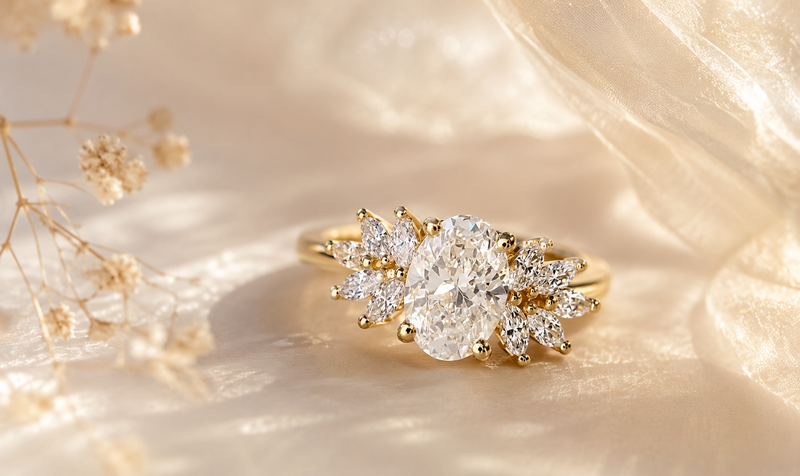
Carat weight measures how much a diamond weighs, not how large it looks from above.
This distinction is important when comparing different diamond shapes. A diamond can carry its weight deeper into the stone, reducing the amount of surface area visible from the top. Another diamond with the same weight may have more of its weight distributed across its length and width.
Oval diamonds can benefit from this visual difference because their elongated outline gives the eye more area to follow from end to end.
When comparing stones, look at the actual millimeter measurements instead of focusing only on carat weight. A diamond measuring 10.5 × 7.0 mm, for example, will create a different visual impression from one measuring 9.8 × 7.3 mm, even if their weights are similar.
Diamond Depth Can Change the Appearance
Depth is another factor that affects how large a diamond looks.
A diamond's depth percentage compares its total depth with its average width. If too much of the diamond's weight is concentrated below the surface, the stone may have less visible spread than expected for its carat weight.
On the other hand, a well-proportioned diamond can distribute its weight across the stone in a way that provides a pleasing face-up appearance.
This is why looking at carat weight alone can lead to an incomplete comparison. The measurements and proportions provide additional information about what you will actually see when wearing the stone.
The Cut Affects Visual Size
Cut quality influences how a diamond interacts with light and how its proportions work together.
With oval diamonds, the relationship between the crown, pavilion, depth, and overall shape can affect the stone's appearance. A poorly proportioned stone may carry weight in areas that do not contribute much to its visible spread.
A well-balanced oval can present a broad face-up appearance while maintaining good visual performance.
Buyers should therefore avoid selecting a diamond based solely on the largest carat number available within their budget. A slightly lighter diamond with better dimensions may look larger and more appealing when worn.
The Bow-Tie Effect and Oval Diamonds
Oval diamonds can display a visual feature commonly called the bow-tie effect. It appears as a darker area across the center of the stone, resembling a small bow tie.
Some degree of this effect can occur in oval diamonds, but its intensity varies from stone to stone. A very noticeable dark area may affect how the center of the diamond looks under different lighting conditions.
When comparing oval diamonds, it is useful to view videos or photographs taken from different angles and lighting environments. This provides a better idea of how the stone performs outside a jewelry display.
A diamond that appears large on paper should still look attractive when viewed in motion and from normal wearing angles.
How Elongation Creates a Larger Look
The elongated outline of an oval diamond can make the finger appear longer as well. Because the stone extends vertically across the finger, the eye naturally follows its length.
This creates a strong visual presence without requiring an extremely high carat weight.
For example, someone comparing a 1.5-carat round diamond with a 1.5-carat oval may notice that the oval seems to occupy more space from one end to the other. The difference is not necessarily because the oval weighs more. It comes from how the shape presents that weight.
This is one reason oval diamonds are frequently considered when shoppers want a substantial-looking center stone while keeping their budget under control.
Why Millimeter Measurements Are Worth Checking
When comparing diamonds online, carat weight is usually easy to find. However, millimeter dimensions deserve just as much attention.
Look for measurements such as:
Length
Width
Depth
Length-to-width ratio
Depth percentage
Table percentage
These details can help you understand how the stone's weight is distributed.
For instance, two 2-carat oval diamonds may have noticeably different measurements. One might be longer and slimmer, while another may be shorter and wider. Both weigh the same, but they will not necessarily look identical on the finger.
Millimeter measurements are especially useful when comparing several diamonds from different sellers.
Does a Larger-Looking Oval Mean Better Value?
Not automatically.
A larger-looking diamond can provide good visual value, but other factors still matter. Color, clarity, cut quality, symmetry, fluorescence, certification, and overall appearance can influence a diamond's desirability and price.
A diamond with excellent spread but noticeable inclusions may not be the best choice simply because it looks large.
The goal should be to find a balance between visual size, quality, appearance, and budget.
For buyers interested in lab grown oval diamond engagement rings, the same principle applies. Comparing the actual dimensions of each stone can help identify options that provide a strong face-up appearance without choosing a higher carat weight solely for the number.
How Lab-Grown Oval Diamonds Fit Into the Comparison
Lab-grown diamonds have the same basic physical and chemical properties as mined diamonds. Their appearance is also influenced by the same factors, including cut, proportions, depth, and dimensions.
When shopping for a lab grown oval diamond ring, it is therefore useful to compare stones using more than carat weight.
Check the stone's measurements and examine its proportions. If two diamonds have similar color and clarity grades but different dimensions, the one with greater visible spread may appear larger when worn.
Certification can also provide useful information about the diamond's grading details. Reviewing the report alongside photographs or video can make comparisons easier.
Choosing the Right Oval Shape for Your Finger
Finger size and personal style can also influence how large an oval diamond appears.
A longer oval may create a stretched visual line across the finger, while a wider oval can provide more side-to-side coverage. Neither option is universally better.
Try to think about the look you want before focusing heavily on carat weight.
If you prefer a broader center stone, compare wider oval proportions. If you like a longer silhouette, consider a more elongated shape. Looking at several examples can make these differences much easier to recognize.
Explore now lab grown oval diamond ring options to compare different proportions and visual sizes.
Practical Tips for Comparing Oval Diamonds
Before making a final decision, consider these points:
Compare Measurements
Do not compare carat weights alone. Check the length and width in millimeters.
Look at the Ratio
The length-to-width ratio can help you understand whether an oval will look broad, balanced, or elongated.
Check the Depth
A stone that carries excessive weight in depth may not provide the face-up size you expect.
Review the Stone in Motion
Photographs can be useful, but video can reveal how the diamond looks as it moves under changing light.
Examine Symmetry
The two halves of an oval should look reasonably balanced. Uneven outlines can affect the overall appearance.
Consider Your Budget as a Whole
Instead of automatically choosing the highest carat weight, compare visual size and overall quality within your price range.
Why Oval Diamonds Can Be a Smart Choice for Visual Impact
The appeal of an oval diamond comes partly from its ability to combine length, width, and surface area in a distinctive shape. Because the eye follows the elongated outline, the diamond can have a strong presence even when its carat weight is lower than shoppers initially expect.
This does not mean every oval will look larger than another diamond of the same weight. Proportions vary significantly, and individual stones should always be assessed on their own.
For shoppers working with a specific budget, this can open up more possibilities. Instead of concentrating only on the carat number, buyers can compare dimensions and select a diamond that makes good use of its weight.
The Role of Setting and Band Proportions
The surrounding jewelry can also influence the perceived size of a center diamond. A slim band may make the center stone appear more prominent, while a heavier band can create a different visual balance.
However, the diamond itself remains the starting point. If the stone has good spread and pleasing proportions, the surrounding design can complement its appearance.
When choosing an oval engagement ring, consider how the center diamond, band width, and overall design work together rather than judging the stone in isolation.
Why Two Diamonds With the Same Carat Weight Can Look Different
Imagine two oval diamonds, both weighing 2 carats.
One may have greater depth and smaller face-up measurements. The other may have a larger length and width with a shallower overall profile.
Although both diamonds have identical carat weights, the second stone may appear larger when viewed from above.
This example shows why carat weight should be treated as one measurement rather than the complete picture.
The same principle applies when comparing different sellers. A 2-carat oval from one listing should not automatically be assumed to have the same visible size as a 2-carat oval from another listing.
Final Thoughts
An oval diamond can look larger than its weight because of its elongated shape, surface area, proportions, and face-up measurements. Length-to-width ratio, depth, cut, symmetry, and overall dimensions all contribute to the way the diamond appears when worn.
For anyone shopping for an oval diamond engagement ring, comparing millimeter measurements alongside carat weight can reveal valuable differences between stones. A well-proportioned diamond may provide the larger visual presence you want without simply increasing the carat number.
Whether you are comparing natural or lab-grown options, focus on the complete appearance of the stone rather than relying on a single specification. Brands such as Antiquecut can also give shoppers another place to compare available diamond options, measurements, and styles before making a final decision.
Ultimately, the best oval diamond is not necessarily the one with the highest carat weight. It is the one whose proportions, appearance, quality, and price work together to create the look you want.






Top comments (0)