

`
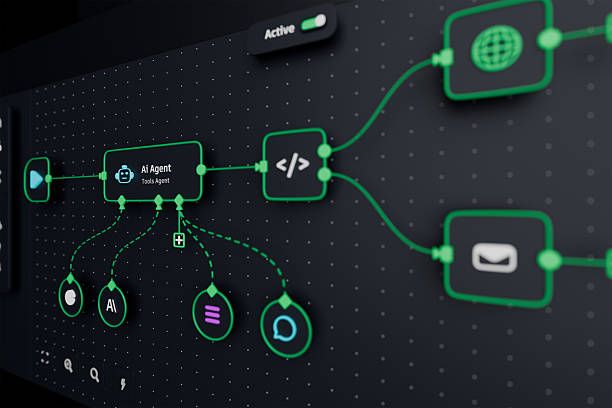
AI agents are moving beyond simple question-and-answer systems and into workflows that require planning, tool use, decision-making, and interaction with real software. As these systems become more capable, the challenge is no longer only about building a stronger model. Teams also need realistic environments where agents can learn, make mistakes, receive meaningful feedback, and be evaluated under controlled conditions. This is where custom rl environments for ai agents become increasingly valuable. Unlike a generic sandbox or downloadable dataset, a purpose-built reinforcement learning environment reflects the actual workflow, tools, constraints, and success criteria an AI agent must handle. For frontier AI labs, enterprise AI teams, and agent companies, environment engineering provides a practical foundation for developing and evaluating more capable systems.
Why AI Agents Need Purpose-Built Environments
An AI agent may appear impressive in a demonstration but still struggle when it encounters the complexity of a real business workflow. Real environments contain incomplete information, changing states, software interfaces, permissions, tool failures, and multiple possible paths to a successful outcome.
A useful reinforcement learning environment recreates these conditions in a controlled setting. The agent might need to navigate business software, use an API, manipulate a browser, write and test code, or complete a sequence of operational tasks. Each interaction becomes part of an environment in which the agent's actions can be observed and evaluated.
The quality of the environment has a direct effect on the quality of the training and evaluation process. If the environment is too simple, an agent may learn shortcuts that do not transfer to realistic situations. If it is poorly designed, rewards may not reflect genuine task completion. Building the right environment therefore requires considerably more engineering than simply packaging data into a training resource.
Designing custom rl environments for ai agents
The development process starts with understanding the target workflow. A client may bring an existing business process, an internal software system, a capability gap, or a specific agent evaluation requirement. The environment is then designed around the tasks the agent needs to perform.
Task design is one of the most important stages. Engineers need to establish starting conditions, available tools, expected actions, possible failures, and measurable outcomes. The environment also needs reliable reset and isolation behavior so that experiments can be repeated without unwanted state carrying over from previous attempts.
Integration is another major component. Depending on the project, an environment may connect to operational business software, browser interfaces, desktop applications, APIs, coding systems, or other tools. These integrations need to behave consistently enough for training and evaluation while still representing meaningful real-world complexity.
Reward and verification mechanisms also require careful attention. A reward should represent genuine progress toward the objective rather than simply rewarding superficial actions. In some workflows, a verifier may be more appropriate than a simple numerical reward. Expert review can then help identify whether the environment actually measures the capability that matters.
Turning Business Workflows Into Agent Training Tasks
Enterprise teams often understand their workflows extremely well, but converting those workflows into reinforcement learning tasks requires a different perspective. A process that is straightforward for an experienced employee can involve dozens of decisions, hidden assumptions, and recovery steps.
Consider an operational software environment. An agent might need to locate information, update records, interact with several screens, handle an unexpected condition, and complete the process without damaging existing data. Simply giving the agent access to the software is not enough. The environment needs defined starting states, controlled data, task objectives, reset mechanisms, and verification logic.
The same principle applies to browser and computer-use environments. A realistic environment can test whether an agent understands instructions, selects appropriate tools, recovers from errors, and reaches the intended result. Coding and integration environments can similarly evaluate whether an agent can modify software, work with dependencies, run tests, and verify its own output.
The objective is not to claim that every industry or software system can be supported automatically. Each environment needs to be scoped around the actual capability being trained or evaluated.
What Makes an Environment Useful for Evaluation?
A strong environment should reveal meaningful differences between agent behaviors. That requires more than a collection of tasks. The environment needs realistic scenarios, reliable verification, and evaluation conditions that prevent the agent from simply memorizing the expected path.
Failure analysis is particularly valuable. When an agent fails, teams need to understand why. Did it misunderstand the objective? Did it select the wrong tool? Did it make an incorrect assumption about the system state? Did it reach the correct result through an unreliable shortcut?
Held-out evaluation can help answer these questions. Tasks or scenarios that are not exposed during development can provide a more realistic indication of whether an agent has learned a transferable capability rather than simply adapting to known examples.
Expert validation also matters. Domain specialists can review tasks, outcomes, and failure cases to determine whether the environment reflects meaningful business requirements. This combination of engineering, evaluation design, and domain knowledge is what separates a serious RL environment from a generic testing sandbox.
The Business Case for Specialist Environment Engineering
For companies developing advanced agents, building every environment internally can consume substantial engineering resources. The work may require expertise across reinforcement learning, software integration, task design, evaluation methodology, infrastructure, and the target business domain.
A specialist environment engineering partner can provide focused expertise for projects where an internal team needs additional capacity or specialized knowledge. The engagement can begin with a specific workflow or capability gap and develop into a structured environment suitable for training, testing, or evaluation.
The most productive projects usually start with a clearly defined objective. Rather than asking for a generic AI sandbox, teams can identify the workflow they want an agent to perform, the tools it must use, the decisions it must make, and what successful completion looks like. This makes it easier to determine the right environment architecture and evaluation methodology.
Conclusion
The next generation of AI agents will need more than powerful models. They will need realistic environments in which planning, tool use, decision-making, and recovery can be trained and evaluated against meaningful objectives. custom rl environments for ai agents provide a way to turn complex workflows and capability gaps into structured engineering systems built for these purposes.
For frontier AI labs, enterprise AI teams, and agent companies, the important question is not simply whether an environment can be created. It is whether that environment accurately represents the capability being tested. Careful task design, integrations, realistic data, isolation, reset behavior, reward or verification systems, expert validation, failure analysis, and held-out evaluation all contribute to that goal. A well-scoped environment engagement can therefore become an important part of building and measuring more capable AI agents.
`





Top comments (0)