

Why Model United Nations Skills Matter Beyond the Classroom
Students often focus heavily on grades and formal qualifications, but many opportunities in university and professional life also depend on communication, confidence, research, and the ability to work with people who hold different opinions.
Model United Nations is one activity that brings several of these skills together. Participants take on the role of delegates, research international issues, discuss policy positions, negotiate with others, and work toward resolutions. The experience can be particularly useful for students interested in business, law, international relations, public policy, or leadership.
What Is Model United Nations?
Model United Nations, commonly called MUN, is an educational simulation of the United Nations. Students represent different countries and discuss topics based on real-world international issues.
A typical conference may involve committees where delegates prepare speeches, participate in moderated discussions, negotiate informally, and eventually work with other delegates to produce draft resolutions.
The activity isn't simply about speaking in front of a room. Participants also need to research their assigned country's position and understand the political, economic, and social background behind the issue being discussed.
Students looking for a structured Model United Nations Course can use this type of training to become familiar with the format before participating in conferences.
Research and Preparation
Good MUN performance begins before the conference. Delegates need to understand their country's policies, previous actions, international relationships, and position on the selected topic.
This requires research from reliable sources. Students may review government statements, international agreements, United Nations publications, economic data, and reputable news reports.
The research process teaches an important academic habit: don't rely on a single source when a subject is complicated. Comparing different perspectives can lead to a more balanced understanding of an issue.
Developing Public Speaking Skills
Public speaking is a central part of MUN. Delegates may need to deliver opening speeches, respond to questions, present proposals, and explain their position during committee discussions.
The objective isn't necessarily to give the longest speech. Effective delegates usually focus on clarity, structure, and relevance.
A short speech with a clear argument can be more effective than several minutes of vague statements. Practicing introductions, transitions, evidence, and conclusions can help students become more comfortable speaking under pressure.
Learning Negotiation and Diplomacy
MUN also introduces students to negotiation. Delegates rarely get everything they want, so they need to identify areas where compromise is possible.
For example, two countries may disagree about the wording of a proposed policy but agree on its broader objective. Negotiating the language of a resolution can teach participants how to protect their main interests while finding common ground.
These skills can later be useful in university projects, workplaces, presentations, and leadership situations.
Why Institutional Support Can Help
While students can learn about MUN independently, structured instruction can make the process easier to understand. Beginners may not know how committees work, how resolutions are written, or how formal procedure affects debate.
A good training environment can introduce these elements through exercises and simulated sessions. Students can practice speeches, receive feedback, and gradually become more comfortable with the pace of committee discussions.
When comparing an institution described as the best insitute for ACCA, students should also examine the broader academic and extracurricular opportunities available to them, especially if they want to develop skills beyond examination preparation.
Useful Skills for Future Careers
The skills developed through MUN aren't restricted to international relations. Employers in many industries value people who can communicate clearly, research information, collaborate with colleagues, and defend their ideas logically.
For example, a business student may eventually need to present a proposal to management. A finance professional might need to explain a complex report to a non-financial audience. A lawyer may need to construct an argument using evidence. The communication and reasoning skills practiced through MUN can contribute to all of these situations.
Making the Most of an MUN Experience
Students can get more from MUN by treating every conference as a learning opportunity. After each session, it can help to review what worked and what didn't.
Consider questions such as:
- Was the opening speech clear?
- Were arguments supported by reliable information?
- Did the delegate listen to other positions?
- Was negotiation handled effectively?
- Could the resolution have been written more precisely?
Keeping notes after conferences can help identify specific areas for improvement.
Conclusion
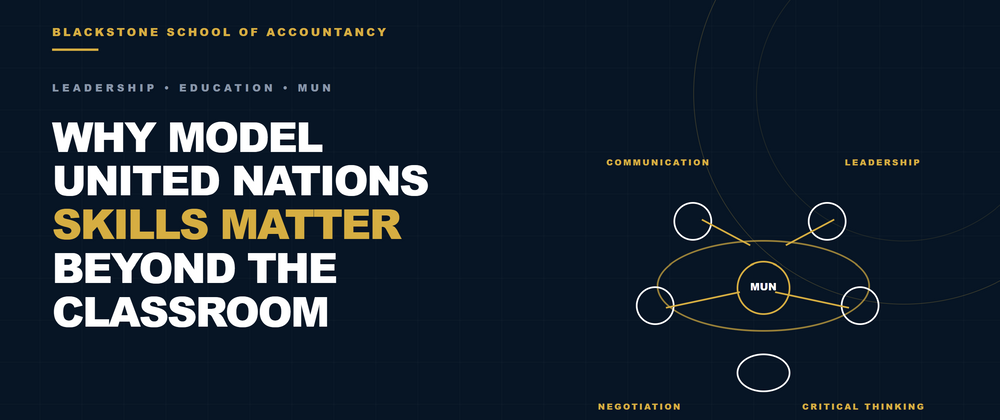
Model United Nations provides students with a practical way to develop research, public speaking, negotiation, collaboration, and critical-thinking skills. These abilities can complement academic qualifications and become useful in many professional settings.
For students considering an MUN course, the most valuable programs are those that combine theory with realistic practice. Simulated debates, research exercises, speeches, and feedback can turn MUN from a simple extracurricular activity into a meaningful learning experience.







Top comments (0)