

Commercial real estate ownership has traditionally required significant capital, long investment periods, and multiple intermediaries to complete transactions. Office buildings, shopping centers, warehouses, hotels, and mixed use developments often remain accessible only to institutional investors or high net worth individuals. As digital finance continues to develop, commercial property owners are looking at different methods to improve investment participation, simplify ownership records, and create new funding opportunities.
One approach receiving growing attention is real estate asset tokenization. By representing ownership interests through blockchain-based digital tokens, property owners can divide commercial assets into smaller investment units while maintaining compliance with applicable legal and financial requirements. This model opens opportunities for investors seeking partial ownership while giving property owners another method to attract capital.
Commercial property owners considering this approach should understand the technical process, legal considerations, investment structure, and platform requirements before beginning a project. This article explains how tokenization works for commercial real estate and why many businesses are evaluating this model for future property investments.
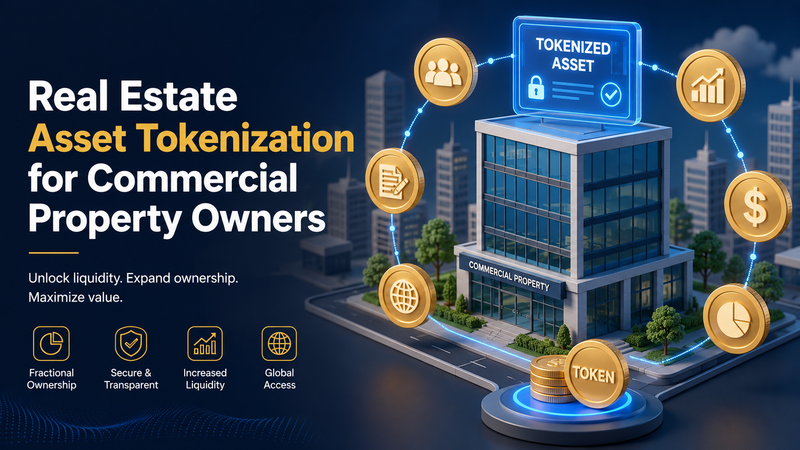
Understanding Real Estate Asset Tokenization
Real estate asset tokenization is the process of converting ownership rights in a commercial property into blockchain-based digital tokens. Each token represents a predefined ownership interest, economic benefit, or revenue participation based on the chosen legal structure.
Instead of transferring ownership through conventional paper-based documentation alone, ownership records are connected with blockchain technology, allowing investors to purchase smaller portions of valuable commercial properties.
Commercial assets suitable for tokenization include:
- Office buildings
- Retail malls
- Hotels
- Industrial warehouses
- Business parks
- Healthcare facilities
- Student housing
- Mixed use commercial developments
Many organizations offering Real Estate Tokenization begin with legal due diligence before creating digital ownership structures that comply with regional regulations.
Why Commercial Property Owners Are Considering Tokenization
Commercial property ownership involves considerable financial commitments. Property owners often need additional capital for expansion, renovation, refinancing, or acquiring new assets.
Real estate tokenization introduces another funding option by allowing multiple investors to participate in a commercial property.
Common business objectives include:
Raising Capital Without Selling the Entire Asset
Instead of transferring complete ownership, property owners can sell fractional interests. This allows them to continue managing the property while attracting new investment.
Expanding Investor Participation
Traditional commercial investments usually involve limited investors. Digital tokens allow participation from a wider investment audience, depending on local regulatory requirements.
Improving Investment Liquidity
Commercial real estate transactions usually take months to complete. Tokenized ownership can simplify secondary market transfers where regulations and platform support permit.
Supporting Portfolio Growth
Property owners planning multiple commercial projects can use proceeds from tokenized assets to finance additional investments.
How Commercial Property Tokenization Works
The tokenization process follows several structured stages. Every project may vary depending on local regulations, property type, and business objectives.
Property Evaluation
The first stage involves evaluating the commercial property's ownership structure, legal status, valuation, rental income, liabilities, and compliance requirements.
Professional valuation reports help determine the property's overall market value before dividing ownership into digital tokens.
Legal Structuring
Commercial properties often require a legal framework before token issuance.
Depending on jurisdiction, ownership may be represented through:
- Special Purpose Vehicles (SPVs)
- Limited Liability Companies
- Trust structures
- Partnership agreements
Legal advisors determine how investors receive ownership rights, profit distribution, or rental income.
Token Creation
After legal preparation, digital tokens representing ownership interests are created on a blockchain network.
Each token may represent:
- Equity ownership
- Revenue sharing
- Rental income participation
- Asset-backed investment rights
This phase generally falls under real estate tokenization development carried out by blockchain specialists.
Platform Development
Investors require an online platform for registration, compliance verification, token purchases, portfolio monitoring, and transaction history.
Many businesses invest in Real Estate Tokenization Platform Development to provide these functions through a single dashboard.
Investor Onboarding
Before investing, participants complete identity verification and compliance procedures.
Depending on local regulations, investors may also undergo:
- KYC verification
- AML verification
- Accreditation checks
- Document verification
Property Management
After token issuance, commercial property operations continue as usual.
Property managers oversee:
- Rental agreements
- Building maintenance
- Tenant management
- Financial reporting
- Income distribution
Investors receive updates according to the ownership model established during project planning.
Commercial Properties Suitable for Tokenization
Several commercial property categories work well for tokenization because of their high value and recurring income.
Office Buildings
Office spaces remain attractive because of long term lease agreements and recurring rental income.
Fractional ownership allows investors to participate without purchasing an entire building.
Retail Centers
Shopping complexes require substantial investment.
Tokenization allows property owners to raise funds for expansion, renovation, or refinancing while maintaining operational control.
Warehouses
The continued growth of logistics and e-commerce has increased demand for industrial warehouses.
Tokenized warehouse ownership attracts investors interested in industrial real estate.
Hotels
Hotels involve significant operational expenses.
Property owners can raise capital for renovations or expansion through tokenized ownership while continuing business operations.
Mixed Use Developments
Projects combining residential, retail, and office spaces often require multiple funding stages.
Tokenization provides another financing option during project development.
Benefits for Commercial Property Owners
Commercial property owners evaluate tokenization for several practical business reasons.
Access to Fractional Investment
Instead of depending on a few institutional investors, property owners can receive investment from multiple participants purchasing smaller ownership portions.
Better Capital Allocation
Funds raised through tokenization may support:
- Property renovation
- Expansion projects
- New acquisitions
- Loan repayment
- Infrastructure improvements
Digital Ownership Records
Blockchain records provide timestamped ownership information, reducing paperwork associated with ownership transfers.
Global Investment Interest
Subject to regulatory requirements, investors from different regions may participate without requiring direct property ownership in the local market.
Portfolio Diversification for Investors
Commercial property owners offering multiple tokenized assets can attract investors interested in different property sectors rather than a single building.
Technology Behind Commercial Property Tokenization
Several technologies work together throughout the tokenization process.
Blockchain Networks
Blockchain stores ownership records and transaction history.
Popular enterprise blockchain networks include Ethereum, Polygon, Avalanche, and permissioned blockchain environments.
Smart Contracts
Smart contracts automate token issuance, transfers, rental distributions, and investor records according to predefined conditions.
Digital Wallet Integration
Investors use digital wallets to receive and manage ownership tokens.
Compliance Systems
Compliance modules assist with investor verification, transaction monitoring, and regulatory reporting.
Investor Dashboard
Property owners and investors access reports, transaction records, ownership details, and financial updates through a secure online portal.
These components are commonly included during Real Estate Tokenization Platform Development.
Factors Commercial Property Owners Should Evaluate
Before beginning a tokenization project, property owners should carefully assess several business considerations.
Property Valuation
Independent valuation provides the basis for pricing ownership tokens.
Regulatory Requirements
Every jurisdiction has different rules governing digital securities, investor participation, taxation, and reporting.
Investor Rights
Ownership rights should clearly define:
- Rental income
- Voting rights
- Exit opportunities
- Asset liquidation process
- Profit sharing
Platform Security
Security measures should include encrypted data storage, access controls, wallet protection, and regular security assessments.
Ongoing Administration
Commercial property owners should plan for:
- Investor communication
- Financial reporting
- Property performance updates
- Regulatory compliance
- Token administration
Choosing the Right Development Partner
Launching a commercial property tokenization project involves legal, technical, financial, and operational expertise.
A professional Real Estate Tokenization company typically provides guidance throughout planning, platform creation, token issuance, compliance integration, and post-launch support.
Businesses often compare providers based on:
- Previous blockchain experience
- Commercial real estate knowledge
- Regulatory understanding
- Security practices
- Platform functionality
- Technical maintenance
Working with an experienced Real Estate Tokenization Development company helps reduce development challenges and supports long term platform operations.
Future Outlook for Commercial Property Tokenization
Commercial real estate continues to attract institutional investors, family offices, developers, and property management companies. As blockchain adoption expands across financial services, more businesses are evaluating tokenized ownership for office buildings, retail centers, hospitality projects, and industrial properties.
Digital ownership records, automated distributions, and fractional investment structures are encouraging commercial property owners to consider blockchain as part of their investment strategy. As regulations continue to mature across different countries, commercial real estate tokenization is expected to become more common for fundraising, portfolio management, and investor participation.
Organizations investing in Real Estate Tokenization Services today are preparing for a market where digital ownership structures work alongside conventional commercial real estate practices.
Conclusion
Commercial property owners are continuously looking for practical methods to attract investment, improve capital availability, and manage ownership more efficiently. Real Estate Tokenization provides a structured approach for fractional ownership while maintaining regulatory compliance and operational control. From legal planning and token creation to investor onboarding and platform management, every stage requires careful execution. Businesses planning commercial property tokenization should work with experienced professionals who understand blockchain technology and real estate regulations. Blockchain App Factory provides Real Estate Tokenization Development Services, supporting businesses with real estate tokenization development, Real Estate Tokenization Platform Development, platform architecture, compliance integration, smart contract implementation, and complete project execution for commercial real estate asset tokenization initiatives.
Frequently Asked Questions
1. What is real estate asset tokenization for commercial properties?
Real estate asset tokenization is the process of converting ownership interests in commercial properties into blockchain-based digital tokens. These tokens represent fractional ownership or financial rights based on the legal structure of the project.
2. Which commercial properties can be tokenized?
Office buildings, shopping malls, hotels, warehouses, industrial facilities, healthcare properties, mixed use developments, and business parks are among the commercial assets commonly considered for tokenization.
3. Why do commercial property owners choose tokenization?
Property owners may use tokenization to raise capital, offer fractional investment opportunities, attract a broader investor base, and digitize ownership records while continuing to manage the property.
4. What services are included in Real Estate Tokenization Development Services?
Typical services include property assessment, legal structuring support, smart contract development, token creation, investor portal development, compliance integration, wallet integration, and ongoing technical maintenance.
5. How long does a commercial property tokenization project take?
The timeline depends on property size, regulatory approvals, legal preparation, platform features, and testing. Many projects require several months from planning to launch.
6. What is the role of a Real Estate Tokenization Development company?
A Real Estate Tokenization Development company develops the blockchain platform, creates digital tokens, integrates compliance features, develops investor dashboards, supports smart contract deployment, and provides technical assistance throughout the project lifecycle.
7. Is commercial real estate tokenization legally permitted?
Regulations differ by country and jurisdiction. Property owners should consult legal professionals to determine applicable securities laws, tax obligations, and investor eligibility before launching a tokenization project.
8. What should businesses look for in a Real Estate Tokenization company?
Businesses should evaluate blockchain experience, commercial real estate knowledge, compliance expertise, platform capabilities, security practices, technical support, and previous project experience before selecting a development partner.






Top comments (0)