
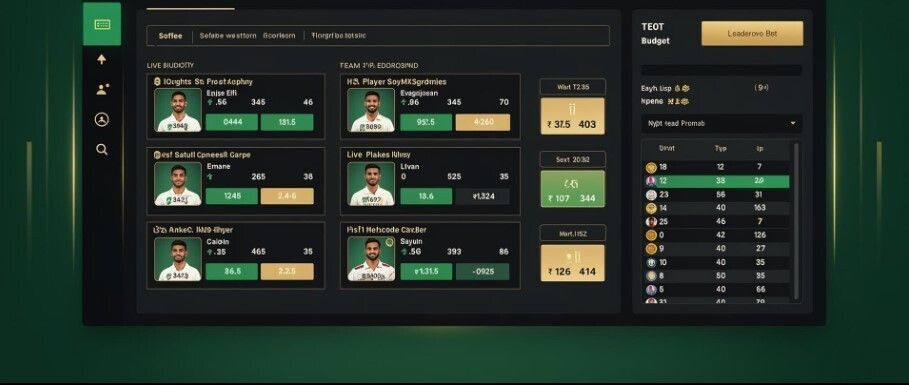

Cricket player auctions have become an important part of modern team management. Whether it is a professional league, corporate tournament, franchise competition, or local cricket event, selecting the right players can directly influence the quality of the competition. Traditionally, player auctions were conducted in physical venues, requiring organizers, team owners, players, and officials to be present at the same location.
Today, an online cricket auction provides a more flexible alternative. Digital auction platforms allow teams to participate remotely, review player information, place bids, and manage selections through a centralized system. This approach can simplify the auction process while improving accessibility and organization.
For leagues looking to modernize their player selection process, online cricket auctions offer several practical benefits.
What Is an Online Cricket Auction?
An online cricket auction is a digital process in which registered teams or franchises bid for available cricket players through an online platform. Depending on the system, organizers can create player pools, establish bidding rules, set base prices, manage team budgets, and monitor bids in real time.
A cricket player auction platform can bring these functions together in one place. Instead of relying on spreadsheets, phone calls, paper records, or a completely physical setup, organizers can use a centralized digital system to coordinate the auction.
This makes online player auctions suitable for different types of competitions, from organized leagues and franchise tournaments to corporate and community cricket events.
1. Greater Accessibility for Teams and Players
One of the biggest benefits of conducting a cricket auction online is accessibility. Participants do not necessarily need to travel to a particular venue to take part in the event.
Team representatives can join from different cities or regions, while organizers can manage the auction from a central dashboard. This can be especially useful when a league includes teams located in different geographical areas.
Players can also benefit from greater visibility. Instead of being limited to a physical event, their profiles can be presented digitally to multiple participating teams.
2. Faster and More Organized Bidding
Managing a live player auction involves several moving parts. Organizers need to track bids, confirm successful purchases, monitor team budgets, and ensure that bidding follows the established rules.
An online player auction system can automate many of these activities. When a bid is placed, the platform can update the current price and display the latest bidding information to participants.
Digital workflows can reduce manual coordination and help keep the auction moving. Automated notifications, player status updates, bid histories, and team budget tracking can further improve operational efficiency.
3. Real-Time Player and Bid Information
Successful team selection depends on having relevant information available at the right time. An online cricket auction platform can display player profiles alongside important details such as playing role, experience, statistics, availability, and base price.
Teams can use this information while making their bidding decisions. Organizers can also update player status as the auction progresses.
A centralized information system reduces the need to switch between multiple documents or communication channels, creating a smoother experience for both organizers and participating teams.
4. Better Transparency in the Auction Process
Transparency is essential when multiple teams compete for the same players. Participants need to understand how bids are progressing and which players have already been selected.
A digital cricket auction platform can maintain records of bids and completed player selections. Depending on the platform's features, participants may be able to see the current bid, bidding history, sold price, and team that acquired a player.
Maintaining digital records can also make it easier for organizers to review the auction after the event and resolve questions related to player allocation or bidding activity.
5. Easier Team Budget Management
Most player auctions operate within specific team budgets. Keeping track of spending manually can become complicated, particularly when teams purchase several players at different prices.
An online auction platform can automatically update a team's remaining budget after each successful bid. Organizers can also establish rules around minimum and maximum spending, squad sizes, or player categories where supported by the platform.
This gives teams a clearer view of their available funds and helps organizers maintain the financial rules of the competition.
6. Reduced Administrative Work
A traditional auction can require significant administrative preparation. Organizers may need to prepare player lists, print documents, record bids, calculate remaining budgets, and communicate updates to teams.
A virtual cricket player auction can reduce much of this manual workload by bringing these functions into a digital environment.
Player registration, profile management, auction scheduling, bidding records, and final player lists can potentially be handled through one system. This allows organizers to spend more time focusing on league operations and less time maintaining paperwork.
7. Improved Audience Engagement
Online auctions can also create opportunities for greater audience participation. Depending on the platform, leagues can provide live auction updates, player information, sold prices, and team selections to viewers.
This can help build excitement around the tournament before matches even begin. For leagues with an active digital audience, the player auction becomes part of the overall sporting experience rather than simply an internal administrative activity.
8. Flexible Auction Management
Every cricket competition has different requirements. Some may need a straightforward bidding process, while others may require multiple player categories, team budgets, registration rules, or customized bidding formats.
A well-designed online cricket auction platform can offer greater flexibility than a fixed physical setup. Organizers can configure the auction according to the competition's requirements and make selected changes without restructuring the entire event.
Digital management can also make it easier to conduct auctions for tournaments with participants in different locations.
9. Centralized Records and Post-Auction Analysis
Once an auction is completed, the information generated during the process can remain useful. Organizers may need final squad lists, player purchase prices, team spending details, or bidding records.
With a digital system, this information can be stored centrally and used for reporting and future planning. Teams can also review their selections and spending patterns when preparing for subsequent competitions.
This makes an online cricket player auction more than a one-time bidding event; it can become part of a league's broader digital management process.
How to Choose an Online Cricket Auction Platform
Before selecting an auction solution, organizers should consider the platform's reliability, ease of use, bidding functionality, player management features, security, scalability, and customer support.
The system should be easy for both technical and non-technical participants to understand. Clear player profiles, real-time bidding updates, budget tracking, and accurate records are particularly important.
Organizers should also test the platform before the live auction. A trial run can help identify potential issues with registrations, bidding rules, participant access, or auction settings.
Conclusion
Conducting an online cricket auction can make player selection more accessible, organized, transparent, and efficient. From real-time bidding and automated budget tracking to centralized player information and digital records, online platforms can simplify many of the challenges associated with traditional auctions.
As cricket competitions continue to adopt digital tools, online player auctions provide a practical way to modernize team selection while creating a smoother experience for organizers, teams, players, and audiences. Choosing a platform that matches the tournament's size, rules, and operational needs can help ensure that the auction runs efficiently from player registration through final squad selection.






Top comments (0)