

Rose gold has a warm color that feels romantic without looking overly traditional. Its soft pink tone also pairs well with many diamond shapes and ring styles. For buyers seeking something distinctive yet easy to wear, rose gold diamond rings offer a useful balance of classic design and modern character.
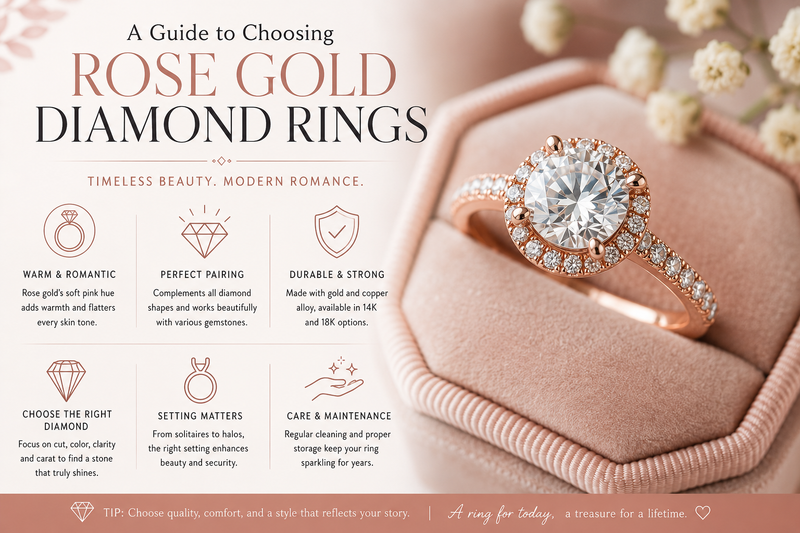
Choosing the right ring involves more than selecting a stone you like. Metal purity, diamond quality, setting style, lifestyle, and long-term care all affect the final choice. Understanding these details can help you find a ring that looks beautiful and remains practical for years.
What Gives Rose Gold Its Distinctive Color?
Pure gold has a rich yellow color and is too soft for most everyday jewelry. Jewelers mix it with other metals to create a stronger alloy. Rose gold usually combines gold with copper and, in some cases, a small amount of silver.
Copper creates the pink or reddish tone. A higher copper content generally produces a deeper rose color, while more gold creates a softer appearance.
The exact shade can vary between jewelers. Two rings marked as rose gold may look slightly different when placed together. This variation is normal and comes from differences in the alloy mixture.
14K Versus 18K Rose Gold
A 14K rose gold ring contains about 58.3% pure gold. The remaining material consists of strengthening metals, including copper. This composition often gives 14K rose gold a noticeable pink color and good durability.
An 18K ring contains 75% pure gold. It often appears warmer and slightly more subtle because it contains less copper. It also has a higher gold content, which usually increases the price.
Buyers with active lifestyles may prefer 14K because of its strength. Those who value higher gold purity may favor 18K instead.
Why Rose Gold Diamond Rings Remain Popular
Color is one of rose gold's main advantages. The pink tone adds warmth around a white diamond and creates a softer contrast than many white metals.
Rose gold also works across different design periods. It can complement vintage details such as milgrain and floral patterns. At the same time, it looks clean and modern in simple solitaire settings.
Another benefit is versatility. Rose gold pairs with colorless diamonds, near-colorless stones, champagne tones, and several colored gemstones. This flexibility gives buyers more freedom when creating a personal ring design.
Skin tone can also affect how the metal appears. Rose gold often looks warm against many complexions because copper gives the metal a gentle blush. Still, personal preference matters more than strict styling rules.
Choosing a Diamond That Complements Rose Gold
A diamond's appearance depends on several quality factors. Buyers often begin with the traditional 4Cs: cut, color, clarity, and carat weight.
Cut has a major influence on brightness and sparkle. A well-cut diamond reflects light more effectively, so prioritizing cut quality can provide a noticeable visual benefit.
Color also deserves attention with rose gold. The warm metal may make slight warmth in a diamond less noticeable, especially when the stone sits close to the rose gold setting. This can allow buyers to consider a broader range of color grades.
Clarity describes internal and external characteristics within a diamond. You may not need the highest clarity grade if lower-grade inclusions cannot be seen without magnification.
Carat measures weight rather than visible size. Two diamonds with the same carat weight can appear different in diameter because of their proportions and shapes.
Buyers comparing natural stones with lab created diamonds should focus on documented quality characteristics rather than judging appearance from origin alone. A grading report can help verify important details about the stone.
Diamond Shapes That Work Well With Rose Gold
The diamond's shape can change the entire personality of a ring. Some cuts create a traditional look, while others feel more contemporary.
Round and Oval Cuts
Round brilliant diamonds suit almost every setting. Their balanced outline works particularly well with solitaires, halos, and pavé bands.
Oval diamonds provide a similar sparkling effect with a longer profile. Their shape can create the appearance of a larger stone and may make the finger look more elongated.
Emerald and Radiant Cuts
Emerald-cut diamonds have long, straight facets and a clean geometric shape. They produce broad flashes of light rather than the intense sparkle associated with round diamonds.
Radiant cuts combine a rectangular or square outline with brilliant-style faceting. Buyers who like strong sparkle but prefer angular shapes may find them appealing.
Pear and Marquise Cuts
Pear-shaped diamonds combine a rounded end with a pointed tip. They can feel elegant while offering a less common silhouette.
Marquise diamonds have pointed ends and an elongated shape. Their spread often makes them appear large relative to their carat weight.
Selecting the Right Ring Setting
The setting affects appearance, security, and daily comfort. A beautiful setting should also match how the wearer uses their hands.
A solitaire keeps attention on the center stone and creates a clean profile. It also makes future pairing with a wedding band fairly simple.
Halo settings surround the center diamond with smaller stones. This design can increase sparkle and make the center appear larger.
Pavé bands place small diamonds along part of the shank. They add brightness without changing the center stone's shape.
Bezel settings use a rim of metal around the diamond. They often provide extra protection around the stone's edge, which can help people with active routines.
Prong settings expose more of the diamond and allow plenty of light around it. However, prongs should be inspected over time because they can wear or loosen.
Consider Your Lifestyle Before Buying
A ring may look attractive in a display case but still be inconvenient for daily wear. Think about work, hobbies, exercise, and how often the ring will be worn.
High-profile settings can catch on clothing or gloves. A lower setting may feel more practical for someone who frequently works with their hands.
Band width also matters. Very thin bands provide a delicate look but may be more vulnerable to bending over many years. Slightly wider bands often provide greater structural support.
Comfort should be part of the decision as well. Try different widths and profiles if possible before choosing a final design.
How to Check Quality Before Purchasing
A reputable seller should clearly explain the ring's metal purity and diamond specifications. Look for a hallmark showing whether the gold is 14K or 18K.
For significant center diamonds, ask whether an independent grading report is available. Reports from recognized gemological laboratories provide information about measurements and quality characteristics.
Inspect the ring's craftsmanship too. The diamond should sit securely, and the prongs should appear even. Pavé stones should form a consistent line without obvious gaps or uneven placement.
Ask about resizing before buying. Some detailed eternity bands and complex settings can be harder to resize than simple designs.
A clear return policy is also useful, especially for online purchases. Read the conditions carefully before placing an order.
Caring for Rose Gold at Home
Regular cleaning helps remove oils, lotions, and everyday dirt. You can clean many rose gold diamond pieces with mild dish soap, warm water, and a soft brush.
Avoid abrasive cleaners that may scratch the metal. Strong household chemicals can also damage or discolor certain jewelry materials.
Store the ring separately from harder pieces to reduce scratching. A fabric-lined jewelry box or individual pouch can provide simple protection.
Professional inspections can help identify worn prongs or loose stones before they become larger problems. The best inspection schedule depends on how often the ring is worn and the type of setting.
Rose gold does not rely on a surface plating to create its color. Its pink tone comes from the alloy itself, so normal wear does not reveal a completely different metal beneath the surface.
Setting a Realistic Budget
Start with a total budget rather than focusing only on diamond size. The price includes the center stone, setting, accent diamonds, metal, craftsmanship, and sometimes customization.
Decide which features matter most. One buyer may prioritize cut quality, while another may prefer a larger-looking shape or detailed setting.
You can also compare different diamond color and clarity combinations. Small adjustments in grades can sometimes reduce cost without creating an obvious visual difference.
Always compare complete specifications rather than judging two rings by carat weight alone.
Finding a Ring That Fits Your Style
The best ring should suit both personal taste and daily life. Rose gold diamond rings can range from simple solitaires to detailed vintage-inspired designs, so there is no single style that suits every buyer.
Consider the metal purity, diamond cut, setting height, band width, and maintenance needs together. These factors often matter more over time than temporary design trends.
Buyers considering lab created diamonds can apply the same careful approach by reviewing cut, color, clarity, proportions, and grading information before purchasing. The goal is to choose a stone and setting that work well as one complete piece.
A thoughtful purchase starts with understanding what you value most. By comparing quality, comfort, durability, and design, you can choose a rose gold ring that feels personal and remains practical for everyday wear.






Top comments (0)