

Digital assets are becoming part of mainstream business conversations, and organizations are looking for practical ways to connect physical assets with blockchain networks. One area receiving significant attention is RWA Tokenization, which allows ownership rights of tangible and financial assets to be represented through blockchain-based tokens. Rather than replacing traditional ownership models, this approach introduces new methods for issuing, managing, transferring, and recording asset ownership with greater efficiency.
Many businesses are no longer limiting blockchain adoption to cryptocurrencies. They are evaluating how real estate, commodities, financial instruments, intellectual property, collectibles, and infrastructure assets can be represented digitally. This shift has encouraged enterprises to invest in Real World Asset Tokenization as a long-term business strategy rather than a short-lived trend.
As regulations continue to mature in many regions, organizations are seeking reliable technology partners for secure implementation. A trusted RWA Tokenization Company can assist businesses in planning, compliance, smart contract development, token issuance, investor onboarding, and ongoing platform management. Businesses are also looking for complete RWA Tokenization Services that fit their operational requirements while supporting future growth.
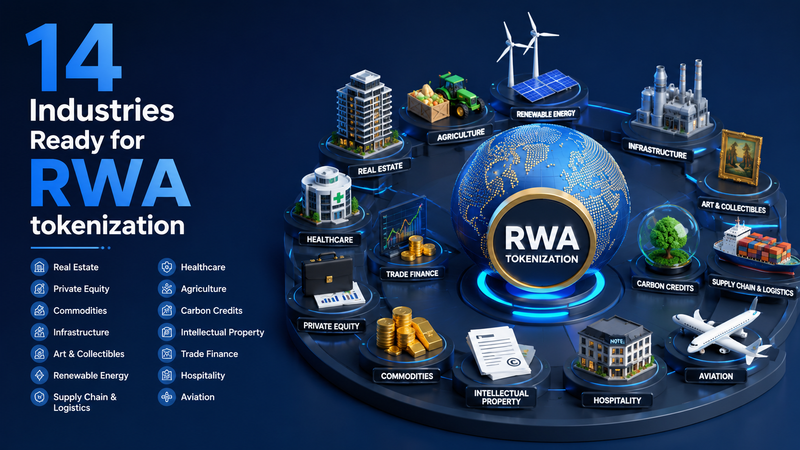
This article discusses fourteen industries where tokenization has practical business value. Each sector presents different opportunities, but all share a common goal of making asset ownership more accessible, efficient, and digitally managed.
Why More Industries Are Looking at RWA Tokenization
Every industry manages valuable assets that involve ownership records, transfers, financing, or investment. Traditional processes often involve paperwork, intermediaries, and lengthy settlement periods.
Real World Asset Tokenization allows businesses to digitize ownership records while maintaining compliance with legal frameworks. Tokens may represent full ownership or fractional ownership, depending on business requirements.
Many organizations also invest in RWA tokenization platform development to create private marketplaces where investors, institutions, and businesses can manage tokenized assets through secure digital environments.
1. Real Estate
Real estate remains one of the largest sectors adopting tokenization.
Commercial buildings, apartments, residential projects, office spaces, hotels, warehouses, and mixed-use developments can all be represented as digital tokens. Fractional ownership allows investors to participate in property markets without purchasing an entire asset.
Property developers can raise capital from a wider investor base while reducing administrative work related to ownership transfers.
Businesses frequently partner with an experienced RWA tokenization development company for property token issuance, smart contract integration, compliance management, and investor portals.
2. Agriculture
Agriculture includes farmland, crop production, irrigation systems, agricultural equipment, livestock, and storage facilities.
Farm owners often require funding for seasonal operations or expansion. Tokenization provides another funding approach by allowing qualified investors to participate in agricultural assets.
Digital ownership records also improve documentation of agricultural investments, making asset management easier throughout the investment period.
RWA Tokenization Services are increasingly being considered for agricultural investment platforms serving institutional and private investors.
3. Precious Metals
Gold, silver, platinum, and other precious metals have long been viewed as stable investment assets.
Instead of storing physical bars and managing paper certificates, ownership can be represented digitally while the physical asset remains securely stored.
Fractional ownership also becomes possible, allowing investors to purchase smaller portions of valuable metals.
Companies involved in precious metal trading often seek Real World Asset Tokenization Services to improve investor accessibility while maintaining audited asset reserves.
4. Fine Art
Paintings, sculptures, rare collections, and historical artwork usually require significant capital investment.
Tokenization allows galleries, collectors, and museums to divide ownership into digital shares while maintaining physical custody of the artwork.
This creates opportunities for broader investment participation without requiring the sale of the complete asset.
A reliable RWA Tokenization Company helps establish secure ownership structures supported by blockchain records and legal agreements.
5. Infrastructure Projects
Infrastructure projects require significant investment before generating returns.
Roads, bridges, airports, renewable energy facilities, transportation systems, and logistics hubs can benefit from digital investment models.
Instead of depending solely on institutional funding, tokenized infrastructure projects may attract qualified investors from different regions.
Businesses pursuing infrastructure funding frequently invest in RWA tokenization platform development for investor management, dividend distribution, and ownership tracking.
6. Renewable Energy
Solar farms, wind farms, hydroelectric projects, battery storage facilities, and carbon credit initiatives continue attracting investment worldwide.
Tokenization allows project owners to divide ownership into smaller investment units while maintaining operational control.
This approach also simplifies revenue distribution generated from electricity production or environmental credits.
Many energy companies seek RWA tokenization development services for creating compliant investment platforms supporting renewable infrastructure.
7. Private Equity
Private equity investments have traditionally been limited to institutional investors and high-net-worth individuals.
Tokenization introduces additional flexibility by representing ownership interests digitally while maintaining legal compliance.
Investment firms can simplify investor onboarding, ownership tracking, dividend distribution, and secondary transfers within regulated environments.
Many financial institutions are investing in RWA Tokenization development to modernize private investment management.
8. Supply Chain Assets
Supply chains involve warehouses, shipping containers, cargo fleets, industrial equipment, inventory, and logistics facilities.
These assets often carry substantial financial value and may be financed throughout their operational life.
Tokenization introduces digital ownership records that simplify asset financing, leasing arrangements, and ownership transfers.
Businesses specializing in logistics increasingly evaluate Real World Asset Tokenization for supply chain financing and asset management.
9. Intellectual Property
Patents, trademarks, copyrights, software licenses, and music royalties represent valuable business assets.
Ownership rights may be divided into tokenized shares, allowing licensing revenue to be distributed according to ownership percentages.
Technology companies, media organizations, and entertainment firms are beginning to evaluate token-based ownership management.
An experienced RWA tokenization development company assists businesses in creating secure digital ownership systems supported by smart contracts.
10. Luxury Goods
Luxury watches, designer handbags, jewelry, collectible vehicles, vintage wines, and rare fashion items often appreciate over time.
Tokenization allows collectors and investment firms to offer shared ownership while preserving the original asset.
Authentication records stored on blockchain also improve ownership history and reduce documentation challenges.
Businesses providing RWA Tokenization Services help luxury asset firms create investment marketplaces for qualified buyers.
11. Healthcare Assets
Healthcare organizations own valuable medical equipment, diagnostic machines, laboratory facilities, research infrastructure, and pharmaceutical assets.
Large healthcare projects often require substantial capital investment before producing long-term revenue.
Tokenization creates another funding method while simplifying ownership documentation and investor participation.
Healthcare organizations evaluating blockchain solutions frequently include rwa tokenization platform development in their digital modernization plans.
12. Mining Industry
Mining companies own mineral reserves, extraction equipment, production facilities, and exploration rights.
These assets often require considerable funding throughout exploration and production phases.
Tokenization allows ownership interests to be represented digitally, creating new investment opportunities for qualified participants.
Mining businesses also benefit from digital asset records that simplify investment reporting and ownership management.
RWA token development plays an important role in creating digital representations of mining-related assets within blockchain ecosystems.
13. Aviation
Aircraft ownership, leasing agreements, airport equipment, maintenance facilities, and aviation infrastructure involve significant financial commitments.
Airlines and leasing companies can evaluate tokenized ownership structures for selected assets while maintaining regulatory compliance.
Fractional investment opportunities may also attract institutional investors interested in aviation-related income.
Many aviation businesses seek Real World Asset Tokenization Services to improve digital asset management and investment administration.
14. Commercial Finance
Commercial finance includes invoices, receivables, trade finance instruments, bonds, structured debt products, and lending portfolios.
Financial institutions manage large volumes of documentation throughout lending and investment processes.
Tokenization introduces digital ownership records that simplify portfolio management and settlement activities.
Banks, investment firms, and fintech companies increasingly work with an experienced RWA Tokenization Company when planning blockchain-based financial products.
Common Benefits Across These Industries
Although every industry has different business requirements, several advantages appear consistently across tokenization initiatives.
Improved Investment Accessibility
Fractional ownership allows businesses to reach a broader investment audience while reducing the financial commitment required from individual participants.
Better Liquidity Opportunities
Certain traditionally illiquid assets may become easier to trade through regulated digital marketplaces, depending on legal and operational frameworks.
Faster Ownership Transfers
Blockchain records reduce manual documentation involved in ownership updates while maintaining an auditable transaction history.
Better Asset Management
Digital ownership records simplify reporting, investor management, and operational administration across multiple asset categories.
More Efficient Fundraising
Businesses seeking project funding gain additional options beyond traditional financing channels by offering regulated tokenized investment opportunities.
Factors Businesses Should Evaluate Before Starting
Every tokenization initiative requires careful planning before development begins.
Asset Selection
Businesses should determine whether the chosen asset can legally and operationally support tokenization.
Regulatory Compliance
Compliance requirements vary between jurisdictions. Legal consultation should remain part of every implementation plan.
Technology Infrastructure
A secure blockchain environment, smart contracts, digital wallets, identity verification, and investor portals contribute to reliable platform operations.
Smart Contract Audits
Independent security reviews reduce operational risks before launching tokenized assets.
Partner Selection
Working with an experienced RWA tokenization development company helps organizations avoid technical and compliance challenges during implementation.
How Businesses Begin RWA Tokenization Development
The implementation process generally follows several stages.
- Asset evaluation and legal review
- Business model planning
- Token economics design
- Smart contract development
- Compliance integration
- Identity verification systems
- Digital wallet integration
- Investor dashboard development
- Token issuance
- Marketplace launch
- Ongoing platform maintenance
Professional RWA tokenization development services support businesses throughout these stages while addressing technical, operational, and regulatory requirements.
Future Outlook
As blockchain adoption continues across financial markets and enterprise sectors, more organizations are expected to digitize ownership of valuable assets. Businesses are moving beyond experimental blockchain projects and focusing on practical applications with measurable commercial value. Real estate, finance, healthcare, agriculture, infrastructure, renewable energy, and intellectual property are only the beginning. As legal frameworks continue to mature, additional industries are likely to include tokenization within their long-term digital strategies.
Conclusion
RWA Tokenization is becoming relevant across many sectors where ownership, investment, and asset management remain central business activities. From real estate and agriculture to aviation, mining, healthcare, and commercial finance, organizations are evaluating digital ownership models that fit modern investment expectations while remaining aligned with regulatory requirements. Success depends on selecting suitable assets, following legal requirements, implementing secure technology, and working with experienced professionals. Blockchain App Factory provides RWA tokenization development services, supporting businesses with asset tokenization planning, platform development, smart contracts, compliance integration, investor management solutions, and end-to-end blockchain implementation for Real World Asset Tokenization projects.
FAQs
1. What is RWA Tokenization?
RWA Tokenization is the process of representing ownership of physical or financial assets as blockchain-based digital tokens. These assets may include real estate, commodities, infrastructure, artwork, and financial instruments.
2. Which industries benefit the most from Real World Asset Tokenization?
Real estate, agriculture, renewable energy, healthcare, finance, mining, aviation, infrastructure, luxury goods, supply chain, private equity, intellectual property, precious metals, and fine art are among the industries actively evaluating tokenization.
3. Why do businesses work with an RWA Tokenization Company?
An experienced RWA Tokenization Company provides technical development, smart contracts, compliance support, blockchain integration, security practices, and platform deployment for tokenized asset projects.
4. What are RWA Tokenization Services?
RWA Tokenization Services generally include asset assessment, token creation, smart contract development, blockchain integration, investor onboarding, wallet integration, compliance support, marketplace development, and ongoing platform maintenance.
5. What is included in RWA token development?
RWA token development involves creating blockchain tokens that represent ownership rights, defining token standards, implementing smart contracts, integrating wallets, and supporting secure asset management.
6. Why is RWA tokenization platform development important?
RWA tokenization platform development provides businesses with investor dashboards, asset management tools, compliance features, transaction management, wallet connectivity, and digital marketplaces for managing tokenized assets.
7. How long does RWA Tokenization development take?
The timeline depends on project complexity, regulatory requirements, blockchain selection, platform features, security testing, and integration requirements. Simpler platforms may take a few months, while enterprise solutions generally require longer development periods.
8. How can businesses choose the right RWA tokenization development company?
Businesses should review technical expertise, blockchain experience, security practices, regulatory understanding, previous project experience, smart contract knowledge, and post-launch support before selecting an RWA tokenization development company.





Top comments (0)