
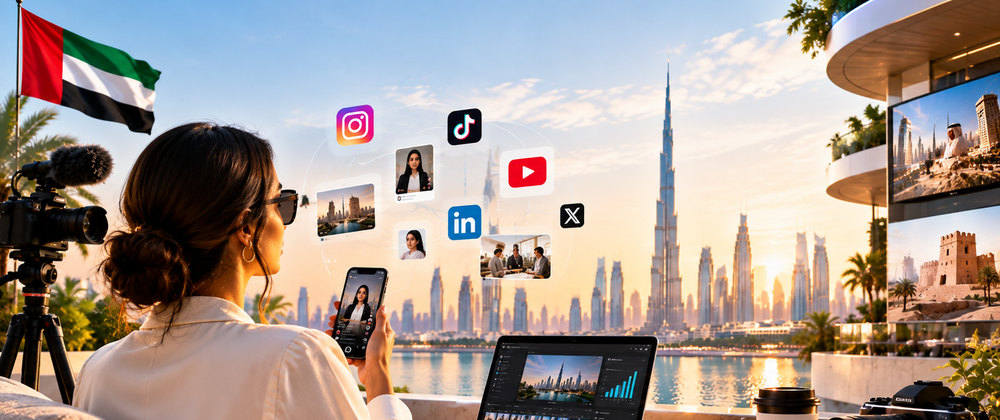

The UAE has become an important environment for professionals, entrepreneurs, creators and businesses that use digital platforms to reach audiences. Social media has changed how people communicate their careers, present business ideas and build communities around shared interests.
In the past, professional visibility was often connected to newspapers, television, corporate events or established industry networks. Today, a person can develop an audience through videos, interviews, professional platforms and educational content while continuing to work in a specialized field.
This shift is particularly noticeable in areas such as football, tourism, entrepreneurship, aviation and lifestyle media. Professionals can use their knowledge and experience to create content that reaches audiences far beyond their immediate workplaces.
For the UAE, this development is relevant because the country brings together international communities, major sporting events, tourism businesses, technology companies and entrepreneurs. Digital communication gives these groups additional ways to interact with audiences across different countries.
Digital Identity Is Becoming Part of Professional Life
A professional identity is no longer limited to a résumé or company profile. Many people now maintain an online presence that explains their interests, experience and areas of expertise.
LinkedIn can communicate professional achievements, while Instagram and other platforms can provide a more visual representation of a person's work. Video platforms allow professionals to explain subjects in greater detail, and podcasts can create longer conversations around careers and industries.
This does not mean every professional needs to become a full-time content creator. Instead, digital platforms can act as an additional communication channel.
A football coach can share training knowledge. An entrepreneur can discuss business development. A pilot can provide insight into aviation. A researcher can explain academic findings to a general audience.
These activities can help create connections between professional expertise and public communication.
Football, Education and Social Research
Football provides an especially interesting example of how sport can connect with education and social issues.
The game is often discussed through competitions, players, clubs and results, but its social impact can also become a subject of research and public discussion.
Maymi Asgari has combined football content creation with academic work. In a 2025 LinkedIn post, she described completing a master's thesis in sociology after researching in Dubai how football influences girls' personal and social skills. She also wrote about coaching girls, speaking at schools and creating content around major international football events.
This combination demonstrates how digital media can support conversations that extend beyond entertainment.
Academic subjects can sometimes appear difficult for general audiences because they are presented through technical language. Social platforms can provide another way to communicate those ideas by connecting research with real experiences.
For sports publishers, this creates an opportunity to cover football through multiple perspectives, including education, community participation, youth development and social research.
MAGNAV's Sports and Lifestyle coverage can benefit from this broader approach by connecting individual stories with larger changes taking place in the UAE and international sports environment.
Why Educational Content Can Perform Well Online
People often use digital platforms to learn something quickly.
They may want to understand a business concept, learn about a career or find practical information about a particular industry. Content that provides a clear explanation can therefore attract audiences beyond those who already know the creator.
Educational content also has a longer lifespan than many short promotional posts.
A temporary announcement may be relevant for a few days, while an informative explanation about career development or sports participation can remain useful for much longer.
This gives professionals an opportunity to create content that supports both immediate engagement and long-term search visibility.
The Creator Economy Is Changing Communication
The growth of creator-led communication has changed the relationship between professionals and audiences.
A creator can develop a community around a specific subject rather than attempting to reach everyone. This allows audiences to choose content based on their interests.
For example, football fans may follow creators who discuss women's football, international competitions or coaching. Aviation enthusiasts may follow pilots who share industry-related experiences. Business audiences may follow entrepreneurs who discuss company-building and leadership.
This specialization can be valuable for brands as well.
Companies increasingly look for ways to communicate with specific communities rather than relying exclusively on broad advertising campaigns.
Personal Experience Can Make Industry Topics Easier to Understand
Technical subjects can become more accessible when they are explained through personal experience.
Aviation is one example. Most passengers experience flying from the perspective of a customer. They arrive at an airport, board an aircraft and travel to another destination.
Aviation professionals experience the process differently. Their work involves training, procedures, teamwork, safety requirements and international operations.
When professionals explain these areas through digital media, audiences can gain a better understanding of what happens behind the passenger experience.
This type of content can also introduce young people to careers they may not have considered before.
Aviation and International Career Visibility
The UAE's aviation sector provides a natural environment for international digital storytelling.
Airlines based in the country operate across global routes, creating professional environments where employees interact with people from many cultures and travel between different destinations.
Online aviation creators can discuss career pathways, training experiences, travel routines and the realities of working in an international airline environment.
Nikita Tomar Pilot is associated online with aviation and travel content, providing an example of how a professional aviation identity can become part of digital storytelling.
For readers, such content can be useful because it provides a perspective that differs from conventional travel marketing. Instead of simply showing destinations, aviation-focused content can explain the profession behind the journey.
Career Content Can Inspire Practical Questions
Professional stories often encourage audiences to ask practical questions.
Someone watching aviation content may want to know what qualifications are required to become a pilot. A young footballer may want to understand how coaching works. An aspiring entrepreneur may want to know how a company can move from an idea to a functioning business.
This creates an opportunity for publishers to develop useful supporting content.
An article about aviation careers can explain training pathways. A football profile can examine the development of women's participation. An entrepreneurship article can examine how founders identify market opportunities.
The original profile then becomes a starting point for a much wider information network.
Businesses Can Benefit From Human-Centered Communication
Corporate communication can sometimes focus heavily on products and services.
Human-centered storytelling takes a different approach by showing the people behind the business.
Entrepreneurs can explain why a product was created. Employees can describe how a service works. Founders can discuss the challenges involved in developing a company.
This type of communication can make a business easier for audiences to understand.
It can also help smaller businesses compete for attention because they may not have the same advertising budgets as large corporations.
A clear personal story can give a company another way to communicate its purpose and experience.
Entrepreneurship and the Experience Economy
The UAE's tourism and entertainment sectors demonstrate how experiences can become business opportunities.
Consumers increasingly spend money on activities, entertainment and memorable experiences rather than only physical products.
This creates opportunities for entrepreneurs to develop attractions, events, recreational services and tourism concepts.
A business does not necessarily need to invent an entirely new category. It can sometimes take an existing idea and adapt it to a particular audience, location or cultural environment.
This approach is visible in several UAE entertainment businesses, where international concepts are adapted to local tourism and leisure markets.
Turning Simple Observations Into Business Ideas
Many businesses begin with an observation about consumer behavior.
An entrepreneur may notice that families need more recreational options. Another may see that tourists want a particular type of experience. A technology founder may identify an inefficient process that could be simplified.
The important step is turning the observation into a workable business model.
This requires market research, customer understanding, financial planning and operational execution.
Digital media can then become an additional tool for communicating the idea to potential customers.
How Storytelling Supports Tourism Businesses
Tourism businesses have an advantage when they can communicate experiences visually.
Images, videos and personal stories can help potential visitors understand what an experience feels like before making a booking.
However, good tourism communication should also provide practical information.
Visitors may want to know where an attraction is located, what activities are available, how long a visit might take and whether there are specific rules or requirements.
Combining visual storytelling with useful information can make tourism content more valuable.
MAGNAV's Tourism coverage can connect this kind of storytelling with wider UAE travel developments, helping readers understand not only individual attractions but also the business environment around them.
Social Media and the International UAE Audience
The UAE has a highly international population, and digital content can reach audiences far beyond the country's borders.
A creator based in Dubai can attract viewers in Europe, Asia, Africa or North America. Likewise, a UAE entrepreneur can communicate with customers and partners in different markets.
This international reach creates opportunities but also requires careful communication.
Content intended for a global audience should avoid assuming that readers understand local references. Clear explanations of places, industries and cultural context can make stories more accessible.
This is especially important for media publishers targeting both UAE residents and international readers.
The Importance of Accuracy in Personal Profiles
Digital visibility also creates editorial responsibilities.
Personal profiles should distinguish between information provided directly by the individual and facts confirmed through independent sources.
Career titles, awards, educational qualifications and business achievements should be handled carefully. If a claim comes from a person's own profile, it should be presented as their stated information when independent verification is not available.
This approach helps protect readers from exaggerated or inaccurate information.
For publishers, accuracy is also important for long-term credibility. Search visibility may bring readers to an article, but reliable information gives them a reason to trust the publication.
The Future of Professional Storytelling
Digital professional storytelling is likely to become increasingly diverse.
Some professionals will focus on short videos, while others may build newsletters, podcasts, long-form articles or educational communities.
Artificial intelligence and new content tools may make production easier, but useful expertise will remain important.
Audiences have access to enormous quantities of online content. Information that provides real knowledge, context or personal experience can help readers decide which sources deserve their attention.
This creates opportunities for publications that combine professional profiles with deeper reporting.
Building a Stronger UAE Digital Media Environment
A healthy digital media environment requires more than constant publishing.
It needs variety.
Business stories can explain entrepreneurship. Sports stories can examine social participation. Aviation profiles can introduce career possibilities. Tourism articles can provide cultural context.
When these subjects are connected, readers receive a more complete picture of modern life in the UAE.
This also gives publishers opportunities to create content that reaches different audiences while remaining connected to the country's wider economic and cultural environment.
Why Personal Stories Have Long-Term Value
Trends on social platforms can change quickly, but personal experiences can remain relevant.
A professional career story may continue to interest readers years after publication. An entrepreneur's business journey can provide lessons for future founders. Research about sports and society can remain relevant as participation changes.
The key is to create articles that provide context rather than simply repeating a social media post.
A useful profile should explain who the person is, what they do, why their work matters and how their experience connects to a larger subject.
Conclusion
The UAE's digital environment is creating new connections between professional careers, entrepreneurship, sports, aviation, tourism and media. Individuals can now communicate their expertise directly to global audiences, while publishers can use personal stories to explain wider changes taking place across different industries.
The combination of education and football content demonstrates how sport can become a platform for discussions about society and community. Aviation creators show how specialized professional experiences can become useful digital stories. Entrepreneurs demonstrate how practical observations can develop into businesses serving tourism and entertainment markets.
The entrepreneurial journey of Ahmed Ben Chaibah and the development of AquaFun provide one documented example of how an idea connected to leisure and family entertainment can develop into a major UAE business, with Guinness World Records documenting AquaFun's 42,400-square-metre inflatable aqua park achievement in Dubai in 2022.
FAQs
How has social media changed professional careers?
Social media allows professionals to communicate directly with audiences, share knowledge, develop communities and create additional opportunities around their existing expertise.
Why is football useful for social research?
Football is connected with education, identity, community participation and social interaction. Research can therefore examine how participation affects people beyond the competitive side of the sport.
Why is aviation content popular online?
Aviation combines travel, international careers, technology and behind-the-scenes experiences. These subjects can attract both aviation enthusiasts and people considering careers in the industry.
How can entrepreneurs use personal branding?
Entrepreneurs can use personal branding to explain their experiences, communicate business ideas, share industry knowledge and create stronger connections with potential customers and partners.
What makes a useful professional profile?
A useful profile should provide accurate background information, explain the person's work, distinguish verified facts from personal statements and connect the individual's experience with a broader subject relevant to readers.





Top comments (0)