
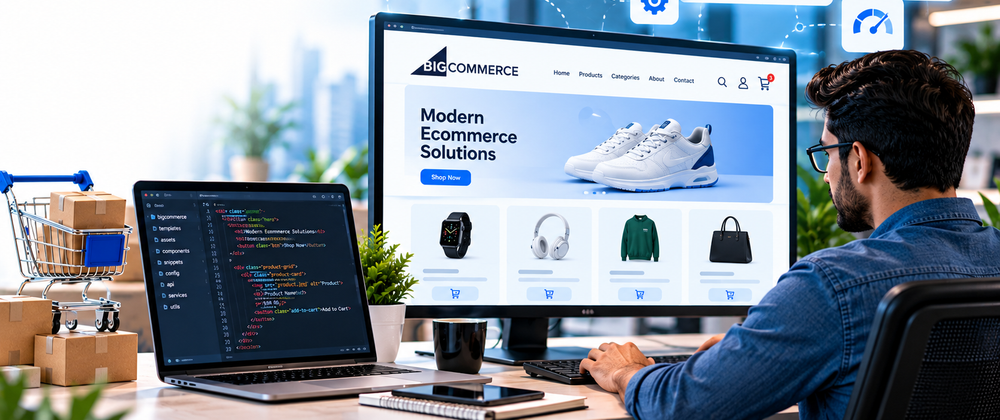

Ecommerce continues to change as customers expect faster websites, convenient payment options, personalized shopping experiences, and reliable order fulfillment. For retailers and wholesalers, building an online store is no longer just about displaying products. The store must also support daily operations, connect with existing systems, and handle growth without creating unnecessary technical problems.
BigCommerce is one platform that supports these requirements through customizable storefronts, commerce APIs, and tools for managing online sales. However, getting the most from the platform requires proper planning, development, and ongoing improvements. Understanding BigCommerce development can help brands build a store that meets their current requirements while remaining flexible enough for future expansion.
What Is BigCommerce Development?
BigCommerce development involves building, customizing, integrating, and maintaining an ecommerce store on the BigCommerce platform. It covers everything from storefront design and product catalog setup to checkout customization, third-party integrations, and performance improvements.
The development process depends on the store's purpose. A small retail store may need a straightforward storefront with essential payment and shipping features, while a large wholesale operation may require customer-specific pricing, bulk ordering, and connections with enterprise systems.
A properly developed store should make shopping easier for customers and daily management simpler for store administrators. It should also support future changes without requiring a complete rebuild whenever new requirements emerge.
Why Are Brands Investing in BigCommerce Development in 2026?
Ecommerce requirements are becoming more complex as brands sell through multiple channels, serve different customer groups, and manage larger product catalogs. A store that works well today may struggle later if its architecture cannot support additional integrations or higher order volumes.
BigCommerce offers options for developing traditional storefronts as well as headless commerce experiences. Its APIs also allow developers to connect commerce functionality with external applications and custom interfaces.
Here are some reasons brands consider the platform:
- Flexible storefront customization: Design shopping experiences that reflect the brand's products, audience, and sales process.
- Integration capabilities: Connect the store with inventory systems, accounting tools, shipping providers, and customer relationship management software.
- Multiple sales channels: Manage different storefronts and sales channels according to the store's requirements.
- Support for B2B and B2C: Build experiences for individual shoppers, wholesale buyers, or both.
- Room for expansion: Extend storefront functionality as product ranges, customer needs, and operational requirements change.
The right development approach helps turn these capabilities into practical improvements rather than adding features that do not solve actual problems.
BigCommerce Development Services: What Do They Include?
BigCommerce development services cover the technical work required to launch, customize, integrate, and maintain an online store. The scope varies according to the existing setup, the complexity of the catalog, and the features required.
Before starting development, it is useful to identify which functions are available through the platform and which require custom implementation. This distinction helps control costs and prevents unnecessary development work.
Common services include:
Store design and theme customization: Developers customize the storefront's layout, navigation, product pages, and shopping experience to match the brand's requirements.
Custom functionality: Additional features may include product configurators, advanced filtering, specialized checkout workflows, and customer-specific interfaces.
Platform migration: Existing stores can be moved to BigCommerce with appropriate planning for product data, customer records, order history, URL redirects, and search visibility.
Third-party integrations: Developers connect the store with ERP, CRM, inventory, payment, shipping, and marketing systems.
Performance optimization: Technical improvements can address slow-loading pages, inefficient scripts, image sizes, and other issues affecting the shopping experience.
Maintenance and support: Ongoing work includes troubleshooting, compatibility checks, security-related updates, and improvements based on customer feedback.
You can explore the scope of BigCommerce development services to understand how store implementation, customization, and integration requirements can be addressed through a structured development process.
Essential BigCommerce Platform Features for Modern Ecommerce
Understanding BigCommerce platform features helps store owners determine which capabilities fit their sales model. Not every store needs advanced customization, but selecting the right features from the beginning can reduce future redevelopment.
Several capabilities are particularly useful for growing ecommerce operations.
Customizable Storefronts
Storefront customization allows brands to control product presentation, navigation, category layouts, and other elements of the shopping experience. Developers can adapt existing themes or build more customized interfaces when standard layouts do not meet specific requirements.
API-Based Integrations
APIs enable the store to exchange information with other applications. For example, an inventory system can help keep stock information synchronized, while an ERP connection can support order processing and fulfillment workflows.
The quality of these integrations depends on data mapping, error handling, authentication, and testing. Simply connecting two systems does not guarantee that information will remain accurate.
Multi-Storefront Capabilities
Brands serving different markets or customer groups may benefit from managing multiple storefronts through a shared platform setup. BigCommerce supports storefronts with separate domains, designs, and other storefront-specific settings, subject to the selected configuration and feature availability.
This can help a brand maintain different shopping experiences without managing every storefront as an entirely separate commerce operation.
Headless Commerce
Headless commerce separates the storefront presentation layer from the commerce backend. Developers can use frontend frameworks and APIs to create more tailored digital experiences while retaining BigCommerce commerce functionality.
This approach can be useful when a brand needs greater control over its interface. However, it also introduces additional development, hosting, monitoring, and maintenance responsibilities.
Product and Order Management
Effective product catalog organization, inventory handling, and order processing are essential to reliable store operations. Development work may involve improving product attributes, category structures, search filters, and connections with fulfillment systems.
The best configuration depends on the size of the catalog and the complexity of the sales process.
BigCommerce B2B and B2C Ecommerce: Understanding the Differences
BigCommerce B2B and B2C ecommerce can operate on the same platform, but the customer experience and purchasing requirements are often different. A successful implementation should account for these differences instead of applying the same checkout and account structure to every customer.
For B2C stores, the main priorities are generally convenient browsing, clear product information, mobile usability, straightforward checkout, and suitable payment and shipping options.
B2B stores often require more advanced purchasing workflows, including negotiated pricing, company accounts, purchase orders, bulk ordering, and approval processes.
BigCommerce B2B Edition provides capabilities such as company account management, buyer portals, sales quotes, invoice management, and buyer permissions. The exact configuration depends on the store's plan, edition, and implementation requirements.
What B2C Stores Need
A B2C storefront should make it easy for shoppers to find products, compare options, understand delivery costs, and complete purchases.
Useful development priorities include:
- Mobile-friendly product and category pages.
- Clear navigation and product filtering.
- Guest checkout and convenient payment options where supported.
- Accurate shipping information and order notifications.
- Customer reviews and product recommendations where appropriate.
These improvements can reduce friction during the buying journey and help customers make informed purchasing decisions.
What B2B Stores Need
B2B ecommerce often involves repeat purchases, larger order quantities, and relationships between multiple buyers and account administrators.
Depending on the requirements, useful capabilities may include:
- Customer-specific pricing and discounts.
- Company accounts with multiple users and permissions.
- Bulk ordering and saved shopping lists.
- Quote requests and negotiated purchasing.
- ERP integration for inventory, orders, and financial workflows.
A combined B2B and B2C setup should keep the experience relevant to each audience while avoiding unnecessary duplication of catalog and operational data.
How to Plan BigCommerce Store Development
A successful implementation starts with business requirements rather than a list of technical features. Defining the scope early helps developers select an appropriate architecture, estimate the work, and identify integration risks before they affect the launch.
The following steps provide a practical starting point.
Step 1: Define Store Requirements
Identify the target audience, product catalog size, pricing structure, sales channels, payment methods, shipping rules, and required integrations.
For B2B stores, document approval workflows, account permissions, bulk ordering, and customer-specific pricing requirements. For B2C stores, focus on navigation, checkout convenience, and product discovery.
Step 2: Select the Storefront Approach
Decide whether a customized native theme is sufficient or whether a headless storefront is justified.
A traditional theme-based implementation may be suitable when the store needs a familiar shopping experience with manageable customization. A headless approach may be appropriate when the frontend needs more specialized functionality or must support several digital touchpoints.
Step 3: Organize Products and Data
Prepare product descriptions, categories, variants, images, pricing, and inventory information. If the store is being migrated, identify how customer records, order history, and existing URLs will be handled.
Clean data reduces inconsistencies and makes testing easier.
Step 4: Implement Integrations
Connect the store with the systems required for everyday operations. Establish how data will move between applications, how frequently it will synchronize, and what should happen when a request fails.
Integration testing should cover common scenarios as well as errors, duplicate requests, and missing information.
Step 5: Test Before Launch
Test the complete shopping journey on different devices and browsers. Check product selection, cart updates, checkout, payment responses, shipping calculations, order confirmation, and administrative workflows.
Also verify redirects, metadata, analytics, and important landing pages before switching the live store.
Step 6: Monitor and Improve
After launch, monitor site speed, checkout completion, product searches, errors, and customer feedback. Use this information to prioritize improvements based on actual problems instead of making changes without a clear purpose.
How Much Does BigCommerce Store Development Cost?
The cost of BigCommerce store development depends on the design, number of products, integrations, customization requirements, and complexity of the purchasing process. A store using a standard theme will generally require less work than a custom storefront with multiple systems and specialized workflows.
There is no single development price that applies to every project. The following ranges are illustrative planning estimates, not official BigCommerce pricing or fixed market rates.
| Project type | Illustrative development budget |
|---|---|
| Basic store setup with limited customization | $2,000–$5,000 |
| Growing store with custom design and integrations | $5,000–$15,000 |
| Advanced store with complex functionality | $15,000–$40,000+ |
| Enterprise or highly customized implementation | $40,000+ |
Actual quotes may fall outside these ranges depending on scope and provider rates. Platform subscriptions, paid themes, applications, hosting for additional components, and ongoing maintenance may also add to the total cost.
To estimate a realistic budget, prepare a feature list, identify required integrations, and separate launch requirements from improvements that can be delivered later. This approach helps prevent unnecessary spending while keeping essential functionality in scope.
Common BigCommerce Development Mistakes to Avoid
Some store problems result from decisions made before development begins. Addressing these issues early can save time and reduce the need for expensive changes after launch.
Ignoring mobile usability: Product pages, menus, and checkout should be tested on smaller screens rather than designed exclusively for desktop.
Adding unnecessary applications: Too many overlapping applications can increase costs and create maintenance or compatibility problems. Review each tool against a specific requirement.
Overlooking SEO during migration: Changes to URLs, product categories, and page content can affect organic visibility. Preserve important URLs where possible, implement appropriate redirects, and verify indexing after launch.
Underestimating integration complexity: Systems may use different data formats and update schedules. Plan synchronization rules and error handling before connecting them.
Skipping post-launch monitoring: A successful launch does not guarantee long-term performance. Monitor errors, checkout behavior, and system integrations regularly.
Avoiding these mistakes requires coordination between the people responsible for store operations, design, development, and marketing.
Conclusion
BigCommerce development can help B2B and B2C brands build flexible online stores that support their customers and operational needs. The most effective approach begins with clear requirements, followed by suitable storefront customization, reliable integrations, careful testing, and ongoing improvements.
Whether the goal is to launch a new store, migrate an existing platform, introduce wholesale purchasing, or develop a more customized shopping experience, technical decisions should support measurable requirements rather than unnecessary complexity.
EmizenTech provides BigCommerce-focused development solutions for store implementation, customization, and integrations. With a clearly defined scope and a practical development plan, brands can create an ecommerce experience that meets present needs and remains adaptable as those needs change.
Frequently Asked Questions
1. What is BigCommerce development?
BigCommerce development involves creating, customizing, integrating, and maintaining ecommerce stores on the BigCommerce platform. It can include storefront design, product catalog setup, checkout improvements, API integrations, and ongoing technical support.
2. Is BigCommerce suitable for both B2B and B2C ecommerce?
Yes. BigCommerce can support both sales models. B2C stores can focus on convenient shopping and checkout, while B2B implementations can incorporate company accounts, custom pricing, bulk ordering, quotes, and other wholesale purchasing requirements.
3. How long does BigCommerce store development take?
A basic store may take a few weeks, while a customized implementation with complex integrations can take several months. The timeline depends on the project scope, data readiness, design approvals, testing requirements, and integration complexity.
4. Can BigCommerce integrate with ERP and CRM systems?
Yes. BigCommerce APIs and suitable integration solutions can connect ecommerce stores with ERP, CRM, inventory, accounting, and fulfillment systems. The implementation should define data synchronization, error handling, and system responsibilities.
5. What affects the cost of BigCommerce development?
The main factors include design complexity, catalog size, custom features, integrations, migration requirements, B2B workflows, and the development team's rates. Ongoing subscriptions, applications, and maintenance should also be considered when estimating the overall budget.




Top comments (0)