
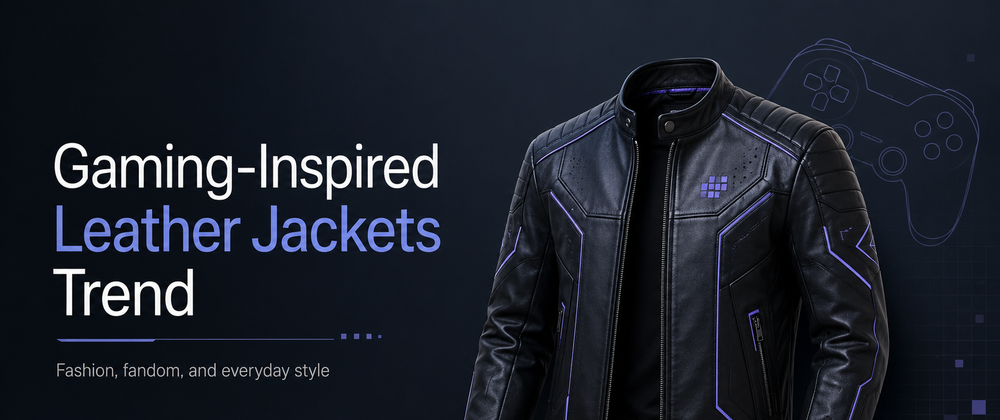

A video game costume is rarely just decoration. Before a character speaks, clothing can suggest occupation, status, climate, danger, or personal history. Game-costume specialists describe clothing as visual storytelling because fit, material behavior, construction, and silhouette communicate character. That is why leather jackets work so well in gaming-inspired cosplay: they do more than copy a look; they help create the impression that the wearer has stepped out of a playable world.
For American cosplayers drawn to survival horror, military adventures, and post-apocalyptic games, a recognizable outer layer can do more work than complicated armor. An RE9 Jacket, for example, can establish a battle-worn protagonist through its dark tone, structured shape, practical closures, and weathered surface. The jacket becomes a visual shortcut, allowing boots, gloves, props, makeup, and posture to complete the character without making the costume difficult to understand.
The Jacket as a Wearable Save File
The most convincing costumes appear to contain history. Scratches suggest a narrow escape. Faded seams imply repeated use. A repaired cuff can show that the character values function over appearance. In this sense, a leather jacket works like a wearable save file: its surface records an imagined journey.
This approach also lets cosplayers recreate a specific stage of a game. A clean jacket may represent the opening chapter, while dust, distressing, artificial blood, or repaired panels can suggest the aftermath of a major mission. The costume becomes more than a static replica; it becomes a snapshot from the character’s story.
Accuracy Is More Than Matching Color
Screen accuracy matters, especially in competitions. Dragon Con’s video game costume contest has judged entries on craftsmanship and accuracy to the portrayed character. Yet accuracy is not simply choosing the correct shade of brown or placing every zipper in the same position. It also involves proportion, weight, and movement. A jacket that looks right while standing still but becomes stiff or bulky in motion may fail to capture the character’s presence.
Reference images should therefore be studied from several angles. Collar height, shoulder width, sleeve shape, pocket placement, closure style, hardware finish, and layering all matter. Game-industry discussions increasingly recognize that detailed character views and cosplay guides help fans translate digital clothing into physical construction.
Realism Must Survive the Convention Floor
A jacket may look excellent in a photo shoot but behave differently during several hours inside a crowded convention center. American conventions involve walking, waiting in lines, posing, climbing stairs, and carrying phones, water, badges, and repair supplies. Mobility and storage are therefore part of costume design, not afterthoughts.
The best cosplay jacket is not necessarily the heaviest. It should allow the wearer to raise their arms, sit down, turn comfortably, and remove the garment when overheated. Hidden interior pockets can preserve the character’s silhouette while carrying essentials. A breathable lining, flexible underarm construction, and room for a light base layer can determine whether the full costume remains wearable all day.
Build, Modify, or Reinterpret?
Cosplay has no single universal standard. Some fans purchase finished pieces, others alter thrifted garments, and experienced makers draft patterns from scratch. Smithsonian reporting notes that cosplayers learn sewing, prop making, makeup, and performance skills from one another, while participation ranges from handmade work to ordered costume sets.
Competition rules may be stricter. Comic-Con’s 2026 Masquerade requires original construction or significant modification and generally expects most of an entry not to be commercially purchased. Its rules also distinguish direct recreations from original designs inspired by fictional worlds.
That distinction creates room for reinterpretation. A cosplayer might imagine a winter version, civilian disguise, alternate timeline, or post-mission variation of a familiar character. Recognition can be preserved through silhouette, colors, emblems, and accessories while the maker adds a personal design idea.
Small Details Create the Game World
A jacket becomes convincing when its details belong to the same fictional system. Highly polished hardware may feel wrong in a grim survival setting, while matte metal, covered snaps, reinforced seams, and aged edges can support the illusion. Patches and insignia should have narrative purpose rather than simply filling empty space.
Distressing should also follow logic. Wear usually appears around cuffs, elbows, pocket openings, shoulders, and closure points because these areas experience regular contact. Random scratches across every panel can make a jacket look artificially damaged instead of naturally worn. Cosplayers can build a more believable finish by imagining how the character moves, what equipment they carry, and which environments they have crossed.
Build documentation can strengthen the result. Costume competitions often ask for reference images, progress photos, materials, patterns, and construction notes so judges can understand choices that may not be visible from the stage. Dragon Con specifically encourages documentation of the creation process.
Cosplay Should Still Feel Like Play
The goal is not to erase the wearer beneath perfect accuracy. Cosplay can be meticulous craft, casual Halloween dressing, social-media storytelling, or a convention-day collaboration among friends. It also gives fans space to explore confidence, performance, and identity through characters they admire.
Gaming-inspired leather jackets succeed because they sit between costume and believable clothing. They can carry fictional history, survive real movement, and communicate a character across a crowded hall. When thoughtfully chosen, modified, or built, the jacket stops feeling like an imitation. It becomes evidence of an unseen journey—and invites the wearer to continue it.







Top comments (0)