

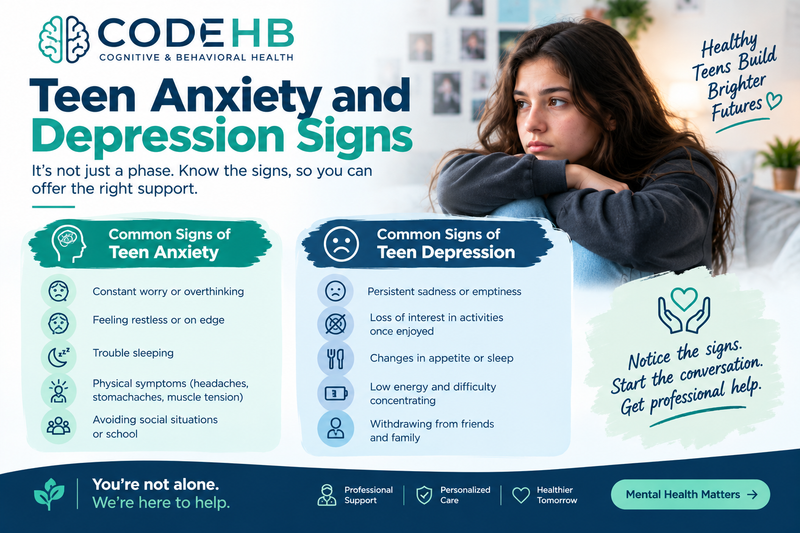
This guide explains the warning signs to watch for, when to seek professional help, how to talk with your teen, and what treatment can look like. It reflects the approach used at Coded Healthcare & Behavioral Services, a psychiatric practice serving children, teens, and adults in Bolingbrook, Shorewood, and across Illinois through telehealth.
Why Teen Mental Health Can Be Hard to Spot
Teens often do not say "I feel anxious" or "I feel depressed." Instead, feelings show up through behavior, mood, and physical complaints. Depression in teens frequently looks like irritability or anger rather than obvious sadness. Anxiety can look like avoidance, perfectionism, or stomachaches before school.
Because these changes can blend in with normal adolescence, the most useful question is not "Is this a bad day?" but "Has this lasted, and is it getting in the way of life?"
Teen Anxiety and Depression Signs to Watch For
Emotional Signs
- Persistent sadness, emptiness, or hopelessness
- Irritability, frequent anger, or outbursts that seem out of proportion
- Excessive worry that is hard to control
- Feeling worthless, guilty, or like a burden
- Loss of interest in activities they used to enjoy
Behavioral Signs
- Pulling away from friends and family
- Dropping grades, skipping school, or refusing to go
- Avoiding social situations, sports, or activities
- Sudden changes in friend groups
- Increased risk-taking or use of alcohol or drugs
- Spending much more time alone or online than usual
Physical Signs
- Changes in sleep, such as trouble falling asleep, waking often, or sleeping far more than usual
- Changes in appetite or weight
- Frequent headaches, stomachaches, or fatigue with no clear medical cause
- Restlessness, shakiness, or racing heart during stressful moments
Signs Specific to Anxiety
- Panic attacks, with sudden intense fear, chest tightness, or trouble breathing
- Constant need for reassurance
- Perfectionism or fear of making mistakes
- Avoiding situations out of fear, such as speaking in class or being around peers
- Trouble concentrating because of worry
Signs Specific to Depression
- Low energy and slowed thinking or movement
- Trouble concentrating or making decisions
- Neglecting personal hygiene or appearance
- Giving away belongings or saying goodbye in unusual ways
Warning Signs That Need Immediate Attention
Some signs mean you should seek help right away, not wait for a routine appointment:
- Talking about wanting to die, disappearing, or being a burden
- Any self-harm, such as cutting or burning
- Research into ways to hurt themselves
- Sudden calm after a long period of depression
- Severe panic or being unable to function
If your teen is in immediate danger, call 911. For emotional crisis support, call or text 988 (Suicide & Crisis Lifeline) or text HOME to 741741 (Crisis Text Line). Do not leave your teen alone if you believe they are at risk, and remember that asking directly about suicide does not plant the idea. It can open the door to help.
When to Seek Professional Help
Consider scheduling an evaluation if:
- Symptoms last two weeks or longer
- Your teen's mood or behavior is clearly different from their usual self
- School, friendships, sleep, or family life are being affected
- Your teen is using alcohol, drugs, or self-harm to cope
- Your own instinct tells you something is wrong
You do not need to wait for a crisis. Early support is often easier and more effective than waiting until problems build.
How to Talk With Your Teen
The conversation matters, and a few habits can help:
- Pick a calm moment. Car rides or walks often feel less intense than a face-to-face sit-down.
- Lead with care, not correction. Try "I've noticed you seem down lately, and I care about you," rather than "What is wrong with you?"
- Listen more than you talk. Let them finish without rushing to fix things.
- Avoid dismissing feelings. Phrases like "You'll get over it" can make a teen feel unheard.
- Normalize getting help. Explain that seeing a mental health provider is like seeing a doctor for any health concern.
- Stay patient. Your teen may not open up the first time, and that is okay.
What Professional Care for Teens Can Look Like
A good teen mental health visit is not scary or punishing. At Coded Healthcare, care typically begins with an evaluation to understand your teen's symptoms, history, sleep, school, relationships, and safety. From there, a treatment plan may include:
- Therapy or skills-based support, such as cognitive behavioral therapy, to build coping strategies
- Medication management, when appropriate, with careful monitoring. Some antidepressants carry a warning about increased suicidal thoughts in young people, so close follow-up is an important part of safe care.
- Safety planning if there are any concerns about self-harm
- Coordination with parents and, when helpful, schools
- Regular follow-up visits to track progress and adjust the plan
Providers also work to balance parent involvement with a teen's need for privacy and trust, which can help teens feel safe being honest.
Choosing the Right Provider for Your Teen
When comparing options, look for:
- A licensed, board-certified provider experienced with adolescents. For example, Dr. Oladunni Boladale, DNP, PMHNP-BC, is a board-certified Psychiatric Mental Health Nurse Practitioner with a Doctorate in Nursing Practice from Walden University. You can verify any provider's license through the Illinois Department of Financial and Professional Regulation (IDFPR).
- A warm, teen-friendly approach where your child feels heard
- Clear communication about confidentiality and parent involvement
- Reasonable wait times and flexible scheduling
Access, Insurance, and Cost
Coded Healthcare treats children ages 6 and up, teens, and adults. Accepted insurance includes Blue Cross Blue Shield PPO, Aetna, Cigna, Meridian, and Molina, with typical copays between $0 and $50. Without insurance, visits generally range from $100 to $250 depending on the service. Most patients are seen within 2 to 5 days at 494 West Boughton Road, Suite 2B in Bolingbrook, 220 Channahon Street, Suite 2W in Shorewood, or by secure telehealth anywhere in Illinois. Ask the office to verify your benefits when you schedule.
Frequently Asked Questions
Q: What are the most common teen anxiety and depression signs?
A: Common signs include ongoing sadness or irritability, withdrawing from friends, falling grades, sleep and appetite changes, excessive worry, and frequent physical complaints such as headaches or stomachaches.
Q: How do I know if it is normal teen moodiness or something more?
A: Look at how long it lasts and how much it affects daily life. Symptoms that last two weeks or more, or that interfere with school, friendships, or family life, are worth a professional evaluation.
Q: Can teens have both anxiety and depression at the same time?
A: Yes. The two often occur together, which is why a full evaluation is important to understand what your teen is experiencing.
Q: What should I do if my teen talks about wanting to die?
A: Take it seriously. Stay with your teen, ask directly and calmly about their safety, and get help right away. Call or text 988, or call 911 if there is immediate danger.
Q: Will my teen need medication?
A: Not always. Many teens benefit from therapy and skills-based support alone. When medication is recommended, it is prescribed carefully and monitored closely, and you will be part of the decision.
Q: What if my teen refuses to go?
A: Stay calm and avoid ultimatums. Explain that you are concerned and want them to feel better, and offer choices when possible, such as a telehealth visit from home. A provider experienced with teens can also help them feel comfortable.
Q: Do you offer telehealth for teens?
A: Yes. Coded Healthcare offers secure telehealth visits across Illinois, along with in-person appointments in Bolingbrook and Shorewood.
Q: How soon can my teen be seen?
A: Most patients at Coded Healthcare are seen within 2 to 5 days, and urgent appointments are available in crisis situations.
Conclusion
Noticing the teen anxiety and depression signs early gives your child the best chance to feel better and get back to the things they care about. You do not need to have every answer or be certain something is wrong. If your instinct says your teen is struggling, reaching out for an evaluation is a caring and practical step.





Top comments (0)