
CV is a document which has a great significance on the professional life. It is an indication of a person's skills, experience and achievement. With such a competitive job market, many people feel like they have to be the one to get the job out of hundreds of people who applied. Awareness of the risks and its implications and ethics will guide job seekers to make the right choice.
Why is it that people lie on their CV?
There are several reasons why people lie on their CV. Others may feel that they don't have the experience that is required for the role they are interested in. Some may believe they can improve their odds by falsifying their qualifications, or by upgrading their job title. In the most competitive market, such as UAE, individuals will want to improve their profiles, such as utilizing services like perfect cv maker in UAE to develop more professional CVs. But making improvements in presentation is far from giving false information.
These are the most frequently used CV lies.
Lying on a CV can be something as small as the exaggeration or something as grand as a big lie. Some people overestimate their position, exaggerate what they lead, claiming leadership positions that they didn't have. Some may tweak their working dates to fill in gaps in work. Further numerous cases of false education qualifications, false exaggeration of technical skills and language proficiency exist. Some go so far as to render bogus references. Though they may seem harmless, at first, they can be easily exposed during the hiring process.
The Short-Term Benefits
To start out, lying on a CV may seem like a positive thing. A strong CV will be able to attract the attention of recruiters and lead to greater interviews. Can assist candidates to navigate through preliminary screening procedures and out-perform more senior candidates. This might result in a job that they wouldn't have been given for some. Under pressure of time or when you are challenged in your career, the quick fix of obtaining the job may be the allure to cheat.
The dangers of being caught. Exposure to risk.
The worst thing that could happen for a lie on a CV is for the person to be found out. Today's employers use state-of-the-art background checks, reference checks and skills tests. If they're not, these can be easily identified if they're not, or a job experience is fabricated or an exaggerated skill. If the candidate is caught during the recruitment process, his/her prospects of making the cut are practically none. Unfortunately, they can be damaging the reputation of the industry. Business is based on trust and sooner or later lies will keep doors closed.
Once you have the job: Consequences.
Once you get the job after lying, you still don't have solutions to your problems. Once that is accomplished, you will be able to see its value. Someone who claims to have advanced skills if they're not, will have a hard time performing. There are grounds for employers to end their contract for misconduct. It may be a legal issue for some jobs, e.g., financial, medical or legal. The ramifications of getting sacked for dishonesty can be an extended setback to a man's or woman's career.
CV honesty from an ethical perspective
People can lie on their CV and it's not OK. It gives an unfair advantage to any person who has not actually gone through the work to get the qualifications and experience. Employers take it as a given that the information provided in the application is true. If this trust is compromised, it will have a negative impact on the professional relationships. Honesty is one of the attributes that is appreciated in work and a bad start is a bad start. Often times, it's the actions of good play that means more than quick wins or goals.
Employers' Perspective on the CV Lie
There are zero tolerance policies with respect to dishonesty among most employers. Just a little puffery can raise questions about a person's character. This lie could lead an employer to believe he or she won't take the time to read the remainder of the CV. This will lead to unconfident and unprofessionalism. Companies invest time and resources in hiring, and they need to have trust in their employees. If CV is dishonest, it is likely that the candidate will be dishonest at work.
Some great Alternate positions to lying.
Job seekers should not misrepresent what skills they have, but rather use positive skills. Highlight transferable skills, volunteer activities, internship and certifications. However, if you have periods of unemployment, be sure to be honest about it. Tailor CV to the job you're applying for and highlight achievements and results over responsibilities. Skills development and/or gaining of practical experience is always a better way than developing qualifications. Ruthless development makes more successful life careers.
Constructing a solid CV with integrity
There is no need for lies to be effective in a CV. Formatting, relevance, measurable outcomes, and accuracy are important factors that recruiters will be impressed with. When candidates are interviewing for a position, they should highlight their ability to learn, be adaptable and be willing to learn. Experience is not all those employers look for, they also look for attitude and commitment. Using professional CV tools and career guidance can indeed help to improve CVs in a non-ethical way. Nothing speaks louder than authenticity, fancy words or false claims.
Conclusion
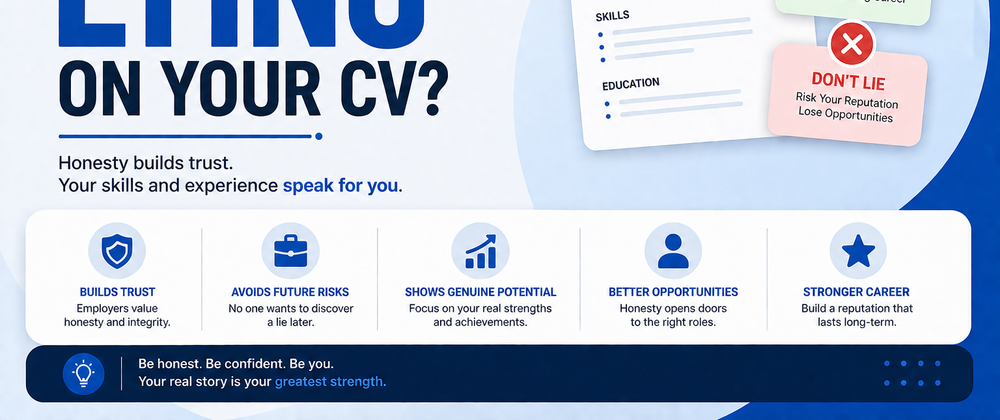
It may feel like an easy route into work, but the cost in terms of the consequences and benefits of dishonesty on a CV are not worth it. It has short-term advantages, but can cause a big damage to reputation, career prospects and personal values. All working relationships need to be based on trust and employers appreciate honesty. Certainly in the long run it's better to be honest, work and be really good at it then to be dishonest. The response is a definite “NO” it's not worth pretending to be on your CV.

Ifrah Yameen
Posted on
Is it worth lying on your CV?
For further actions, you may consider blocking this person and/or reporting abuse






Top comments (0)