
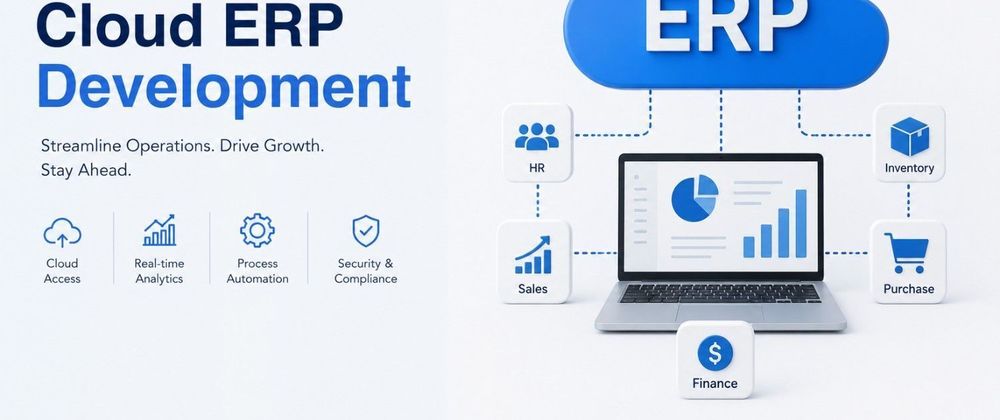

Cloud ERP development has become a major priority for businesses trying to simplify operations, improve collaboration, and scale without constantly upgrading hardware. Traditional systems often create bottlenecks — and nobody enjoys waiting for reports that move slower than office coffee machines on Monday mornings. Modern organizations need centralized platforms that support finance, inventory, HR, customer management, and analytics from a single environment. Cloud ERP solutions make that possible while reducing infrastructure headaches. As digital transformation accelerates across industries, businesses are increasingly investing in flexible ERP ecosystems that adapt quickly to operational changes and long-term growth strategies.
What Is Cloud ERP Development?
Cloud ERP development refers to building enterprise resource planning software hosted on cloud infrastructure instead of local servers. Unlike traditional ERP systems that require heavy on-site hardware, cloud-based platforms allow businesses to access data and workflows remotely through secure internet connections. Public, private, and hybrid cloud models provide different levels of flexibility and control depending on organizational needs. Companies across healthcare, retail, logistics, manufacturing, and professional services are rapidly adopting cloud ERP solutions because they simplify operations while improving accessibility. Modern ERP platforms are no longer static databases — they function more like connected business command centers.
Why Businesses Are Moving Toward Cloud ERP Solutions
Businesses are shifting toward cloud ERP systems because operational complexity continues to grow across departments. Finance teams need real-time reporting, HR departments require centralized employee management, and sales teams expect faster customer insights — preferably without sending twelve spreadsheets through email chains. Cloud ERP platforms improve collaboration by connecting business functions inside one scalable environment. Remote work has also accelerated ERP adoption because employees now need secure access from multiple locations and devices. Faster updates, lower maintenance costs, and better visibility into operations make cloud ERP systems an attractive option for organizations focused on long-term efficiency and scalability.
Scalability for Growing Businesses
Scalability remains one of the biggest advantages of cloud ERP development. Businesses rarely stay the same size forever, even though some accounting systems behave as if growth is an unexpected inconvenience. Cloud ERP platforms allow organizations to add users, modules, and storage without rebuilding infrastructure from scratch. Expanding operations across multiple locations becomes far easier when the ERP system can scale alongside demand. Whether supporting startups managing rapid growth or enterprises handling global operations, scalable ERP solutions provide flexibility that traditional systems often struggle to deliver. This adaptability helps businesses respond faster to market changes and evolving operational requirements.
Real-Time Data Accessibility
Real-time accessibility transforms how organizations manage information and make decisions. Cloud ERP systems centralize operational data so departments can instantly access reports, inventory levels, financial records, and customer insights from any authorized device. Delayed reporting often creates unnecessary confusion — especially during meetings where everyone confidently presents different spreadsheet versions. Centralized ERP platforms reduce those inconsistencies by ensuring all departments work from the same live data environment. Faster access improves decision-making, increases collaboration, and helps businesses identify operational problems before they become expensive disruptions. Real-time visibility also supports better forecasting, planning, and overall business agility.
Lower Infrastructure Costs
Traditional ERP infrastructure can become expensive due to servers, maintenance, upgrades, and IT management requirements. Cloud ERP solutions significantly reduce those costs because businesses no longer need to maintain large on-premise systems. Subscription-based pricing models also make budgeting more predictable, which finance teams usually appreciate more than surprise hardware replacement invoices. Cloud hosting providers handle updates, backups, and system monitoring, reducing the workload for internal IT departments. Lower infrastructure expenses allow organizations to allocate resources toward innovation, automation, and growth initiatives instead of constantly troubleshooting aging servers hidden somewhere in an overworked office storage room.
Improved Business Automation
Cloud ERP systems improve operational efficiency by automating repetitive business processes across departments. Tasks such as invoice generation, payroll processing, inventory tracking, and customer management can run with minimal manual intervention. Automation reduces human error while helping employees focus on higher-value responsibilities instead of repetitive administrative work. Businesses often discover hidden inefficiencies during ERP implementation — usually after realizing several departments have been manually entering identical data for years. Integrated workflows streamline communication between teams and create smoother operational processes overall. As businesses grow, automation becomes essential for maintaining productivity without dramatically increasing administrative overhead or staffing requirements.
Enhanced Security and Data Backup
Security remains a critical priority in cloud ERP development because businesses manage sensitive operational and financial information daily. Modern cloud ERP systems include encryption, multi-factor authentication, automated backups, and advanced monitoring tools designed to protect business data from cyber threats. Disaster recovery capabilities also reduce the risk of permanent data loss during unexpected outages or technical failures. Many organizations initially worry about storing information in the cloud — until they compare it with passwords written on sticky notes attached to office monitors. Properly designed ERP environments provide stronger protection, centralized access control, and more reliable security management overall.
Faster Deployment Cycles
Cloud ERP systems generally offer faster deployment compared to traditional on-premise implementations. Since businesses do not need extensive physical infrastructure, development and rollout processes become more streamlined and efficient. Faster implementation allows organizations to modernize operations without lengthy disruptions that impact productivity. Updates and feature enhancements can also be deployed quickly through cloud environments, reducing downtime across departments. Businesses appreciate shorter deployment timelines because nobody enjoys multi-year software projects that somehow outlive office furniture and employee coffee preferences. Efficient ERP deployment helps organizations start benefiting from automation, reporting, and operational improvements much sooner than legacy systems typically allow.
Data Migration Complexities
Data migration remains one of the most challenging aspects of cloud ERP development. Many businesses store years of inconsistent information across spreadsheets, outdated software, and disconnected databases. Moving that data into a centralized ERP platform requires careful validation, cleanup, and planning to avoid operational disruptions. Migration projects often reveal duplicate records, missing entries, and formatting inconsistencies that quietly accumulated over time. Structured migration strategies help reduce downtime while preserving business continuity during implementation. Testing data accuracy before deployment is equally important because even advanced ERP systems cannot perform effectively when fed incomplete or unreliable operational information from legacy environments.
Integration With Existing Systems
Modern businesses rely on multiple software platforms for accounting, CRM, inventory, communication, and analytics. Integrating these tools with a cloud ERP system can become complicated if systems lack compatibility or standardized APIs. Poor integration often creates disconnected workflows that reduce operational efficiency instead of improving it. Businesses sometimes underestimate integration complexity until departments begin asking why reports suddenly stop matching each other. Successful ERP development requires careful planning to ensure smooth communication between applications and databases. Well-structured integrations improve visibility, eliminate redundant processes, and create a more unified operational ecosystem that supports long-term business growth and efficiency.
User Adoption and Employee Resistance
Employee resistance can significantly slow ERP implementation if teams are unprepared for operational changes. Staff members often become comfortable with existing workflows — even when those processes involve excessive spreadsheets, duplicate tasks, and systems older than the office microwave. Cloud ERP adoption requires training, communication, and change management strategies that help employees understand the benefits of the new platform. User-friendly interfaces and simplified workflows also improve adoption rates across departments. Organizations that involve employees early in the implementation process usually experience smoother transitions and fewer productivity disruptions. Successful ERP systems depend as much on user engagement as technical performance.
Security and Compliance Concerns
Cloud ERP platforms must comply with industry regulations while protecting sensitive operational and customer information. Businesses operating in healthcare, finance, logistics, and e-commerce often face strict compliance requirements related to privacy, reporting, and data handling. Security planning should include role-based access control, encryption, audit trails, and continuous monitoring to reduce vulnerabilities. Compliance challenges become more complicated when organizations operate across multiple regions with different regulatory standards. Strong ERP security frameworks help businesses maintain trust while minimizing legal and operational risks. Effective compliance management also supports long-term scalability as organizations expand into new markets and industries.
Customization Limitations
Customization is valuable in ERP development, but excessive modifications can create long-term maintenance challenges. Businesses sometimes attempt to customize every workflow until the ERP system resembles a completely different application altogether. Over-customization often increases complexity, slows updates, and creates integration difficulties over time. Successful ERP development focuses on balancing flexibility with simplicity by prioritizing essential operational requirements first. Modular architecture allows businesses to expand features gradually without overloading the system during initial implementation. Organizations should carefully evaluate which customizations genuinely improve efficiency and which changes simply replicate outdated processes that no longer support modern operational goals effectively.
Define Business Objectives Clearly
Clear business objectives provide the foundation for successful cloud ERP development. Organizations should identify operational pain points, workflow inefficiencies, reporting challenges, and scalability requirements before development begins. Without defined goals, ERP projects can quickly become confusing collections of disconnected features and endless meetings that somehow produce more meetings. Structured planning helps businesses align ERP functionality with long-term operational strategies while avoiding unnecessary development costs. Clear objectives also improve communication between stakeholders, developers, and department leaders throughout implementation. Businesses that establish measurable ERP goals early typically experience smoother deployments, stronger adoption rates, and better overall return on investment from the platform.
Choose the Right Technology Stack
Selecting the right technology stack is essential for building scalable and reliable ERP systems. Cloud infrastructure, programming frameworks, database architecture, and integration capabilities all influence long-term performance and maintainability. Businesses should prioritize flexible technologies that support future growth instead of choosing solutions based only on short-term cost savings. Experienced ERP developers often recommend modular architectures because they simplify updates and feature expansion over time. Technology decisions made during early development stages can significantly impact scalability, security, and integration capabilities later. Strong technical foundations help businesses avoid expensive redevelopment projects as operational complexity continues to increase.
Focus on User Experience
User experience plays a major role in ERP adoption and operational efficiency. Complex interfaces and confusing workflows can frustrate employees and reduce productivity, regardless of how powerful the software may be technically. Cloud ERP systems should prioritize clean dashboards, intuitive navigation, and mobile accessibility to improve usability across departments. Employees generally prefer software that simplifies tasks instead of requiring instruction manuals thick enough to qualify as office furniture. Well-designed ERP interfaces reduce training time while helping users complete tasks more efficiently. Simple, responsive experiences encourage stronger adoption and allow businesses to maximize the long-term value of their ERP investments.
Prioritize Security From Day One
Security should never be treated as an afterthought during cloud ERP development. Businesses manage financial records, operational data, employee information, and customer details inside ERP environments, making security planning essential from the beginning. Multi-factor authentication, encryption, access controls, and regular security audits help protect sensitive information against cyber threats. Waiting until deployment to address vulnerabilities usually creates larger problems later, along with emergency meetings nobody enjoys attending. Proactive security strategies improve compliance, reduce operational risks, and strengthen customer trust. Secure ERP development also helps businesses maintain stability as operations scale across multiple users, locations, and connected platforms.
Build With Future Scalability in Mind
ERP systems should support future operational growth without requiring constant redevelopment. Modular cloud architectures allow businesses to expand functionality gradually as organizational needs evolve. Scalability planning includes database performance, API flexibility, infrastructure management, and integration readiness for future technologies. Businesses that ignore scalability often encounter performance bottlenecks precisely when growth accelerates the fastest. Designing flexible ERP environments from the start helps organizations adapt more efficiently to changing operational demands. Scalable systems also reduce long-term maintenance costs while supporting expansion into new departments, markets, and digital business processes without disrupting existing workflows or operational continuity.
Work With Experienced Development Teams
Successful ERP implementation often depends on working with experienced technical teams that understand business operations as well as software development. Skilled ERP developers can identify process inefficiencies, recommend scalable architectures, and prevent costly implementation mistakes before they become operational problems. Businesses investing in custom ERP software development services usually benefit from long-term technical guidance throughout planning, deployment, and future expansion phases. Experienced development teams also improve communication between technical and non-technical stakeholders during implementation. Strong collaboration reduces delays, simplifies troubleshooting, and ensures ERP platforms align more effectively with operational goals, compliance requirements, and long-term business strategies.
Industries Benefiting From Cloud ERP Systems
Cloud ERP systems support a wide range of industries by improving operational visibility, automation, and collaboration. Healthcare organizations use ERP platforms to manage patient records, billing, and compliance processes more efficiently. Manufacturing companies rely on ERP systems for inventory management, production scheduling, and supply chain coordination. Retail and e-commerce businesses benefit from centralized order tracking and customer management features. Logistics companies use cloud ERP platforms to optimize transportation and warehouse operations in real time. Even educational institutions and construction firms are adopting ERP solutions because managing disconnected spreadsheets across departments eventually becomes everyone’s least favorite daily activity.
AI-Powered ERP Automation
Artificial intelligence is rapidly transforming cloud ERP development by improving automation and operational decision-making. AI-powered ERP systems can analyze business data, predict trends, generate reports, and recommend workflow improvements with minimal manual intervention. Predictive analytics helps businesses identify operational risks before they escalate into costly problems. Automated reporting also reduces administrative workloads across departments. Many organizations once relied entirely on manual forecasting methods — which usually involved equal parts spreadsheets, assumptions, and nervous optimism. AI integration improves efficiency while helping businesses make faster, data-driven decisions. As ERP platforms continue evolving, intelligent automation will become a standard operational requirement rather than an optional feature.
Mobile ERP Adoption
Mobile ERP adoption continues to grow as businesses increasingly support remote operations and distributed teams. Employees now expect access to approvals, dashboards, reports, and workflow management tools directly from smartphones and tablets. Cloud ERP platforms designed with mobile accessibility improve operational flexibility while supporting faster communication across departments. Sales teams, field staff, and executives benefit significantly from real-time access outside traditional office environments. Businesses that ignore mobile usability often create frustrating user experiences that slow productivity. Modern ERP systems must support seamless mobile interactions because operational decisions rarely wait patiently until someone returns to a desktop computer in the office.
IoT and ERP Integration
The integration of IoT technology with cloud ERP systems is creating smarter operational environments across industries. Connected sensors and devices can automatically send real-time information into ERP platforms for monitoring equipment performance, inventory movement, and supply chain activity. Manufacturing and logistics companies especially benefit from IoT-enabled ERP systems because operational visibility improves dramatically. Automated monitoring also reduces delays caused by manual reporting processes. Businesses once depended heavily on reactive maintenance strategies — usually after something stopped working unexpectedly during the busiest week possible. IoT integration allows organizations to improve forecasting, maintenance scheduling, and operational efficiency through continuous real-time data collection.
Industry-Specific ERP Platforms
Industry-specific ERP platforms are becoming increasingly popular because businesses require solutions tailored to their operational workflows. Generic ERP systems often include unnecessary features while lacking specialized tools needed for niche industries. Healthcare organizations require compliance-focused modules, while manufacturing companies prioritize production and inventory management capabilities. Industry-focused ERP platforms improve efficiency by aligning software functionality with real operational requirements. Businesses frequently discover that forcing unique workflows into rigid software creates unnecessary complications over time. Customized ERP environments provide better scalability, simplified operations, and stronger long-term adaptability. Specialized solutions also improve user adoption because employees work with tools designed specifically for their daily responsibilities.
How Custom ERP Solutions Support Business Growth
Custom ERP solutions help businesses create operational systems that align directly with their workflows, goals, and scalability requirements. Standard software may work temporarily, but many organizations eventually realize they are adjusting business processes simply to accommodate software limitations. That approach rarely ends well. Tailored ERP systems improve flexibility by supporting unique operational structures, reporting needs, and automation requirements. Businesses investing in custom ERP software development services often gain better long-term efficiency because the platform evolves alongside organizational growth. Custom development also allows companies to integrate essential tools seamlessly while avoiding unnecessary features that complicate workflows and reduce productivity.
Mistakes Businesses Should Avoid During ERP Development
Several common mistakes can negatively impact cloud ERP implementation and long-term performance. Ignoring employee feedback often creates adoption challenges because users struggle with workflows that fail to reflect daily operational realities. Over-customization can increase complexity and slow future system updates. Businesses sometimes prioritize lower costs over scalability, only to face expensive redevelopment later. Poor testing before deployment may also introduce operational disruptions that affect productivity across departments. Security planning should never be delayed because vulnerabilities become significantly harder to address after implementation. Successful ERP development requires strategic planning, realistic expectations, and continuous collaboration between technical teams and business stakeholders.
Conclusion
Cloud ERP development continues transforming how businesses manage operations, automate workflows, and support long-term growth. Scalable cloud environments provide greater flexibility, real-time accessibility, and improved collaboration compared to traditional ERP systems. At the same time, successful implementation requires careful planning, security management, and strong user adoption strategies. Businesses that approach ERP development strategically often gain significant operational advantages while reducing inefficiencies across departments. Modern ERP systems are no longer simple record-keeping tools hidden behind outdated interfaces. They have evolved into intelligent operational ecosystems — and thankfully, far fewer employees are chasing missing spreadsheets through endless email threads because of it.
FAQs
What is cloud ERP development?
Cloud ERP development involves creating enterprise resource planning software hosted on cloud infrastructure instead of local servers. These systems centralize business operations such as finance, HR, inventory, and customer management within one scalable digital platform accessible through the internet.
How is cloud ERP different from traditional ERP?
Traditional ERP systems rely on on-premise servers and internal infrastructure, while cloud ERP solutions operate through cloud hosting environments. Cloud-based systems generally offer better scalability, lower maintenance costs, remote accessibility, and faster deployment compared to legacy ERP platforms.
Is cloud ERP secure for businesses?
Modern cloud ERP systems include advanced security measures such as encryption, role-based access controls, automated backups, and multi-factor authentication. Properly developed cloud ERP platforms often provide stronger security management than outdated on-premise systems with limited monitoring capabilities.
How long does ERP implementation take?
ERP implementation timelines vary depending on system complexity, business size, customization requirements, and data migration needs. Smaller projects may take several months, while enterprise-level ERP implementations can require longer planning and deployment phases.
Which industries benefit most from cloud ERP systems?
Healthcare, manufacturing, retail, logistics, construction, education, and professional services all benefit from cloud ERP solutions. These systems improve operational visibility, automate workflows, and support more efficient collaboration across departments.
Can cloud ERP systems be customized?
Yes, cloud ERP systems can be customized to support specific business processes, reporting structures, and operational workflows. However, businesses should avoid excessive customization that increases complexity and affects long-term maintainability.
Why should businesses hire professional ERP developers?
Experienced ERP developers help businesses build scalable, secure, and efficient ERP platforms aligned with operational goals. Professional development teams also reduce implementation risks, improve system integration, and provide long-term technical support throughout the ERP lifecycle.







Top comments (0)