

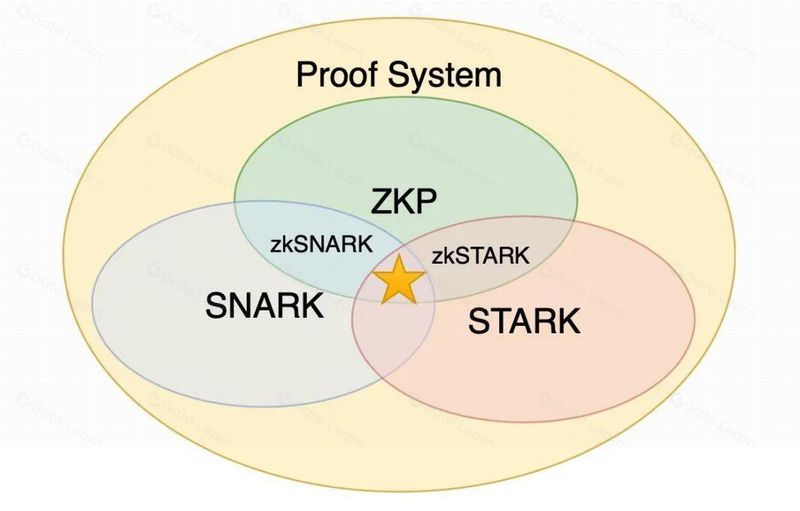
The development of blockchain verification has tended to reflect the growing purpose of decentralized systems. The networks of the early days were constructed so as to be transparent and, by no means, scalable and private. With the increase in more complex applications, both in financial settlements and identity frameworks and encrypted computation verification, the traditional verification mechanisms were simply incapable of keeping up. The load on-chain became heavier, the expenses were rising, and the ability to use it globally started to seem constrained. Recursive ZK Proofs introduced the idea of verification that fundamentally changed the meaning of the word into this landscape.
Recursive proof structures proposed a different form of compression of complexity at a time when blockchain systems were not able to support themselves. Rather than verifying every transaction or computed on a case-by-case basis, recursive systems allow one to verify a proof of a proof, then a proof of a proof, and a chain of infinite verification layers to be constructed. The discovery of fully off-chain activity could be condensed into a single succinct proof that is on-chain. In systems with encrypted computation and Proof Pods and privacy-first architecture such as ZKP, recursion is not merely a cosmetic quality of the system, but a fundamental underpinning of scalable confidentiality.
Recursive verification is no longer an ideology. It has turned out to be the mechanism of satisfying the needs of the contemporary data, AI and privacy applications, by the blockchain networks. Recursion also ensures that the network can check huge datasets, AI workloads, identity flows and transaction bundles without overloading the base layer. This is the very thing that makes the infinite seem finite which explains why recursion is among the most significant inventions in the world of cryptography.
The importance of Recursive ZK Proofs
The essence of Recursive ZK Proofs is that they are able to address computational complexity in a graceful way. Rather than obliging validators to carry out each operation directly, recursive systems enable them to check a small, succinct proof that will guarantee them the correctness of all the underlying computations. This is a paradigm shift in the architecture of blockchains, one of the most significant changes in the architecture is the use of verification as the basis of trust.
Practically, recursion changes the scaling of blockchains. Conventional networks scale linearly: the larger the user base, the larger the number of transactions, the larger the amount of data, and the larger the computing requirements. However, when using recursion this model is non-linear. Millions of transactions of potentially complex operations can be aggregated, proven, and recursively verified, with one on-chain proof. This significantly decreases the load on the base layer, allowing larger ecosystems to operate at high throughput without any compromise in the areas of decentralization or security.
The privacy-first design of the ecosystem of ZKP is compatible with recursion. Since Proof Pods are dealing with encrypted computation and verifiable AI processing, recursive proofs allow boosting to make sure that every such computation, regardless of its complexity, can be proven. As the outcome of one encrypted calculation is involved in a subsequent calculation, recursive verification is performed to verify integrity of that complete chain. This is important because sensitive data is redirected on identity checks, AI inference processes or controlled operations without showing any raw data on the network.
Recursion also contributes to long-term sustainability of blockchain. Recursive proof systems have lightweight verification requirements despite higher demand, in contrast to the demand-increasing methods of increasing block size or the workload of the validators. They transform the economic equilibrium of network operation towards efficiency, so that it is an equitable, affordable and scalable model to be used globally. This applies particularly to cross-industry applications where organizations are dependent on confidential operations: finance, supply chain, healthcare, AI, and government infrastructure all are beneficiaries of the world where proofs not raw data run verification logic.
Recursive Structures
When zero-knowledge technology was implemented into the networks, initial demonstrations addressed the privacy issue and not the scalability issue. The amount of resources required to generate proofs was large, and even the process of proving a large number of independent proofs was demanding on the blockchain itself. Recursive ZK Proofs created the breakthrough that this bottleneck was solved by allowing the stacking, layering, and compression of proofs.
In the case of privacy-driven ecosystems like ZKP, this implies that encrypted computation is quite secure, not to mention scalable. Proof Pods have the ability to implement confidential AI models, identity processes, and classification of data without ever exposing raw data. Every calculation generates its own demonstration, which is in turn folded up into larger recursive chains. This forms a system under which thousands of personal computations in the network can be certified by a single on-chain proof.
The other implication that is more powerful in recursion is that it is capable of supporting more complex rollup architectures. ZK Rollups already have cost-effective scaling, which checks transactions in batches. These rollups are exponentially more efficient when used along with recursion. Recursive compression of multiple rollups can create single proofs, which allow a global scale of transactions across connected ecosystems. This type of design that is a rollup of rollups has also been called fractal scaling, and it is the future of blockchain networks where they are modular, interoperable, and infinitely scalable.
What the Recursive Verification of Digital Trust Systems
With the global economy going digital, all industries encounter the same issues: how to authenticate information, keep privacy, guarantee compliance, and expand the infrastructure without exerting unnecessary strain on the systems. Recursive ZK Proofs provide a system that all these requirements are met at once. Rather than being supported by institutional trust, or centralized databases, the systems may be supported by cryptographic truth. Recursion allows making this truth lightweight, portable and cross-border and industry-wide.
Recursion is going to play an important role in the next generation of blockchain applications. Cross-chain communication, decentralized identity, AI verification, encrypted computation and multi-layer financial networks all demand scalable proof systems that can process complex and interconnected data flows. This is made possible by recursion to unify these systems under a verification-first model in which one can mathematically enforce trust.
In the case of the privacy-first digital ecosystem of ZKP, recursion will be defining. The demand in scalable verification increases as more users utilize Proof Pods, ZKP Coin and privacy-driven computation environments. The recursive structures are in place so that although the encrypted computation grows exponentially, still, the blockchain underneath it has become efficient. One can envision a world in which millions of personal transactions take place per second all authenticated by a stacked up chain of short cryptographic verifications.
Conclusion
Recursive ZK Proofs are not only one of the biggest leaps in cryptographic scalability and blockchain architecture. By enabling proofs of proofs, recursion makes it possible to compress unlimited computation, complex workflows, and interconnected systems into succinct, verifiable artifacts. This not only increases network capacity but also preserves privacy, efficiency, and decentralization in environments demanding high integrity.
In a world where complexity grows daily, recursion brings order to chaos. It allows blockchain networks to scale infinitely while maintaining the mathematical guarantees that define decentralized trust. And as more industries adopt cryptographic security, recursive zero-knowledge technology will continue shaping the future of secure, scalable digital infrastructure.





Top comments (0)