

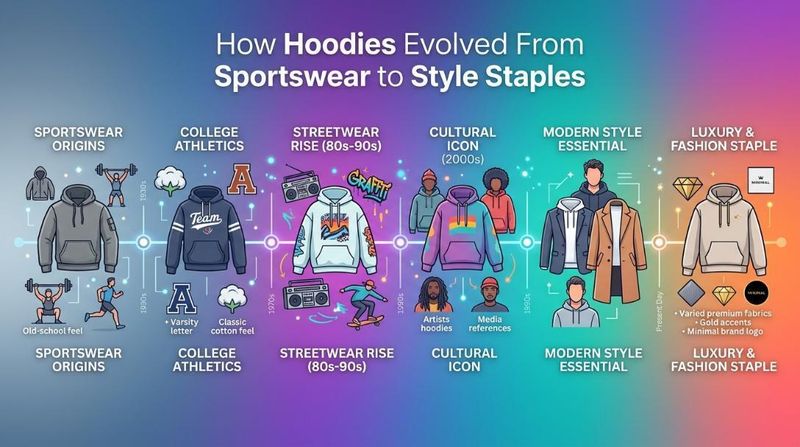
The basic design hasn't changed much. A soft sweatshirt gains a hood, a roomy pocket, and sometimes a zipper. Yet hoodies have carried very different meanings across generations. They have represented team spirit, youth culture, privacy, rebellion, comfort, celebrity influence, and luxury fashion.
That flexibility explains why hoodies no longer belong to one age group or style community. People wear them for early morning workouts, weekend errands, long flights, casual offices, concerts, and relaxed evenings at home. Designers may adjust the cut, fabric, color, or graphics, but the familiar shape remains easy to recognize.
The story of hoodies is really a story about changing lifestyles. As clothing became less formal and personal style became more important, a piece created for physical activity found a permanent place in mainstream fashion.
The practical beginning of the modern hoodie
The modern hoodie developed in the United States during the 1930s. Sportswear manufacturers were producing thick cotton sweatshirts for athletes who needed warmth between training sessions. Adding a hood offered extra protection without requiring a separate hat or jacket.
Workers also found the design useful. Warehouse employees, delivery crews, and people working outdoors could pull the hood over their heads when temperatures dropped. Early hoodies were not intended as fashion statements. They were durable layers made for movement, warmth, and repeated wear.
That practical background still shapes the garment. Ribbed cuffs keep sleeves in place. Fleece interiors hold warmth. Kangaroo pockets give the hands somewhere to rest, while drawstrings allow the wearer to adjust the opening around the face. These details were useful decades before they became familiar style features.
Sports teams soon recognized another benefit. Hoodies could display school names, mascots, and team colors. Players wore them during practice, and supporters wore them to show loyalty. A simple training top began developing an identity beyond the gym.
College campuses made hoodies everyday clothing
College sports helped move hoodies into daily life. Student athletes already wore them for training, but other students started buying the same designs from campus stores. A sweatshirt printed with a university name offered warmth while also communicating membership and pride.
The relaxed atmosphere of campus life suited the garment. Students needed clothing that could handle walks between classes, evenings in libraries, sporting events, and weekends away from home. Hoodies worked in all of those settings without demanding much thought.
They also became personal keepsakes. Graduates kept old university hoodies for years because the clothing carried memories rather than seasonal fashion value. That emotional connection remains part of their appeal. A worn hoodie can remind someone of a school, team, trip, relationship, or period of life.
Modern designs often build on that same sense of connection. A piece such as the sincerely yours hoodie uses recognizable wording and visual references to give the garment a specific identity. The buyer isn't choosing only a warm layer. The design links the clothing to a story or cultural moment.
Film gave the hoodie a new kind of visibility
Movies helped audiences see hoodies differently. Athletic characters wore them while running, boxing, or preparing for competition. On screen, the garment communicated focus and effort because it looked practical rather than polished.
The training scenes in the 1976 film Rocky are often connected with this shift. Rocky Balboa's plain grey sweatshirt looked believable because it wasn't glamorous. It matched the character's working-class background and disciplined routine. Viewers began associating the garment with determination as much as comfort.
That image proved powerful. A hoodie could make a character appear private, serious, or mentally prepared. Pulling up the hood created an instant visual boundary between the wearer and the surrounding world.
Film did not invent those meanings, but it introduced them to wider audiences. The hoodie was no longer limited to sports teams and college bookstores. It could help tell a story before a character spoke.
Hip-hop and street culture changed the garment's meaning
During the 1970s and 1980s, hoodies became closely tied to hip-hop culture in New York. DJs, breakdancers, graffiti artists, and young people in city neighborhoods wore clothing that allowed free movement and worked in public spaces. Sweatshirts, sneakers, tracksuits, caps, and jackets formed a practical street wardrobe.
The hood had a particular advantage. It offered warmth and a degree of privacy without restricting movement. Graffiti artists could use it to avoid recognition, while dancers could practice comfortably outdoors or in informal venues.
Rappers later brought the look into performances, album photography, and music videos. Fans copied what they saw. Logos grew larger, colors became bolder, and athletic clothing became a way to communicate neighborhood ties, musical taste, and confidence.
The same period saw skate communities adopt hoodies for equally practical reasons. Skaters wanted clothing that could survive falls, changing weather, and long hours outside. Loose cuts allowed movement, while heavier fabrics provided some protection against rough surfaces.
These communities didn't treat hoodies as temporary trends. They made the garment part of their visual language. That cultural credibility would later attract mainstream brands, although the influence began on streets, playgrounds, music stages, and skate spots rather than in corporate design rooms.
Graphics turned hoodies into wearable identity
Once hoodies became established in youth culture, the front and back of the garment started functioning like a canvas. Brand names, record labels, sports logos, political messages, illustrations, and local references could all be printed on the fabric.
A T-shirt offered similar possibilities, but hoodies had more visual weight. Their thicker construction and larger shape made bold graphics feel substantial. People also wore them for more months of the year, giving a design greater visibility.
Motorsport and action-sports branding benefited from this connection. The monster energy hoodie, for example, fits naturally into a style shaped by racing graphics, sponsor logos, dark colors, and high-energy sports culture. The attraction comes from the world associated with the image as much as the garment itself.
Graphic hoodies allow wearers to communicate without explaining themselves. A logo can identify a favorite team. An album reference can start a conversation. A fictional design can connect strangers who recognize the same film or television series.
This made hoodies especially valuable in streetwear, where clothing often signals community knowledge. The right graphic may mean little to a casual observer, but it can carry a precise message for people who understand the reference.
Streetwear brands made scarcity part of the appeal
Streetwear labels changed how hoodies were released and purchased. Instead of keeping every style available throughout the year, many brands introduced small seasonal drops. Limited quantities created urgency, and popular pieces sometimes sold out within minutes.
The hoodie was perfect for this sales model. It offered enough space for distinctive graphics, yet its familiar shape made online purchasing relatively simple. Buyers already understood how the garment would feel and fit. The design supplied the reason to choose one release over another.
Scarcity also created a resale market. Certain hoodies began trading for far more than their original retail prices because collectors wanted specific colors, years, collaborations, or logo placements. Ownership became a sign that someone had followed the brand closely or managed to secure a difficult release.
This changed consumer expectations. People no longer saw all hoodies as interchangeable basics. Fabric weight, stitching, print quality, brand history, fit, and rarity could affect both price and desirability.
Luxury fashion brought hoodies onto the runway
By the 2000s and 2010s, the border between streetwear and luxury fashion had started to weaken. High-end designers looked to sports clothing, music scenes, and youth culture for ideas. Hoodies appeared in expensive collections made with premium cotton, unusual proportions, embroidery, and carefully developed washes.
The change surprised shoppers who remembered when sweatshirts were considered too casual for fashionable spaces. Yet it matched the way people were already dressing. Sneakers had entered offices and restaurants. Tailored trousers were being paired with T-shirts. Formal rules were losing their grip.
Luxury labels didn't make hoodies fashionable on their own. They recognized value that athletes, students, musicians, and streetwear communities had already established. The runway added prestige and higher prices, but the garment's cultural authority came from decades of everyday use.
Designer collaborations accelerated the shift. A familiar sportswear company could work with a fashion house, artist, musician, or entertainment franchise. The resulting hoodie combined several audiences in one product and often arrived with limited availability.
Athleisure made comfort acceptable almost everywhere
Athleisure pushed hoodies even further into mainstream wardrobes. People began wearing performance-inspired clothing outside gyms because daily routines demanded flexibility. Someone might work from home, meet friends, travel across town, and stop at a store without changing clothes.
Matching sets became especially popular. A coordinated hoodie and pair of joggers looked more intentional than an old sweatshirt worn with random lounge pants. Slimmer cuts, technical fabrics, zip pockets, and cleaner color schemes helped sportswear feel suitable for public settings.
That interest also explains the appeal of pieces connected with recognizable tracksuit styling, such as maduro nike tech. Tech-fleece looks combine the comfort people expect from sportswear with a structured silhouette that feels sharper than traditional sweat clothing.
The change wasn't only visual. Workplaces became more casual, travel clothing became a major fashion category, and social media exposed shoppers to celebrity off-duty outfits. Hoodies benefited from all three shifts.
Fit now matters as much as the logo
Early hoodies were mainly judged by warmth and durability. Modern shoppers also pay close attention to shape. An oversized hoodie creates a relaxed streetwear look, while a fitted zip-up works well as a light layer. Cropped cuts change the proportions of an outfit, and heavyweight designs hold a boxier shape.
Shoulder construction can alter the whole appearance. Dropped shoulders feel casual. Set-in sleeves look cleaner. A large hood adds volume around the neckline, while a smaller hood sits more discreetly beneath a coat.
Fabric weight makes a visible difference too. Lightweight cotton works for cool evenings and indoor layering. Thick fleece feels substantial and holds its structure. Washed fabric can create a broken-in appearance from the first wear.
These choices show how far hoodies have moved from their uniform beginnings. Two garments may share the same basic parts while producing completely different outfits.
How people style hoodies now
The easiest approach still works: jeans, sneakers, and a simple pullover. But hoodies now appear in combinations that would once have seemed unusual.
A plain design can sit under a wool overcoat, bringing a casual edge to tailored clothing. A zip-up can replace a light jacket in spring. An oversized style works with cargo pants or wide-leg denim, while a neat, neutral hoodie can soften the formality of trousers and leather shoes.
Color affects the mood. Grey, navy, black, and cream are easy to layer because they don't compete with the rest of an outfit. Bright colors and large graphics make the hoodie the main feature. Vintage washes create a softer, worn appearance that suits relaxed denim and retro sneakers.
The best outfit usually respects the shape of the garment. A bulky hoodie needs enough room beneath a jacket. A long hem changes how the upper body relates to the trousers. Small decisions about proportion make the difference between looking comfortable and looking careless.
Why hoodies have lasted
Fashion repeatedly returns to clothing that solves a clear problem. Hoodies keep the wearer warm, allow movement, provide useful storage, and require little maintenance. Those advantages matter even when trends change.
The garment also adapts without losing its identity. A designer can remove the drawstrings, add a zipper, shorten the body, enlarge the sleeves, change the fabric, or cover the surface with artwork. People will still recognize it immediately.
There is an emotional reason too. Hoodies feel private. Pulling up the hood can create a small sense of separation in a crowded airport, on a cold walk, or during a difficult day. Few fashion pieces offer that combination of physical comfort and psychological familiarity.
Most importantly, hoodies don't demand a particular kind of wearer. Athletes, musicians, students, office workers, actors, and parents have all made them part of daily life. The garment survives because each group can use it differently.
From training layer to permanent style staple
The hoodie didn't leave sportswear behind. It carried that practical foundation into every new setting it entered. College culture added identity. Film added visual drama. Hip-hop and skateboarding gave it cultural authority. Streetwear introduced collectability, while luxury fashion experimented with materials, shape, and price.
Through all those changes, hoodies remained comfortable and familiar. That combination is difficult for fashion to replace. Trends may alter the preferred fit or graphic, but the basic garment continues to work.
A style staple earns its place through repeated use, not a single famous appearance. The hoodie has spent nearly a century proving that practical clothing can gather new meanings without giving up the qualities that made people wear it in the first place.
Frequently asked questions
When did modern hoodies first appear?
Modern hooded sweatshirts appeared in the United States during the 1930s. They were created as warm, practical layers for athletes and workers who spent time in cold conditions.
How did hoodies become connected with hip-hop?
Young people involved in New York hip-hop culture wore hoodies because they were affordable, comfortable, and suitable for dancing or spending time outdoors. Rappers later brought the style into performances, photographs, and music videos, which helped it reach a global audience.
Why are some hoodies so expensive?
Price can reflect fabric quality, construction, limited production, licensing, designer involvement, or brand demand. Rare streetwear releases may also become more expensive in the resale market after selling out.
Can hoodies be worn with smart clothing?
Yes. A plain, well-fitting hoodie can work beneath an overcoat or structured jacket. Neutral colors and minimal graphics usually pair more easily with tailored trousers, leather footwear, and cleaner outerwear.
What makes a hoodie suitable for everyday wear?
Look for comfortable fabric, secure stitching, a hood that holds its shape, and a fit that works with the rest of your wardrobe. Midweight cotton or fleece often provides the best balance between warmth and easy layering.
Find a hoodie that reflects your style
Hoodies have moved through sports, music, film, streetwear, and luxury fashion without losing their everyday usefulness. Jackets Junction brings together designs inspired by the personalities, teams, entertainment, and cultural moments people recognize. Browse the latest collection and choose a hoodie that adds comfort, character, and a clear point of view to your wardrobe.







Top comments (0)