

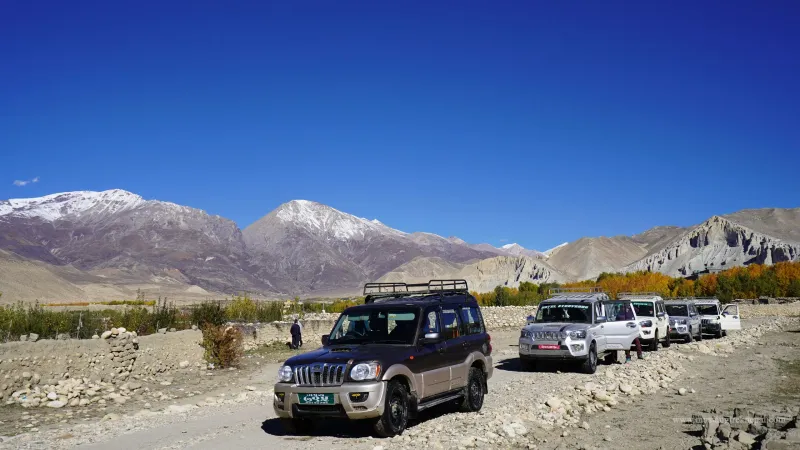
Tashi Delek. That is how locals greet you here, and it is a warm start to a place that feels like it slipped out of time. Tucked behind the great Himalayan wall in northern Nepal, Upper Mustang Nepal sits right beside the Tibetan plateau. The land is dry and golden. The sky is huge and very blue. The air is thin, clean, and quiet. Few places on earth leave such a deep mark on a traveler in so few days.
Why They Call It the Forbidden Kingdom
For many years, outsiders were not allowed to enter this region at all. The gates only opened in 1992. That long silence kept the old ways alive. Homes are still built from mud and stone. Prayer flags snap in the wind above every ridge. Monks still chant in dim halls that smell of butter lamps. The wall of mountains blocks most rain, so the valley stays dry and the views stay clear. When you arrive, you do not simply visit a place. You step into a story that is still being told.
A Walled City That Time Forgot
The heart of the region is Lo Manthang. A tall earthen wall circles the town, and inside it narrow lanes twist between whitewashed houses. Horses stand in doorways. Women spin wool in the sun. Children chase each other past red monastery gates. The place is small, yet every corner holds something worth a slow look. The royal palace rises above the lanes, plain and proud. Nearby, ancient temples guard wall paintings that are hundreds of years old. The colors are still bright. Painted faces stare down at you, calm and fierce at once. Take your time here. Rushing would waste it.
Where Tibet Lives On in Nepal
Though the border lies only a few days away on foot, the culture here is deeply Tibetan. People speak a Tibetan dialect and follow the Buddhist faith in everyday life. Long walls of carved prayer stones, called mani walls, stretch along the trails. Locals always pass them on the left, a small habit that shows how belief shapes each step. Art is everywhere too. Thangka paintings, carved wooden doors, and clay statues fill even the smallest chapels. Festivals add more color. Dancers in bright masks fill the courtyard, long horns groan, and the whole valley gathers to watch. If your dates match, you will remember it for years.
Caves, Cliffs, and Quiet Mysteries
The cliffs here are full of holes. Some are plain shelters. Others were homes, shrines, or burial places carved by hands long gone. Entire cave villages hang high on the rock, reached by rough ladders and sheer nerve. Nobody can say for sure how old many of them are. Some held ancient paintings and old scrolls that were found only recently. Guides will gladly share local tales, and each villager seems to know a different version. That puzzle is part of the charm. You stand at a cave mouth, look across the wind-carved canyon, and wonder who stood in this exact spot before you.
A Journey That Changes You
Every day brings something fresh. One morning you cross a riverbed of grey stones. By afternoon you are sipping hot tea in a village with apple trees. The next day brings red cliffs that glow at sunset. A Mustang trek is never about speed. It is about letting the land slowly change your mood. You stop checking your phone. You start noticing small things, like the sound of bells on a mule or the smell of juniper smoke. Evenings are simple. You share a warm room, trade stories, and fall asleep early. Modern life has touched this place only lightly. That is its gift, and also our duty. Walk gently, buy from local shops, ask before taking photos, and leave nothing behind. If you want to meet the kingdom of Lo with your own eyes, book an Upper Mustang tour and let the trail do the talking.




Top comments (0)