
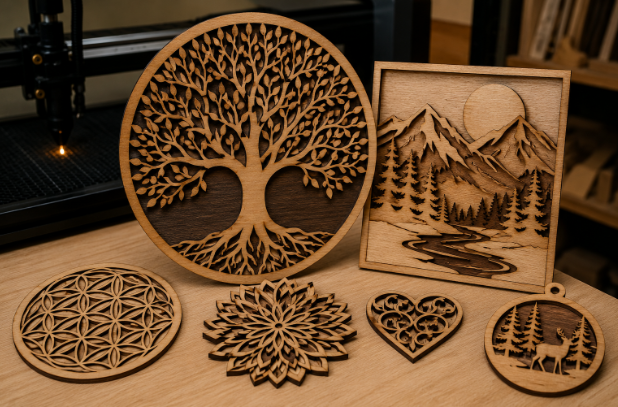

Woodworking has evolved significantly with the introduction of digital fabrication technologies, allowing artists, hobbyists, and professional makers to create highly detailed decorative pieces with exceptional precision. Among these innovations, laser cut wood art has become one of the fastest-growing creative trends, combining traditional craftsmanship with modern technology to produce intricate home décor, personalized gifts, wall decorations, and custom signage.
The growing popularity of laser cut wood art comes from its ability to create complex patterns, clean edges, and repeatable designs that would be difficult to achieve using conventional woodworking tools. Laser cutting uses a focused beam to cut, engrave, or score wood without direct contact, making it possible to produce highly detailed artwork with minimal material waste. Whether creating decorative wall panels, ornaments, or personalized keepsakes, this technique offers nearly endless design possibilities.
What Is Laser Cut Wood Art?
Laser cut wood art refers to decorative or functional wooden pieces created using computer-controlled laser cutting technology. The laser follows digital vector designs to produce precise cuts, engravings, or surface markings on various wood materials.
Common applications include:
- Wall décor
- Personalized signs
- Home decorations
- Holiday ornaments
- Wooden maps
- Custom gifts
- Decorative panels
- Business signage
Its precision allows creators to produce intricate details while maintaining consistent quality across multiple pieces.
Why Laser Cut Wood Art Is So Popular
Several factors have contributed to the growing demand for laser cut wood art.
Exceptional Precision
Laser cutting produces highly accurate details that are difficult to achieve with manual tools.
Endless Design Possibilities
Digital files allow artists to create geometric patterns, floral designs, typography, landscapes, and customized artwork.
Minimal Material Waste
The narrow laser beam creates clean cuts while reducing unnecessary material loss.
Repeatable Results
Digital production enables identical copies without sacrificing quality, making it ideal for commercial production and personalized gifts.
Best Wood Materials for Laser Cutting
Selecting the right material plays an important role in producing high-quality laser cut wood art.
Popular choices include:
Baltic Birch Plywood
Known for its smooth finish, durability, and consistent cutting performance.
MDF
Provides a smooth surface that works well for painting and decorative applications.
Veneer Plywood
Offers attractive wood grain while remaining suitable for intricate cutting.
Hardwood
Premium hardwoods provide elegant finishes but often require careful machine settings due to their density.
Popular Applications
The versatility of laser cut wood art allows creators to produce a wide variety of decorative products.
Some popular applications include:
- Personalized name signs
- Family wall décor
- Wedding decorations
- Nursery artwork
- Holiday ornaments
- Wooden clocks
- Business logos
- Decorative wall panels
Many artists also combine engraving and cutting techniques to create unique visual effects.
Design Tips for Better Results
Creating professional-quality laser cut wood art involves thoughtful planning during the design stage.
Helpful recommendations include:
- Use vector-based design software.
- Keep cut and engraving layers separate.
- Measure actual material thickness.
- Include alignment marks for multi-layer projects.
- Test designs before large production runs.
- Optimize spacing between intricate details.
Advantages Over Traditional Woodworking
Laser cutting offers several benefits compared to conventional woodworking methods.
Cleaner Edges
The focused laser creates precise cuts with minimal finishing required.
Faster Production
Digital automation speeds up production while maintaining consistent quality.
Complex Patterns
Intricate geometric and decorative designs can be produced with remarkable accuracy.
Easy Customization
Personalized names, logos, and artwork can be added without requiring additional tooling.
Current Trends in Laser Woodworking
Creative woodworking continues evolving as technology advances.
Current trends include:
- Personalized home décor
- Nature-inspired wall art
- Geometric designs
- Wooden maps
- Custom business signage
- Multi-layer decorative projects
- Sustainable wood materials
These trends continue expanding opportunities for both hobbyists and professional makers seeking creative woodworking solutions.
Tips for Beginners
If you're interested in creating laser cut wood art, consider these best practices:
- Start with simple designs.
- Use high-quality plywood or MDF.
- Test machine settings before final production.
- Keep laser lenses clean.
- Ensure proper ventilation during cutting.
- Practice engraving before attempting intricate cuts.
Developing proper techniques early helps improve both safety and finished project quality.
Conclusion
Laser cut wood art combines creativity with precision, allowing makers to produce detailed, customized wooden pieces for home décor, gifts, business branding, and artistic expression. With the right materials, thoughtful design, and proper cutting techniques, creators can achieve professional-quality results while exploring endless design possibilities. For makers looking to add greater depth and dimension to their projects, layered wood art offers an excellent way to create visually striking designs with a unique three-dimensional appearance. As laser technology continues to advance, this innovative form of woodworking is expected to remain a popular choice for artists and craftspeople alike.






Top comments (0)