
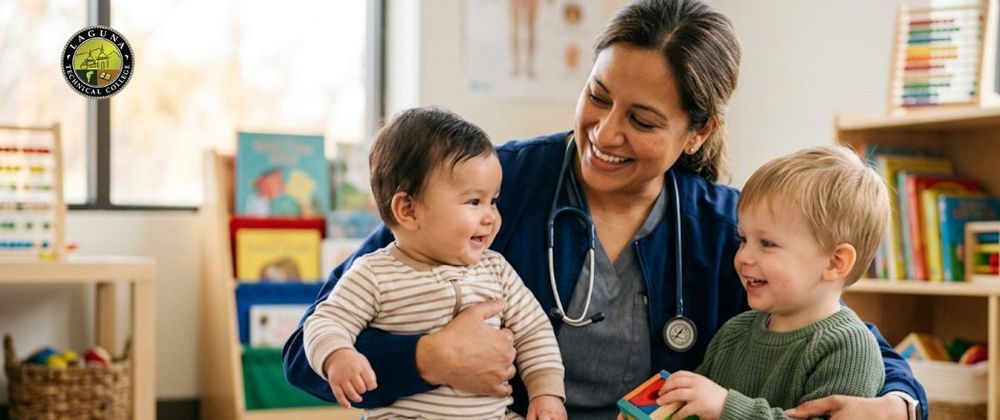

The first three years of a child's life are filled with remarkable changes. Infants begin developing sensory awareness, forming emotional connections, recognizing familiar voices, and exploring their surroundings. As they grow into toddlers, they gradually develop communication skills, physical coordination, curiosity, and greater independence. Understanding these early developmental stages is essential for anyone who cares for or educates young children.
Early childhood professionals need knowledge of child development, responsive caregiving, early language, safety, and age-appropriate learning activities. Laguna Technical College in Pomona, California, offers an Early Childhood Education course focused on infant and toddler development and care, helping students explore important concepts related to children's earliest years.
Why Infant and Toddler Development Matters
Infants and toddlers experience rapid physical, cognitive, social, and emotional development. Everyday interactions, including feeding, playing, talking, reading, and responding to a child's needs, can create valuable opportunities for learning.
Caregivers who understand early development can better recognize children's changing abilities and respond to their individual needs. For example, an infant may communicate through crying, facial expressions, gestures, or sounds. A toddler may begin using words, imitating adults, exploring objects independently, and interacting more actively with other children.
Responsive caregiving involves observing these behaviors and responding with patience, attention, and encouragement. Establishing predictable routines and providing a safe, nurturing environment can help young children develop trust and confidence.
Understanding developmental differences is equally important. Children do not all reach milestones at precisely the same time. Caregivers should observe children's progress without making unfair comparisons and communicate concerns to families when appropriate.
Important Areas of Infant and Toddler Development
Physical and Motor Development
Physical development includes growth, movement, and coordination. During the first three years, children gradually develop abilities such as holding objects, reaching, crawling, standing, walking, and manipulating toys.
Caregivers can encourage these skills by providing safe spaces for movement and age-appropriate play. Activities should be adapted to each child's abilities, with close supervision and attention to potential hazards.
Language and Communication
Early communication begins long before children speak their first words. Infants listen to voices, respond to sounds, and gradually experiment with vocalizations. Toddlers begin connecting words with people, objects, actions, and experiences.
Talking throughout daily routines, reading picture books, singing songs, and responding to children's attempts to communicate can support language development. These interactions also help children feel heard and understood.
Cognitive Development
Cognitive development involves attention, memory, exploration, and problem-solving. Young children learn by interacting with their surroundings, repeating actions, and discovering how objects work.
Simple activities such as stacking blocks, exploring different textures, playing with safe toys, and looking at picture books can encourage curiosity. Caregivers can support learning by allowing children time to explore while offering guidance when needed.
Social and Emotional Development
Social and emotional development includes forming relationships, expressing feelings, and gradually learning to manage emotions. Warm, consistent interactions help children build relationships with trusted caregivers.
As toddlers become more independent, frustration and emotional outbursts may occur. Calm responses, predictable routines, and age-appropriate choices can help children feel supported as they develop new skills.
Explore an Infant Toddler Development Course Online
Laguna Technical College offers an infant toddler development course online for individuals interested in learning about the development and care of children from birth through age three.
According to the college's published course description, the subject emphasizes early language development, developmental care, and curriculum planning for infant care programs. It also introduces the practical application of child development theories in early childhood settings.
The course is listed as three semester units, with 15 lecture hours and 90 course-completion hours. The published price is $350, and no prerequisites are listed on the course page.
Although the course information is available online, the course page also describes classroom instruction and hands-on experience, including a practicum or externship component. Students should therefore confirm the current delivery format, practical requirements, schedule, and any required health or fingerprint documentation directly with the college before enrolling.
What Students Can Learn From This Course
An infant toddler development course can help learners explore how developmental knowledge informs daily caregiving and educational planning. Understanding children's needs makes it easier to select suitable activities, maintain consistent routines, and create environments that encourage safe exploration.
The course description identifies curriculum planning and early language development as important areas of study. These topics are particularly relevant to caregivers who want to understand how everyday experiences can support children's learning.
Students interested in working with infants and toddlers should also learn about safe caregiving practices, respectful communication with families, and the importance of following applicable childcare policies. Specific workplace requirements may vary, so prospective students should check the expectations associated with their intended role.
Choosing the Right Learning Opportunity
Before enrolling, consider your professional interests, current experience, and future learning goals. The course may be relevant to people entering childcare, current caregivers seeking to strengthen their knowledge, or individuals interested in infant and toddler learning environments.
Review the official course page, school catalog, enrollment information, and current master calendar. Confirm the course schedule, total costs, practical requirements, and documentation provided after successful completion.
Laguna Technical College also advertises a discount of $25 per course for students who enroll in four or more courses at the same time and pay in full. Prospective students should confirm the current terms before registering.
Completing an individual course does not automatically satisfy every employer or licensing requirement. Anyone planning to pursue a childcare position should verify the applicable qualifications with the employer or relevant agency.
Conclusion
Understanding infant and toddler development helps caregivers provide responsive support during the earliest years of life. Knowledge of physical growth, communication, cognitive development, and emotional relationships can guide everyday interactions and encourage meaningful learning experiences.
Laguna Technical College in Pomona, California, offers a course focused on infant and toddler development and care. By reviewing the published course information and confirming current enrollment and practical requirements, prospective students can make an informed decision about whether this learning opportunity aligns with their goals in early childhood education.







Top comments (0)