

A successful real estate development website does far more than display properties and project photographs. It acts as the digital face of a developer, introduces projects to potential buyers, builds confidence, and turns website visitors into genuine enquiries. In competitive markets such as Dubai and the wider UAE, buyers often compare several developments before making contact. A professional website therefore needs to make information easy to find, projects easy to understand, and enquiries easy to submit. The strongest real estate development websites combine attractive design with useful information, fast performance, mobile accessibility, strong calls to action, and a clear understanding of what buyers need at every stage of their decision-making process.
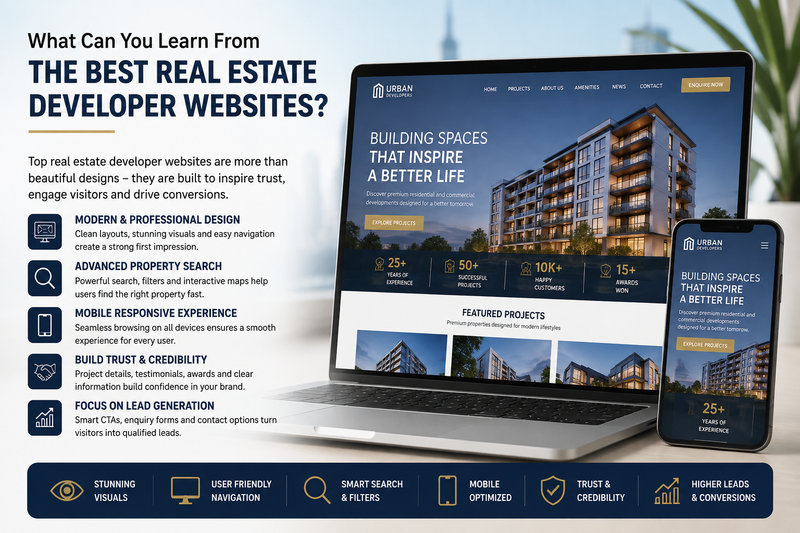
1. Professional and Modern Website Design
First impressions matter greatly in real estate. A development website should immediately communicate quality, reliability, and the character of the brand. Clean layouts, high-quality property photography, carefully selected typography, spacious sections, and consistent branding can create a polished experience without making the website difficult to navigate. The design should also reflect the type of development being promoted. A luxury waterfront project may require a sophisticated visual approach, while a family-focused residential community may benefit from a warmer and more approachable presentation. Good design is not simply about appearance; it should guide visitors naturally from the project introduction to property details and, ultimately, an enquiry.
2. Clear Project Information
Potential buyers should not have to search through several pages to understand a development. Successful websites provide essential information in a clear and organised format. This can include the project's location, property types, unit sizes, prices or starting prices where appropriate, available amenities, completion information, payment plans, developer details, and key project advantages. Well-structured information allows visitors to quickly determine whether a development matches their requirements. Instead of filling pages with unnecessary promotional language, developers should focus on practical information that helps buyers make informed decisions.
3. High-Quality Property Photography and Video
Real estate is highly visual, making photography and video essential website features. Professional images can showcase architecture, interiors, landscaping, amenities, views, and surrounding areas far more effectively than long descriptions. Video tours can provide an even stronger sense of the development, particularly when a project is still under construction. Drone footage, walkthrough videos, construction updates, and lifestyle videos can help visitors understand the scale and atmosphere of a community. When visual content is presented properly, visitors spend more time exploring the website and gain a stronger impression of the project.
4. Easy Property and Unit Search
Developments with multiple buildings, floor plans, or unit types need an efficient way for visitors to explore their options. A useful property search system can allow users to filter apartments, villas, townhouses, or commercial units according to criteria such as bedrooms, size, price range, availability, floor, or property type. Interactive floor plans can also help visitors understand individual layouts. The purpose is to reduce the amount of effort required to find suitable properties. When visitors can quickly narrow down their choices, they are more likely to continue exploring and submit an enquiry.
5. Strong Location and Map Features
Location is one of the most important factors in a property purchase. A real estate development website should therefore explain not only where a project is located but also what surrounds it. An interactive map can highlight nearby schools, shopping centres, business districts, transport links, airports, beaches, attractions, and major roads. Travel-time information can make the location easier to understand. For Dubai developments, showing connections to major areas and landmarks can be particularly useful because buyers may be comparing communities based on accessibility and lifestyle. A clear location section gives visitors valuable context before they contact the sales team.
6. Mobile-Friendly User Experience
Many prospective buyers access real estate websites through smartphones. A website that looks impressive on a desktop but performs poorly on a mobile device can quickly lose potential customers. Responsive design should ensure that images, property details, menus, forms, floor plans, and buttons work properly across different screen sizes. Navigation should remain simple, while important actions such as requesting information or contacting a sales representative should be easy to access. A mobile-friendly website is no longer an optional feature; it is an essential part of a modern property marketing strategy.
7. Fast Loading Speed
Large property images, videos, animations, and interactive features can make real estate websites visually impressive, but they can also slow them down. Visitors are unlikely to wait for a page that takes too long to load. Developers should therefore optimise images, use efficient website technology, minimise unnecessary scripts, and choose reliable hosting. Fast-loading pages provide a smoother browsing experience and can also support better search engine performance. The goal is to create a website that looks premium without sacrificing speed or usability.
8. Powerful Lead Generation Features
The ultimate purpose of many development websites is to generate qualified enquiries. Contact forms should be short, straightforward, and relevant. Instead of asking visitors to provide excessive information, websites can request essential details such as name, phone number, email address, preferred property type, or buying interest. Prominent calls to action such as “Request a Brochure,” “Book a Viewing,” “Register Your Interest,” or “Speak to a Property Advisor” can encourage visitors to take the next step. Live chat and messaging options can provide additional ways for interested buyers to contact the sales team.
9. Detailed Floor Plans and Virtual Tours
Floor plans give buyers a better understanding of how a property is arranged before arranging a viewing. Interactive floor plans can display room sizes, layouts, balconies, entrances, and other important details. Virtual tours can take this experience further by allowing users to explore interiors remotely. These features are particularly useful for international buyers who may not be able to visit the development immediately. By providing more information online, developers can attract better-informed enquiries and make the sales process more efficient.
10. Search Engine Optimisation
An attractive website is of limited value if potential buyers cannot find it through search engines. Real estate development websites should be built with SEO in mind from the beginning. Relevant project, location, property, and service keywords should be incorporated naturally into page titles, headings, descriptions, content, image information, and internal links. Dedicated pages for individual developments, communities, property types, and locations can help capture specific searches. Technical SEO, mobile performance, structured content, and a logical website architecture also contribute to stronger organic visibility.
11. Trust-Building Content
Property purchases involve substantial financial decisions, so trust is a major factor in converting visitors. A successful development website should clearly introduce the developer, highlight relevant experience, showcase completed projects, and provide useful company information. Awards, certifications, media coverage, construction updates, testimonials, and project milestones can further strengthen credibility when they are genuine and verifiable. Buyers want confidence that they are dealing with an established organisation. Providing transparent information helps reduce uncertainty and gives visitors stronger reasons to make contact.
12. Clear Payment Plans and Investment Information
For many buyers, understanding the financial side of a development is just as important as viewing its design. Where appropriate, websites should clearly explain payment structures, booking requirements, instalment schedules, expected completion dates, and other relevant financial information. Investors may also want information about rental potential, community demand, or the project's broader market position. Financial information should be presented clearly and responsibly, avoiding exaggerated promises. Straightforward explanations can help visitors determine whether they should proceed to a consultation with the sales team.
13. Multilingual and International Buyer Support
Dubai's real estate market attracts buyers from many countries, making accessibility particularly important. Depending on the target audience, a development website may benefit from multilingual content and clear international contact options. Currency information, international phone numbers, downloadable brochures, virtual viewing options, and remote consultation features can make the buying process easier for overseas prospects. The website should anticipate the questions international buyers are likely to have and provide useful answers before they need to contact the developer.
14. Analytics and CRM Integration
A modern property website should not operate independently from the sales process. Integrating forms and enquiries with a customer relationship management system allows sales teams to track prospects and respond more efficiently. Analytics can reveal which projects receive the most attention, which pages generate enquiries, where visitors come from, and which marketing campaigns perform best. These insights allow developers to improve their website and marketing decisions based on actual visitor behaviour rather than assumptions.
15. Simple Navigation and Strong User Experience
Even a website with excellent content can fail if visitors cannot find what they need. Navigation should be simple and predictable, with clear categories for projects, properties, locations, about the developer, news, and contact information. Important pages should not be buried beneath unnecessary menus. Search functionality, breadcrumbs, clear buttons, and well-organised content can make large websites easier to explore. Every page should have a logical purpose and guide the visitor toward the next useful action.
Conclusion
The most successful real estate development websites combine visual quality with practical functionality. Professional design attracts attention, while detailed project information, property search tools, floor plans, maps, videos, and virtual tours help visitors evaluate a development. Mobile responsiveness, fast loading, SEO, strong calls to action, and CRM integration support both user experience and lead generation. Most importantly, the website should be built around the needs of potential buyers rather than simply serving as an online brochure. When design, information, technology, trust, and conversion features work together, a real estate development website can become a powerful sales and marketing asset that supports the developer long after a visitor leaves the homepage.







Top comments (0)