
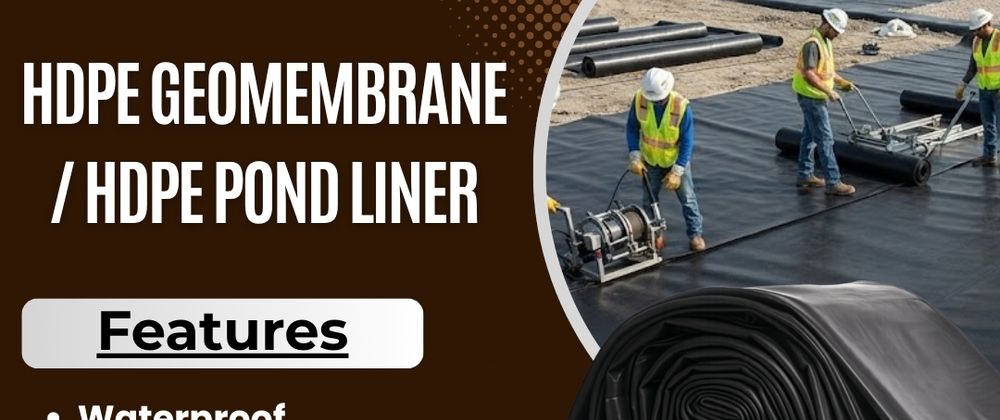

HDPE Pond Liner is a popular material used for the protection of the pond floor from water seepage. The letters HDPE stand for High-Density Polyethylene which is a type of thermoplastic material. It is known for such properties as durability, strength, chemical resistance, low permeability and flexibility. The material is mostly used for covering agricultural ponds, fish ponds, reservoirs, irrigation systems, waste water treatment, water storage for industry, etc. HDPE pond liner's main role is the creation of the reliable barrier between the water that is being kept in the pond and the soil. Without the proper liner, the water can leak into the soil and get lost. Thus, it will lead to additional expenditures. HDPE pond liner comes in different thicknesses, widths, and lengths of rolls in order to provide the material for any project.
Market Availability and Industry Demand
There is a continued increase in the demand for HDPE Pond Liner as agriculture, aquaculture, infrastructure, and industry look for effective means of managing water. India is one country with a huge agricultural sector where water conservation plays an important role in farming. The HDPE Pond Liner Supplier India may be contacted by those companies interested in comparing the product's thickness, quality, dimension of rolls, UV resistance, technical specifications, and delivery information. An ideal purchasing partner needs to be able to provide such information regarding products. Likewise, companies interested in the HDPE Pond Liner Exporter India need to consider issues such as export packaging, international technical specifications, quality certification, shipping, and delivery time.
Properties and Manufacturing Processes
High-density Polyethylene Resin is typically manufactured using special extrusion and film production technology. During the production process, plastic grains are melted in order to become one homogeneous layer. This process is followed by processing the melted resin in special equipment to obtain sheets with certain thickness and surface. Depending on the manufacturing process, the product can have a smooth or textured surface. The quality of material and the manufacturing process are very important when determining the final performance of the product. The main properties include tensile strength, elongation, puncture resistance, tear resistance, and resistance to environmental stress cracking. HDPE material is characterised by low permeability, which makes it useful in situations where leakage of the water should be avoided.
Main Properties and Advantages
There are some properties of HDPE Pond Liner that make it widely used among other materials of water containment. First of all, its good water barrier property helps to decrease the amount of water penetrating through the bottom of the pond and soil. The material is very strong in terms of mechanical characteristics, especially tensile strength and puncture resistance provided that the right type of HDPE Pond Liner is chosen and correctly installed. Another valuable advantage is chemical resistance, which is important in cases of agriculture, industry and wastewater.
Usage in Agricultural and Industrial Applications
HDPE Pond Liner can be used in many agricultural and industrial applications due to its ability to contain water. In agriculture, HDPE Pond Liner can be used in irrigation ponds, farm reservoirs, rainwater harvesting tanks, and storage tanks. Lined ponds in agriculture are used to hold water for irrigation in times of low rains. Fish farming firms also use appropriate HDPE liners in their fish farming ponds due to its controlled surface layering abilities. In industrial settings, HDPE liners can be used in some wastewater treatment plants and effluent storage tanks as well as water containment tanks. Some mining operations might require specific geomembrane liners for use in processing water and containment uses. They are suitable in many environments due to their chemical resistance and low permeability but compatibility needs to be considered.
The right thickness and quality of the product
Choosing the appropriate HDPE Pond Liner calls for an analysis of many technical aspects. Among the key aspects considered when selecting the product, there is thickness that affects the strength, flexibility and abrasion resistance of the liner.The correct thickness is determined by pond depth, soil conditions, requirements for the installation and the type of application. Buyers should pay attention to such characteristics as tensile strength, elongation, puncture resistance, tear resistance and UV stability. Another important aspect is soil preparation. Sharp stones, roots, debris and any other unevenness should be removed from the soil before installation of the product.
Installation, Maintenance and Storage Methods
Proper installation is one of the key factors influencing the performance and longevity of the HDPE Pond Liner. Prior to the installation process, the area of the pond should be excavated and prepared for creating a smooth base. Sharp stones, debris, roots, and any objects that might compromise the integrity of the liner must be removed from the base. The soil must be compacted correctly; and, if required, protective layers can be applied. With the surface being prepared, the liner can be carefully laid over the bottom and sides of the pond. Individual pieces of the liner are welded together using specialized equipment and techniques. The edges of the pond should also be protected by securing the liner properly. After the installation is finished, the inspection and testing can reveal any problems that may arise prior to filling the pond with water.
Conclusion
HDPE Pond Liner is an excellent material for the purpose of water storage, leakage control, and containment in agricultural, aquacultural, constructional, and industrial applications. Its being impermeable, chemically resistant, durable, and available in different thicknesses makes it an ideal choice for all kinds of pond and reservoir lining applications. Some factors need to be taken into account when choosing the right HDPE Pond Liner, such as quality, thickness, tensile strength, tear strength, UV protection, and environmental conditions.Companies searching for a good HDPE Pond Liner Supplier India may look into sturdy and high-quality pond liners for use in water storage, fish rearing, agriculture and irrigation projects.
Frequently Asked Questions (FAQs)
1. What is the use of HDPE Pond Liner?
The major uses of HDPE Pond Liner are for the purpose of lining agricultural ponds, fish farm ponds, irrigation ponds, water storage tanks, wastewater treatment plants, and industries.
2. What thickness is available for HDPE Pond Liner?
Thickness of HDPE Pond Liner varies depending on the availability of the products in the market.
3. Can HDPE Pond Liner be used for fish farming?
Suitable HDPE Pond Liner can be used for the purpose of fish farming in aquaculture ponds. Customers need to make sure that the material is fit for the particular fish farming project.
4. What are the parameters to look out for before buying HDPE Pond Liner?
Thickness, tensile strength, puncture resistance, UV resistance, chemical resistance, and other installation features are some important considerations.
5. Who is the largest exporter of HDPE Pond Liner?
It is not possible to determine any figure by which any company emerges as the biggest exporters of HDPE Pond Liner. Mahira Polyglobal LLP is an India based company offering services of HDPE Pond Liner for agricultural ponds, fish farms, water tanks, irrigation and industries. While selecting the right service provider one needs to consider issues like thickness of the liner, material strength, puncture resistance, UV resistance, chemical resistance, etc.







Top comments (0)