

Key Takeaways
- Identify potential schedule delays before they disrupt projects.
- Forecast budget overruns, material shortages, and equipment problems.
- Improve resource planning using historical and current project data.
- Reduce operational risks without replacing engineering judgment.
- Make better project decisions with reliable predictive analytics solutions.
A concrete delivery arrives late, the crane is unavailable, and the electrical crew cannot begin its scheduled work. By the time the project manager updates the timeline, several teams have already lost productive hours. Construction delays rarely stay limited to one task. They affect budgets, subcontractors, materials, and client commitments.
Most contractors collect plenty of information through project schedules, daily reports, purchase orders, and equipment logs. The problem is turning those records into useful warnings before something goes wrong. A spreadsheet can show that spending has increased, but it may not reveal which activities are most likely to push the project over budget next month.
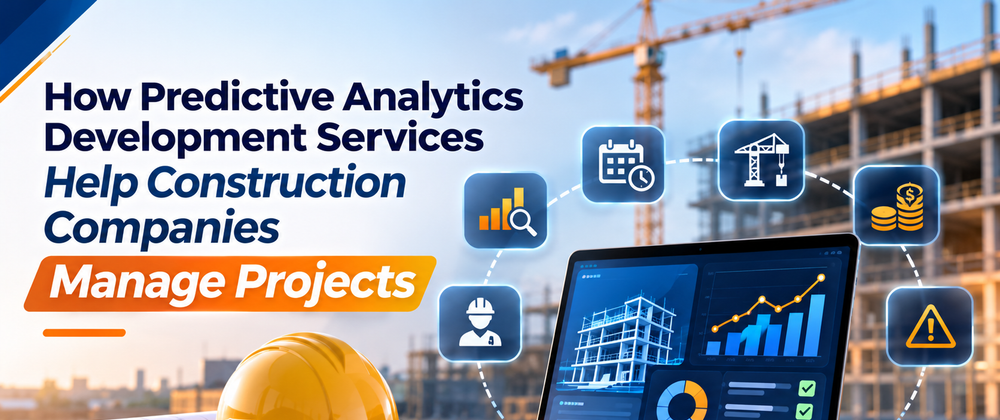
Predictive analytics development services help construction companies examine past and current project information to estimate delays, costs, resource needs, and operational risks. Rather than reacting to every problem after it appears, managers can prepare possible responses earlier.
Working with a predictive analytics development company such as Technoyuga is one way to build these capabilities into existing project software. The real opportunity, however, lies in choosing predictions that help site teams make better everyday decisions.
1. Predictive Analytics Development Services Help Prevent Schedule Delays
Construction schedules depend on work happening in the right order. A late foundation inspection can affect framing, mechanical installation, and finishing activities.
Predictive models can assess previous project durations, task dependencies, weather forecasts, and current progress reports to flag activities at risk of delay.
For example, a contractor might learn that a delayed steel delivery threatens several critical tasks rather than only one installation date.
The project manager can then review alternate delivery arrangements or revise crew assignments.
Predictions cannot guarantee completion dates, but they can support more informed conversations with subcontractors and clients. Accuracy improves when schedules and daily progress records are updated consistently.
2. Forecast Budget Overruns and Cash Flow Problems
A project can appear financially healthy until rising labor hours, change orders, and supplier costs begin to accumulate. Traditional monthly reporting may reveal those changes too late.
With custom predictive analytics development solutions, contractors can compare estimated and actual costs, monitor spending patterns, and forecast the likely cost at completion.
A commercial builder, for instance, might see early signs that repeated overtime is putting the finishing budget at risk.
Cash flow forecasts can also help teams plan supplier payments and expected receipts.
Managers should review the assumptions behind each estimate, especially when contracts or material prices change. Forecasts support financial control; they do not replace accountants or quantity surveyors.
3. Plan Materials and Labor Around Actual Project Needs
Ordering too early ties up cash and storage space. Ordering too late can leave workers waiting at the site. Labor planning presents similar challenges when several teams compete for limited resources.
Predictive analytics can combine the construction schedule with material lead times, crew productivity, and historical usage.
A housing developer might estimate how much drywall will be needed across several buildings over the next four weeks.
Supervisors can use these forecasts to coordinate purchasing and adjust staffing plans.
It is important to account for local supplier constraints, approved designs, and employee availability. A sensible prediction should make planning easier without forcing teams into rigid decisions.
4. Reduce Equipment Downtime with Predictive Maintenance
Unexpected machinery failures can stop work and create costly delays. Maintenance based only on fixed dates may miss warning signs between scheduled inspections.
Where equipment sensors and reliable service records are available, models can look for unusual temperature, vibration, usage, or fault patterns.
A contractor running several excavators could identify a machine that needs attention before a critical earthmoving phase.
Teams can schedule inspections and prepare replacement equipment when needed.
Predictive maintenance still requires qualified technicians and regular safety checks. Its value comes from reducing avoidable surprises, not from assuming a model can diagnose every mechanical fault.
5. Identify Safety and Quality Risks Before They Escalate
Site managers already examine incident reports, inspection findings, and quality records. Predictive analysis can help them spot patterns that are difficult to notice across multiple projects.
For example, repeated defects during a particular installation stage may suggest a need for earlier inspections or additional training.
Historical incident and task data may also point to conditions that require closer safety supervision.
These predictions should guide preventive action, never replace statutory inspections, site-specific risk assessments, or professional judgment.
Workers must not be evaluated unfairly from unreliable scores. Responsible use is particularly important when dealing with safety and employment information.
6. How a Predictive Analytics Development Company Makes Forecasts Useful
A dashboard that predicts delays has little value if the people managing the work never see it.
Project forecasts should connect with scheduling software, procurement systems, or the reports teams already use.
An AI predictive analytics development company can help design alerts that explain the likely issue, its possible impact, and the information behind the forecast.
Start with a limited pilot, such as predicting late material arrivals on one project.
Compare predicted outcomes with actual results and measure whether managers took useful action.
Companies considering predictive analytics consulting services in India should ask about data preparation, integration, ongoing model monitoring, and ownership of project information.
Better predictions only matter when they support better decisions.
Why Choose Technoyuga?
Building reliable forecasts requires more than feeding construction records into an AI model. Project data must be cleaned, relevant variables selected, and predictions tested against real outcomes.
Teams also need a straightforward way to use the results without learning an entirely new workflow.
Technoyuga offers predictive analytics development services, including data preparation, machine learning model development, forecasting dashboards, software integration, and ongoing model monitoring.
Its broader custom software capabilities may be useful for contractors who want forecasts inside existing project management tools.
For example, a company could begin with a delay-risk dashboard that uses schedule changes and purchasing records, then consider cost forecasting once the first model proves useful.
When comparing Technoyuga with another predictive modeling services company in India, ask for a clear project scope, data requirements, security controls, testing methods, and support arrangements.
The right technology partner should explain limitations openly and connect every proposed feature to a practical project management outcome.
Conclusion
Construction projects involve moving parts that rarely follow a perfect plan. Predictive analytics can help managers see schedule pressure, rising costs, material shortages, equipment problems, and possible quality risks before they become harder to manage.
Success depends on reliable records, realistic expectations, and clear responsibility for acting on forecasts.
Start with one project problem, test the predictions against actual results, and involve the people who will use the information. Expand only when the system provides measurable value.
A predictive analytics development company such as Technoyuga can help businesses explore custom forecasting tools and connect them with existing systems.
The best investment is not a complicated dashboard. It is a dependable early warning system that helps construction teams make timely, better-informed decisions.





Top comments (0)