
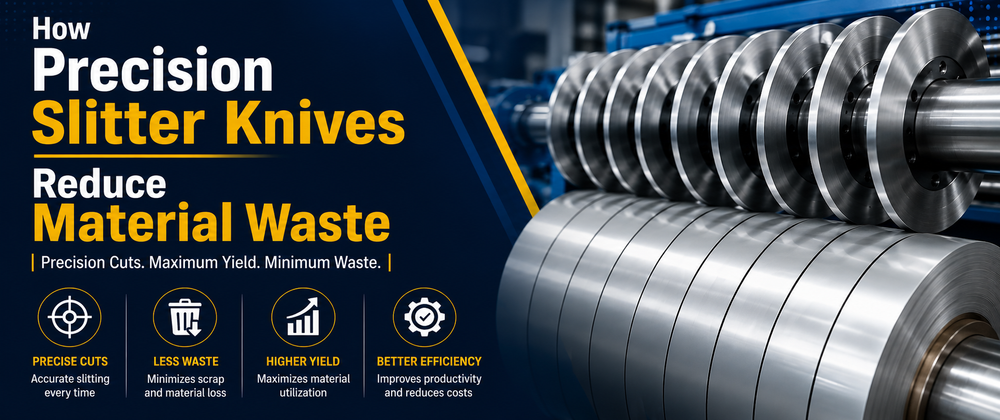

In modern manufacturing industries such as packaging, paper, plastic films, textiles, and metal processing, minimizing material waste is critical for profitability and sustainability. Even small inaccuracies during the cutting or slitting process can result in significant losses over time. This is where precision slitter knives play a vital role. Designed for accuracy, durability, and consistency, these cutting tools help manufacturers achieve clean cuts, improve efficiency, and significantly reduce material waste.
The Importance of Accuracy in Slitting Operations
Slitting is the process of cutting large rolls of material into narrower strips. Whether it’s paper, plastic film, foil, rubber, or metal sheets, the precision of the cut directly affects the quality of the final product. Inaccurate cuts can lead to uneven edges, tearing, fraying, and dimensional inconsistencies. These defects often force manufacturers to discard material, increasing overall waste.
High-quality slitter knives are engineered to maintain tight tolerances and deliver consistent performance. Their sharp edges and balanced design ensure smooth cutting without damaging the material. This precision prevents over-cutting or under-cutting, which are common causes of scrap generation.
Cleaner Cuts Mean Less Scrap
One of the main reasons manufacturers experience waste is due to rough or jagged cuts. Dull or poorly designed blades can crush, tear, or stretch materials instead of slicing them cleanly. This not only affects product quality but also increases rejection rates.
Precision slitter knives are manufactured using high-grade tool steels, carbide, or other advanced materials that retain sharpness for longer periods. The result is a clean, burr-free edge that minimizes trimming losses. When cuts are precise and consistent, there is less need for rework or disposal of defective strips, ultimately reducing material waste.
Improved Blade Longevity and Reduced Downtime
Frequent blade replacement can indirectly contribute to waste. When knives become dull, operators may continue running them slightly longer than optimal to avoid downtime. During this period, cut quality decreases, and more material is wasted.
Precision slitter knives are designed for durability and wear resistance. Their superior metallurgy and heat treatment processes ensure longer service life. This means fewer blade changes and consistent performance throughout production runs. When blades maintain their sharpness, they produce uniform cuts from start to finish, preventing unnecessary material loss.
Additionally, reduced downtime allows operators to focus on maintaining consistent machine settings, further minimizing variations that could lead to waste.
Enhanced Process Control and Consistency
Modern manufacturing environments rely heavily on automation and precision engineering. Even slight deviations in blade alignment or sharpness can disrupt the entire slitting process. Precision slitter knives are engineered to exact specifications, ensuring proper alignment and balance within slitting machines.
This precise fit reduces vibration and ensures even pressure across the cutting surface. When pressure is evenly distributed, materials are cut smoothly without distortion. This level of process control minimizes the chances of wrinkling, stretching, or uneven widths—common issues that lead to rejected materials.
Consistency also helps manufacturers maintain accurate width tolerances, which is especially important in industries such as flexible packaging and metal processing. When each strip meets exact measurements, there is less need for trimming excess material.
Reduced Edge Damage and Material Deformation
In materials like thin plastic films or delicate foils, improper cutting can cause edge damage that spreads across the roll. Once the integrity of the edge is compromised, large portions of material may need to be discarded.
High-quality slitter knives reduce this risk by delivering controlled, clean cuts. Their sharpness minimizes the force required to slice through material, reducing stress and deformation. This is particularly beneficial when working with sensitive materials that require tight quality standards.
By preventing edge cracking, feathering, or burr formation, precision blades ensure that more of the original material is usable.
Lower Setup Errors and Calibration Issues
Another common source of material waste is improper machine setup. If blades are inconsistent in size, balance, or sharpness, operators may struggle to achieve proper calibration. This can lead to repeated test runs and adjustment cycles, wasting raw material before full production even begins.
Precision slitter knives are manufactured with strict dimensional accuracy, ensuring uniformity across batches. This consistency simplifies setup and reduces trial-and-error adjustments. As a result, production can begin faster with fewer rejected samples.
Supporting Sustainable Manufacturing Practices
Reducing material waste is not only beneficial for cost control but also for environmental sustainability. Industries worldwide are focusing on minimizing their carbon footprint and optimizing resource usage. Efficient cutting tools directly contribute to these goals.
By using high-quality slitter knives, manufacturers can maximize material utilization and reduce scrap rates. Less waste means fewer raw materials consumed, lower disposal costs, and improved overall sustainability metrics. In competitive markets, these efficiencies can significantly improve both profitability and brand reputation.
Cost Savings Through Waste Reduction
Material waste directly impacts production costs. Raw materials often represent a large portion of total manufacturing expenses. Even a small percentage reduction in waste can translate into substantial financial savings over time.
Precision slitter knives help companies protect their material investments by ensuring that each roll or sheet is used efficiently. Clean cuts, accurate widths, and reduced rejection rates all contribute to higher yield per batch. Over months or years, these improvements can result in significant cost reductions.
Conclusion
Precision cutting tools are essential for maintaining efficiency and quality in slitting operations. By delivering cleaner cuts, reducing edge damage, improving consistency, and extending blade life, precision slitter knives play a crucial role in minimizing material waste. Their contribution goes beyond simple cutting—they enhance process control, reduce downtime, and support sustainable manufacturing practices.
For manufacturers aiming to improve productivity while controlling costs, investing in high-quality slitter knives is a smart and strategic decision. With reduced scrap rates and improved output quality, businesses can achieve better profitability and long-term operational success.







Top comments (0)