

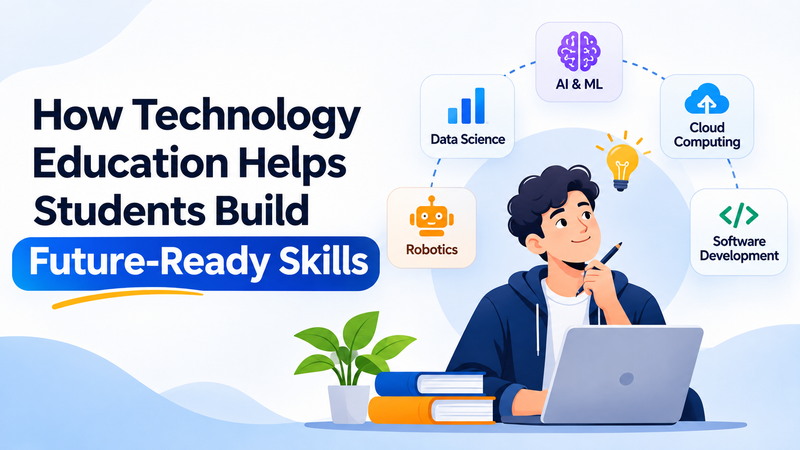
Technology is changing the way people work, communicate and solve problems. From artificial intelligence and cloud computing to data science and robotics, digital technologies are becoming part of many industries. For students, understanding these developments can help them make informed decisions about their education and future careers.
Technology education is not only about learning programming languages or using digital tools. It also involves developing logical thinking, problem-solving abilities, creativity and the confidence to apply knowledge in practical situations.
A well-planned learning journey combines academic foundations, hands-on experience and continuous skill development.
Why Technology Education Matters
Technology-related knowledge is useful across several career areas. Businesses use software to manage operations, analyse information, automate tasks and improve customer experiences. Industries also depend on digital systems for communication, research, production and decision-making.
Students who explore technology during their education can begin understanding how these systems work and where their interests may fit.
Technology education can help students:
- Develop logical and analytical thinking.
- Understand digital tools and modern technologies.
- Improve problem-solving and project development skills.
- Explore different academic and career pathways.
- Build confidence through practical learning.
- Adapt to changing technology and industry requirements.
Explore Different Areas of Technology
Technology includes several specialisations. Students can explore different subjects before deciding which area best matches their interests and strengths.
1. Artificial Intelligence and Machine Learning
Artificial Intelligence focuses on developing systems that perform tasks involving learning, prediction, language and decision-making. Machine Learning is an important area of AI that uses data to identify patterns and generate predictions.
Students can begin by learning Python, mathematics, statistics and basic programming concepts.
Practical learning examples include:
- Creating a simple prediction model.
- Exploring how recommendation systems work.
- Building a basic image classification project.
- Understanding conversational AI applications.
2. Artificial Intelligence and Data Science
Data Science focuses on collecting, organising, analysing and interpreting data. It helps people identify patterns and communicate useful findings.
Students can develop knowledge of spreadsheets, Python, SQL, statistics and data visualisation.
Possible learning activities include:
- Analysing sample business or student datasets.
- Creating charts and dashboards.
- Identifying trends in public datasets.
- Presenting data-based findings.
3. Cloud Computing
Cloud Computing involves accessing computing resources such as servers, storage, databases and software through internet-based services.
Students interested in this area can start with computer networks, operating systems, basic programming and cloud fundamentals.
Practical learning activities include:
- Deploying a simple website.
- Exploring cloud storage.
- Understanding virtual machines.
- Learning how applications are hosted online.
4. Robotics and Artificial Intelligence
Robotics combines mechanical systems, electronics, sensors and programming to develop machines that perform specific tasks.
Students can explore basic electronics, microcontrollers, automation and programming.
Beginner learning activities include:
- Creating a sensor-based project.
- Understanding obstacle detection.
- Building a basic automation prototype.
- Exploring how robots receive and process instructions.
5. Computer Science and Software Development
Computer Science introduces students to programming, algorithms, databases, computer systems and software development.
Students can develop practical skills through activities such as:
- Building a personal website.
- Developing a simple application.
- Creating a database project.
- Learning programming logic and algorithms.
Connect Academic Learning With Practical Projects
Understanding a concept is important, but applying it helps students develop deeper knowledge.
For example, learning about databases becomes more meaningful when students create a small database application. Studying data analysis becomes more practical when they work with a dataset and explain the results.
Students can improve their learning through:
- Mini projects: Start with small tasks that apply one or two concepts.
- Practical exercises: Practise regularly instead of depending only on theory.
- Group activities: Work with classmates to exchange ideas and solve problems.
- Project documentation: Record the tools, methods and results of each project.
- Portfolio development: Organise completed projects to demonstrate learning progress.
Projects do not need to be complicated. A simple project that is completed and clearly explained can provide valuable learning experience.
How to Choose a Suitable Learning Path
Choosing a technology learning path requires more than following a popular trend. Students should consider their interests, academic strengths and long-term goals.
Before selecting a programme, consider these factors:
- Personal interest: Identify the subjects and activities you enjoy.
- Course curriculum: Review the subjects, practical components and learning outcomes.
- Technical foundation: Understand the mathematics, programming or science knowledge required.
- Project opportunities: Check whether the programme includes practical assignments and projects.
- Learning resources: Explore the availability of laboratories, software tools and academic support.
- Career direction: Research the types of roles and further learning opportunities connected to the subject.
Students should compare course structures carefully and check official eligibility and admission details with the relevant institution.
Build Skills Beyond the Syllabus
Academic subjects provide a foundation, but students can strengthen their knowledge through additional learning activities.
Useful skills to develop include:
- Programming and logical reasoning.
- Communication and presentation.
- Research and information evaluation.
- Teamwork and collaboration.
- Problem-solving and critical thinking.
- Time management and independent learning.
Students can also explore online learning resources, technical communities, workshops and project-based activities. Consistent practice is often more useful than trying to learn many technologies at once.
The Role of Continuous Learning
Technology changes over time, so learning should not stop after completing a degree or course. New tools, platforms and methods continue to emerge across different industries.
Students can maintain their knowledge by reading technical articles, practising with new tools, building projects and reviewing developments in their chosen field.
A simple learning routine can include revising one concept, practising a technical skill and making progress on a small project each week.
Explore Technology Learning Opportunities With MH Cognition
Students who want to explore technology-focused academic pathways can review the programmes and learning information available through MH Cognition's Learning Hub.
The learning programmes include areas such as BCA Cloud Computing, BCA AI and Data Science, B.Sc. Computer Science with AI and Machine Learning, B.Sc. Computer Science with AI and Data Science, and B.Tech Robotics and AI.
Explore the relevant programme pages to understand their course information:
- BCA Cloud Computing
- BCA AI and Data Science
- B.Sc. Computer Science AI and ML
- B.Sc. Computer Science AI and Data Science
- B.Tech Robotics and AI
Students should review the latest programme details and confirm admission requirements with the respective institution before making a decision.
Conclusion
Technology education gives students an opportunity to understand modern digital systems, develop practical abilities and explore different career directions. The most effective learning journey combines academic knowledge with hands-on projects, independent practice and continuous improvement.
Start by identifying your interests, exploring relevant subjects and building a strong foundation. With consistent learning and practical experience, students can gradually develop the skills needed to participate in a technology-driven world.
Frequently Asked Questions
1. Why should students learn about modern technology?
Learning about modern technology helps students understand digital systems, develop problem-solving skills and explore different academic and career opportunities.
2. Which technology subjects can students explore?
Students can explore Artificial Intelligence, Machine Learning, Data Science, Cloud Computing, Robotics, Computer Science and Software Development.
3. Is practical learning important in technology education?
Yes. Practical exercises and projects help students apply concepts, understand technical processes and identify areas that need improvement.
4. How can students improve their technical skills?
Students can practise programming, complete small projects, use online learning resources, participate in workshops and document their learning progress.
5. Where can students explore technology-focused degree programmes?
Students can review programme information through university websites and education providers such as the MH Cognition Learning Hub. They should verify the course structure and admission requirements before applying.







Top comments (0)