

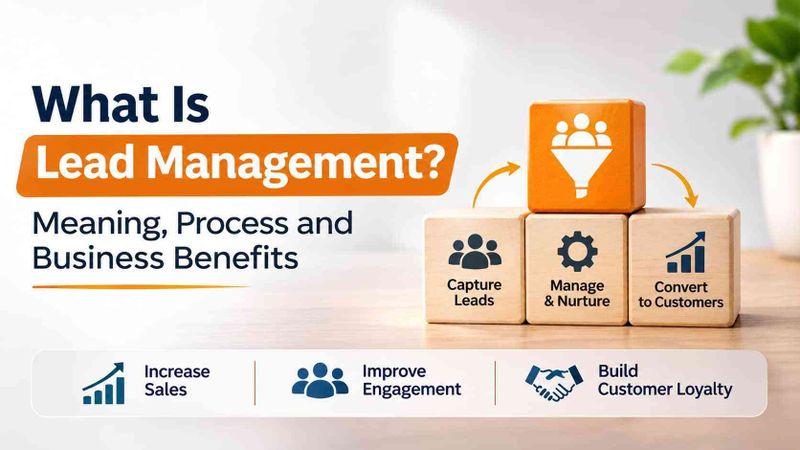
Generating leads is an important part of growing any business. Companies use websites, social media, email campaigns, advertisements, and other marketing channels to attract potential customers. However, generating leads alone does not guarantee business growth. Organizations also need a proper process to track enquiries, understand customer interests, follow up at the right time, and convert potential customers into actual buyers.
This is where lead management becomes important.
Lead management helps businesses organize and manage potential customers throughout their sales journey. It allows sales and marketing teams to understand where leads come from, identify promising opportunities, maintain communication, and improve the overall sales process.
In this guide, we will explore what lead management is, how it works, its important stages, benefits, and how businesses can use CRM systems to manage leads more effectively.
What Is Lead Management?
Lead management is the process of capturing, tracking, organizing, qualifying, nurturing, and converting potential customers into paying customers.
A lead is an individual or business that has shown interest in a company's products or services. For example, someone who fills out a website enquiry form, requests a product demonstration, downloads a brochure, or contacts a business through social media can become a potential lead.
Instead of managing these enquiries manually, businesses can follow a structured lead management process to make sure every potential customer receives the appropriate attention.
A proper system also helps sales teams understand customer requirements and decide which leads need immediate follow-up.
Why Is Lead Management Important for Businesses?
Businesses may generate hundreds of enquiries through different marketing channels. Without a proper tracking process, some enquiries may be missed, delayed, or forgotten.
An effective lead management approach helps businesses handle these opportunities more systematically.
1. Better Lead Organization
Lead management keeps customer information organized in one place. Sales teams can access contact details, enquiry sources, communication history, and follow-up activities without searching through multiple spreadsheets or messages.
2. Faster Customer Follow-Up
Responding to enquiries at the right time can help businesses maintain customer interest. A structured process makes it easier to assign leads to sales representatives and track pending follow-ups.
3. Improved Lead Qualification
Not every enquiry represents an immediate sales opportunity. Some people are researching products, while others are ready to make a purchase.
Lead qualification helps businesses understand customer requirements, interest levels, and purchase readiness.
4. Better Sales Team Productivity
When leads are properly assigned and prioritized, sales representatives can spend more time communicating with relevant prospects instead of managing scattered records.
5. Improved Customer Relationships
Consistent communication helps businesses understand customer expectations and build stronger relationships throughout the buying journey.
How Does the Lead Management Process Work?
A structured lead management process generally includes the following stages.
Step 1: Lead Generation
The first stage is attracting potential customers through different marketing and sales activities.
Common lead generation channels include:
- Company websites and enquiry forms
- Social media platforms
- Email marketing campaigns
- Search engine marketing
- Online advertisements
- Webinars and events
- Customer referrals
- Direct sales activities
Every lead should be recorded with relevant information, including its source and contact details.
Step 2: Lead Capture and Data Collection
Once a person expresses interest, their information should be collected and stored in a centralized system.
Typical lead information includes:
- Customer name
- Email address
- Phone number
- Company name
- Industry
- Product or service interest
- Lead source
- Enquiry date
Accurate information helps sales teams understand each enquiry and prepare relevant follow-up communication.
Step 3: Lead Qualification
Lead qualification helps businesses identify which potential customers are more likely to become buyers.
Sales teams can evaluate leads based on factors such as:
- Customer requirements
- Budget expectations
- Purchase timeline
- Product interest
- Business requirements
- Decision-making authority
This process helps teams prioritize enquiries according to their potential value and readiness.
Step 4: Lead Assignment
After qualification, leads should be assigned to the appropriate sales representative or team.
For example, a business may assign leads based on location, product category, industry, or sales team responsibilities.
Clear lead ownership helps prevent duplicate communication and ensures that every enquiry has someone responsible for the next action.
Step 5: Lead Nurturing
Some customers may not be ready to purchase immediately. They may need additional information, product comparisons, demonstrations, or time to make a decision.
Lead nurturing involves maintaining communication through useful emails, product updates, consultations, and relevant information.
The goal is to build trust and keep the business connected with potential customers until they are ready to move forward.
Step 6: Lead Conversion
The final stage is converting qualified leads into customers.
Sales representatives may conduct product demonstrations, discuss pricing, answer questions, and explain how the product or service meets customer requirements.
Once a customer makes a purchase, the lead can be updated to reflect the new customer status.
What Is the Role of CRM in Lead Management?
Customer Relationship Management (CRM) software plays an important role in organizing and managing customer information.
A CRM system provides a centralized location to store lead details, record customer interactions, track sales activities, and monitor opportunities.
Businesses can use CRM tools to:
- Store and organize lead information.
- Track enquiries from different sources.
- Assign leads to sales representatives.
- Record calls, emails, and meetings.
- Monitor follow-up activities.
- Manage sales pipeline stages.
- Review lead conversion performance.
Understanding what CRM is and how it works can help businesses identify how customer relationship management supports sales and customer communication.
For organizations looking to manage their customer information more efficiently, exploring a dedicated Customer Relationship Management solution can also be useful.
Common Lead Management Challenges
Even businesses that generate a steady number of enquiries may face difficulties managing them effectively.
Some common challenges include:
1. Missing Follow-Ups: Leads may be forgotten when sales teams rely on manual reminders or spreadsheets.
2. Duplicate Lead Records: The same customer may enter the system through multiple channels, creating duplicate records and unnecessary communication.
3. Poor Lead Qualification: Without clear qualification criteria, sales teams may spend too much time on enquiries that are not suitable opportunities.
4. Unorganized Customer Information: Scattered contact details and incomplete interaction histories make it difficult to understand customer requirements.
5. Lack of Performance Tracking: Businesses may struggle to identify which marketing channels generate valuable leads and which stages of the sales process need improvement.
A centralized lead management process supported by CRM software can help address these challenges.
Best Practices for Effective Lead Management
Businesses can improve their lead management activities by following a few practical recommendations.
- Define clear lead qualification criteria.
- Capture leads from all relevant channels.
- Maintain accurate and updated customer information.
- Assign ownership to every lead.
- Set reminders for follow-up activities.
- Prioritize leads based on interest and business requirements.
- Maintain consistent communication with prospects.
- Review lead status regularly.
- Track lead conversion rates and sales performance.
- Use CRM software to organize the entire process.
These practices help sales and marketing teams work together and reduce the possibility of losing valuable enquiries.
How to Choose the Right Lead Management System
Choosing a suitable lead management system depends on business size, sales processes, customer requirements, and future growth plans.
Before selecting a solution, businesses should consider the following features:
- Centralized lead database
- Lead capture and tracking
- Lead assignment
- Follow-up reminders
- Customer interaction history
- Sales pipeline management
- Reporting and analytics
- Automation capabilities
- Integration with existing business applications
- Data security and access controls
A suitable CRM platform should support the organization's existing workflow while providing the flexibility to manage increasing customer enquiries.
Conclusion
Lead management is an essential part of building an organized and effective sales process. It helps businesses capture potential customers, track their interactions, qualify opportunities, maintain follow-ups, and improve conversion efforts.
By combining a structured lead management process with CRM software, organizations can improve sales team productivity, maintain better customer information, and build stronger customer relationships.
Businesses looking to understand the complete process can explore the Lead Management Guide by MH Cognition for more information.





Top comments (0)