

Imagine a student building a robot that refuses to follow a line. Instead of receiving the answer, the student checks the sensor, adjusts the code, tests the robot and tries again. After several attempts, the robot finally follows the correct path. This simple experience demonstrates how practical learning develops curiosity, critical thinking and the ability to solve problems independently.
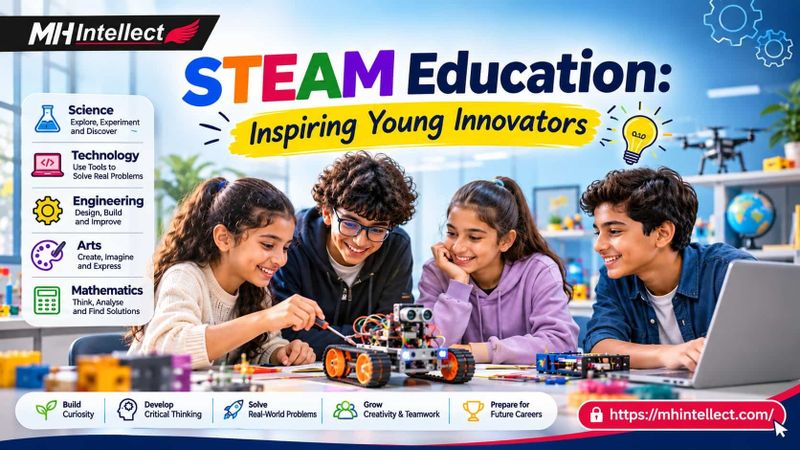
This is the purpose of STEAM education in UAE schools. By combining Science, Technology, Engineering, Arts and Mathematics, STEAM learning helps students connect classroom knowledge with real-world applications and develop skills for a technology-driven future.
What Makes STEAM Education Different?
STEAM education brings five learning areas together through practical, project-based activities. Instead of studying subjects independently, students apply different concepts to solve a shared challenge.
Each discipline contributes to the learning experience:
- Science: Encourages observation, investigation and evidence-based thinking.
- Technology: Introduces coding, robotics, sensors and digital tools.
- Engineering: Develops designing, building, testing and improving skills.
- Arts: Supports creativity, design thinking and effective communication.
- Mathematics: Strengthens measurement, data analysis and logical reasoning.
For UAE schools, this approach creates opportunities to connect classroom activities with emerging fields such as artificial intelligence, renewable energy, robotics, aerospace and smart infrastructure.
STEM vs STEAM Model: Why Does the Difference Matter?
Understanding the STEM vs STEAM model helps schools recognise the importance of creative thinking alongside technical knowledge.
STEM focuses on Science, Technology, Engineering and Mathematics, developing technical understanding and practical problem-solving. STEAM extends this approach by integrating Arts, including design thinking, visual planning, creative exploration and communication.
For example, when students build a robotic model, they need more than programming and engineering knowledge. They must also consider its design, functionality and how to present their solution. This combination encourages learners to approach challenges from different perspectives.
How Robotics and AI Turn Ideas into Innovation
Robotics education UAE programmes give students opportunities to apply coding, sensors, mathematics and engineering through hands-on projects. Activities such as obstacle navigation and automated systems encourage learners to test ideas, identify errors and improve their designs.
Similarly, AI education UAE activities introduce students to data, automation logic and intelligent systems. Learners can explore how data influences a system's output, understand the importance of accuracy and investigate how AI is used in everyday technology.
Practical STEAM activities can help students develop:
- Programming logic and computational thinking
- Analytical reasoning and technical troubleshooting
- Engineering design and creative problem-solving
- Collaboration and communication
- Confidence in exploring emerging technologies
Aviation: Another Dimension of STEAM Learning
Aviation provides another practical context for connecting scientific and engineering concepts. Students can explore drone technology, aerodynamics, propulsion and navigation while applying mathematics, coding and engineering principles.
These experiences introduce learners to aerospace, autonomous systems and aviation technology while helping them understand how classroom concepts are applied in real-world industries.
Why Structured STEAM Implementation Matters
Successful STEAM education requires more than providing students with robotics kits or electronic equipment. Schools need curriculum alignment, age-appropriate activities, teacher training and a clear progression of practical projects.
Working with a STEM Implementation Partner can help schools develop structured learning pathways that connect technology-based activities with educational objectives. Teachers also need the confidence and guidance to encourage experimentation, support investigation and assess how students approach challenges.
How MH Intellect Supports Future-Ready Learning
MH Intellect works with schools across the UAE, Gulf region and India to support practical STEM and STEAM learning through robotics, AI, IoT, engineering design, aviation and drone-based education. Its approach focuses on integrating technology into meaningful classroom experiences through structured programmes, teacher training and implementation support.
Conclusion: Turning Young Learners into Future Innovators
STEAM education helps students become more than technology users. It encourages them to understand how systems work, explore different solutions and develop the confidence to create their own ideas. Through structured projects, robotics, AI and aviation learning, UAE schools can build practical educational experiences that strengthen creativity, critical thinking and future-ready skills.







Top comments (0)