

India's telecom sector is one of the fastest-growing in the world, and with that growth comes tighter regulation around the equipment that powers it. If your business manufactures, imports, or sells telecommunication equipment in India, you've likely come across a mandatory requirement called MTCTE. For many businesses, especially first-time importers or smaller manufacturers, MTCTE feels like just another compliance hurdle. In reality, it's a structured certification system designed to keep India's telecom network secure, reliable, and standardized.
In this blog, we'll break down what MTCTE Certification for telecom equipment actually is, who needs it, how the process works, and how a consultant like UMSPCS can help you get certified without unnecessary delays or rejections.
What Is MTCTE Certification?
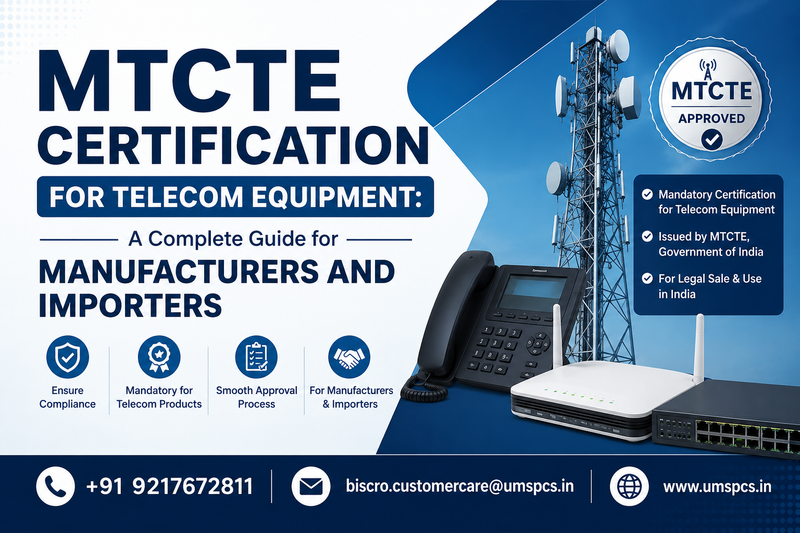
MTCTE stands for Mandatory Testing and Certification of Telecommunication Equipment, a certification scheme introduced by the Department of Telecommunications (DoT) under the Ministry of Communications, Government of India. It's implemented through the Telecommunication Engineering Centre (TEC).
The scheme requires that all specified telecom equipment sold, imported, or used in India undergo testing and certification to confirm compliance with Essential Requirements (ERs), covering safety, electromagnetic compatibility, security, and performance parameters.
Simply put, MTCTE ensures that telecom equipment connecting to India's networks meets consistent quality and security benchmarks before it reaches the market.
Why Was MTCTE Introduced?
Before MTCTE, telecom equipment entering India often relied on certifications from other countries or self-declarations, which created gaps in quality control and network security. MTCTE was introduced to:
Standardize testing requirements across all telecom equipment categories
Strengthen network security by verifying equipment doesn't compromise telecom infrastructure
Reduce dependency on foreign certification standards
Support the "Make in India" initiative by encouraging domestic testing and certification
Protect consumers from substandard or unsafe telecom devices
Given how deeply telecom infrastructure integrates with national security and everyday communication, this level of oversight isn't surprising, it's necessary.
Read More:- BIS ISI Certification in India
Who Needs MTCTE Certification?
- Telecom Equipment Manufacturers Companies manufacturing telecom equipment within India, ranging from routers and switches to base stations, must obtain MTCTE certification before their products can be sold domestically.
- Importers of Telecom Equipment Businesses importing telecom devices into India must secure MTCTE certification for applicable equipment categories before customs clearance and market entry.
- Foreign Manufacturers Selling in India International telecom equipment brands entering the Indian market need to go through MTCTE testing and certification, often coordinating with an Indian authorized representative for the application process.
- Telecom Service Providers and Network Operators While not certifying entities themselves, telecom operators are required to use MTCTE-certified equipment within their networks, making certification a practical necessity for their equipment suppliers. Which Equipment Falls Under MTCTE? MTCTE covers a wide and expanding list of telecom equipment categories, notified in phases. Common examples include: Routers and switches Wi-Fi access points Optical fiber equipment Mobile handsets and related devices IP-based telecom equipment GPON and other network access equipment Multiplexers and transmission equipment Since new equipment categories are periodically added under different phases, it's important to check the latest notified list to confirm whether your specific product requires certification. Read More:- BIS CRS Registration in India How the MTCTE Certification Process Works
- Identify Applicable Essential Requirements (ERs) Each equipment category has specific ERs covering safety, EMC (electromagnetic compatibility), and security testing parameters. Identifying the correct ER document is the first step.
- Testing at Recognized Labs Equipment must be tested at labs recognized by TEC, either in India or accredited international labs under mutual recognition arrangements, depending on the product category.
- Application Submission via Portal Applications are filed through the TEC's online certification portal, along with test reports, technical documentation, and manufacturer declarations.
- Document and Technical Review TEC reviews submitted documentation and test results to confirm compliance with applicable Essential Requirements.
- Certificate Issuance Once approved, a Certificate of Compliance is issued, allowing the equipment to be legally sold, imported, or deployed within India's telecom networks.
- Post-Certification Compliance Manufacturers must maintain compliance records and may need to recertify equipment if design changes occur or if regulatory requirements are updated. Common Challenges Businesses Face with MTCTE Confusion Over Applicability – Many businesses aren't sure whether their specific product falls under a notified MTCTE category Testing Delays – Limited lab availability or incomplete technical documentation can slow down testing timelines Incorrect ER Selection – Applying under the wrong Essential Requirement document leads to rejected or delayed applications Portal and Documentation Errors – The TEC portal requires precise technical submissions, and small errors can trigger unnecessary back-and-forth Frequent Regulatory Updates – New equipment categories and requirement changes make it easy for businesses to fall out of compliance unintentionally How UMSPCS Helps with MTCTE Certification Getting MTCTE certification right the first time requires a clear understanding of applicable ERs, lab coordination, and documentation standards, areas where many manufacturers and importers struggle without expert support. As a dedicated certification consultant, UMSPCS assists businesses with: Determining whether their equipment falls under a notified MTCTE category Identifying the correct Essential Requirements applicable to their product Coordinating with TEC-recognized testing labs for sample testing Preparing and reviewing technical documentation before submission Managing the application process through the TEC portal Handling post-certification compliance and recertification when needed This structured support helps businesses avoid common pitfalls, reduce processing delays, and get their telecom equipment into the Indian market faster. Final Thoughts MTCTE Certification and BIS Certification plays a crucial role in maintaining the safety, security, and reliability of India's telecom infrastructure. While the process involves detailed technical requirements and coordination with testing labs, it becomes far more manageable with the right guidance. Whether you're a domestic manufacturer, an importer, or a foreign telecom brand entering the Indian market, understanding MTCTE requirements early can save significant time and prevent costly application errors. Partnering with an experienced consultant like UMSPCS ensures your certification journey stays on track from application to approval.
FAQs
- Is MTCTE Certification mandatory for all telecom equipment? It's mandatory only for equipment categories officially notified by the Department of Telecommunications. New categories are added periodically, so it's important to check current notifications.
- How long does MTCTE Certification take? Timelines vary depending on testing lab availability and documentation accuracy, but the process typically spans a few weeks to a few months.
- Can foreign manufacturers apply for MTCTE Certification directly? Foreign manufacturers usually need to work through an Indian authorized representative to apply for and manage the certification process.
- What happens if I sell telecom equipment without MTCTE Certification? Selling or importing uncertified equipment that falls under a notified category can lead to penalties, shipment holds, and legal action under applicable telecom regulations.
- Do I need to recertify equipment after design changes? Yes, significant design or technical changes to certified equipment typically require recertification to ensure continued compliance with Essential Requirements.
- How can a consultant help with MTCTE Certification? A consultant helps identify applicable requirements, coordinates lab testing, prepares accurate documentation, and manages the application process, reducing delays and the risk of rejection.







Top comments (0)