
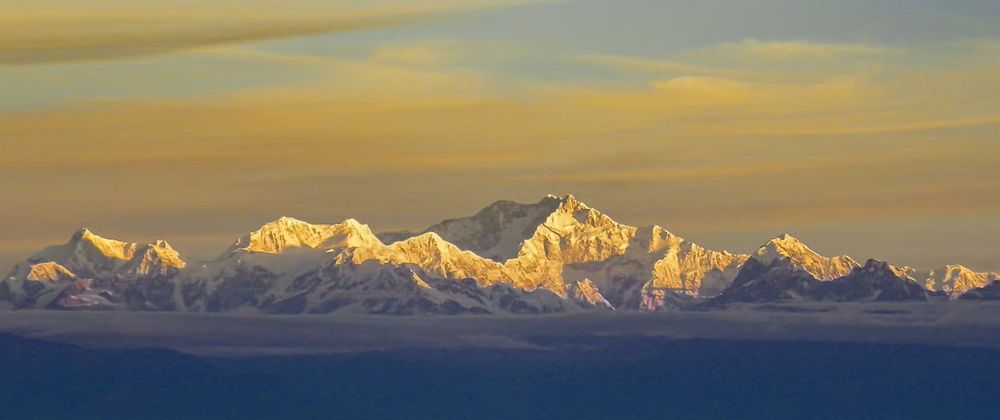

You have walked for eight days and passed only three villages. The trail hugs a cliff high above a roaring river. Then the valley opens, and a wall of ice fills the entire sky. The third highest mountain on Earth stands right in front of you, and there is nobody else around. This is the Kanchenjunga Base Camp Trek, the wildest and loneliest walk in all of Nepal.
This guide covers what you really need to know before you go.
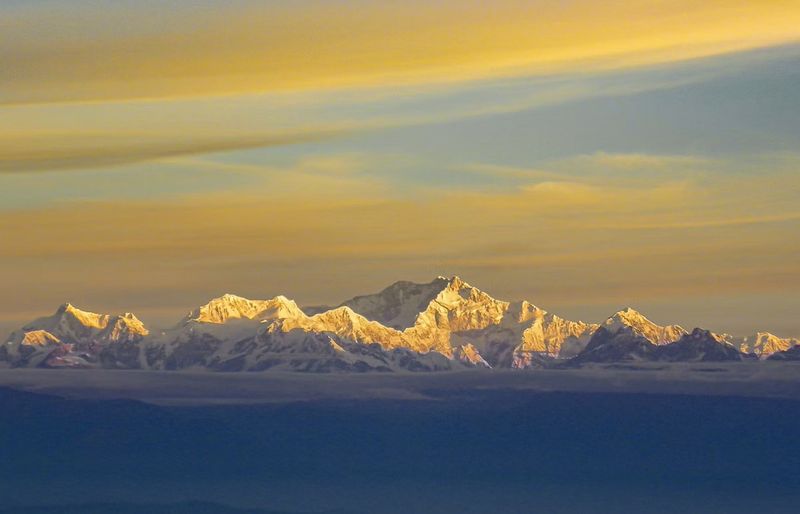
Meet the Five Treasures of the Snow
Mount Kanchenjunga rises to 8,586 meters. Only Everest and K2 are taller.
The name means "Five Treasures of the Snow." Local people believe the mountain guards gold, silver, gems, grain, and holy scriptures.
It sits in Nepal's far eastern corner, right on the border with India. Getting there takes real effort, and that effort keeps the crowds far away.
The Numbers You Should Know
The trek to North Base Camp usually takes 18 to 22 days. The full circuit visiting both base camps runs 21 to 26 days.
The total walking distance is roughly 200 to 220 kilometers.
The highest point is Pangpema, the North Base Camp, at 5,143 meters or 16,873 feet. The South Base Camp at Oktang sits near 4,730 meters.
You start low near Taplejung at around 1,800 meters. Most days involve five to eight hours of walking.
Getting there means a flight from Kathmandu to Bhadrapur, then a long jeep ride of eight to ten hours.
From Cardamom Fields to Glaciers
Few treks change this much along the way.
The first week is hot and humid. You walk through rice terraces, cardamom farms, and thick bamboo groves. Waterfalls crash beside the trail.
Then pine and rhododendron forests take over. The air cools and rivers turn milky blue.
Higher up, every tree disappears. Only rock, ice, and wind remain. Glaciers stretch out like frozen highways.
A Real Wildlife Wonderland
The trek crosses the Kanchenjunga Conservation Area. It protects about 2,035 square kilometers of land.
Snow leopards live here, though they are ghosts you will probably never see. Red pandas hide in the bamboo. Blue sheep graze on high slopes.
Over 250 bird species fill the forests. You may spot the colorful Impeyan pheasant, Nepal's national bird.
Your guide will point out tracks and signs you would never notice alone.
Villages With Different Hearts
The lower trail belongs to the Limbu and Rai people. Their language, food, and festivals differ completely from western Nepal.
Higher up, Sherpa and Tibetan culture takes over.
Ghunsa is the largest upper village. It has a monastery, stone homes, and even a small hydro plant.
Kambachen and Lhonak are tiny. Just a few basic lodges and grazing yaks. Above Ghunsa, facilities become very simple.
What You Need to Know Before Booking
Kanchenjunga is a restricted area. There are firm rules.
You need a special restricted area permit. You must trek with a licensed guide. You also need at least one trekking partner.
Solo trekking is not allowed here. Plan for this from the start.
Trekking With Nepal Social Treks and Expedition
Because a guide is required, your choice of company matters a great deal.
Nepal Social Treks and Expedition organizes guided Kanchenjunga treks from Kathmandu. Their packages usually include the restricted area permit, conservation fees, experienced guides, porters, lodging, meals, and domestic flights to Bhadrapur.
Their guides know this remote region well. They plan safe acclimatization days and carry emergency communication gear. They also arrange food and shelter in areas where lodges are extremely basic.
The company runs other adventures too, including Manaslu Circuit, Everest Base Camp, Langtang Valley, and peak climbing trips. Contact them for current dates and prices, since permit rules change.
Best Time to Go
Autumn, from October to November, is the best window. Skies are clear and trails are dry.
Spring, from April to May, is also excellent. Rhododendrons bloom across whole hillsides.
Winter brings deep snow and closed high routes. Monsoon brings leeches, landslides, and constant rain.
How Tough Is It Really?
Be honest with yourself before booking. This is a hard trek.
Days are long and facilities are basic. Hot showers barely exist above Ghunsa. Wi-Fi is mostly a fantasy.
You need strong fitness and three free weeks. You also need patience when weather changes your plans.
You do not need climbing skills. Just good boots, warm layers, and a flexible mind.
What to Pack
Bring a sleeping bag rated to minus 15 degrees Celsius. Upper lodges have thin blankets.
Pack a water filter or purification tablets. Carry enough cash, because there are no ATMs after Taplejung.
Add a power bank. Charging is limited and often costs extra.
Why It Stays With You
Ask anyone who finishes this trek what they remember.
They talk about the silence. The empty trails. The night at Lhonak when the stars looked close enough to touch.
Kanchenjunga does not just show you a mountain. It gives you the rare gift of being completely alone with one.






Top comments (0)