
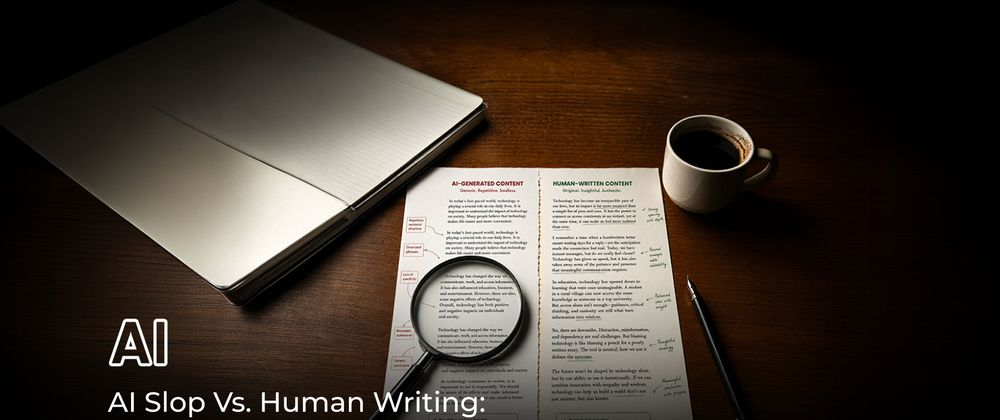

AI-generated content has become a major part of the internet, but not every article created with AI qualifies as AI slop. The real concern is low-quality content that appears polished while lacking meaningful insights, credible research, or original value. As AI-generated content continues to grow, the more important question is not whether AI was involved, but whether the information is accurate, useful, and trustworthy.
AI slop is often marked by repetitive ideas, predictable formatting, vague references, exaggerated claims, and little to no unique perspective. Even more problematic are AI hallucinations, where articles include fabricated statistics, fake studies, incorrect dates, or sources that fail to support the claims being made. These issues make careful fact-checking and source verification essential when evaluating online content.
Instead of depending solely on AI detection tools, readers and publishers should prioritize editorial quality. AI Slop Vs. Human Writing explains that trustworthy content is built on verified sources, specific examples, logical analysis, and original thinking rather than on whether AI assisted in the writing process. AI detectors can be useful indicators, but they should support human judgment instead of serving as final proof.
Ultimately, polished writing cannot hide a lack of substance for long. Whether an article is written by a person, AI, or both, its true value lies in the reliability of its information, the depth of its insights, and the credibility of its evidence. Readers who focus on quality over appearance are better equipped to separate genuinely useful content from low-value AI-generated material.






Top comments (0)