
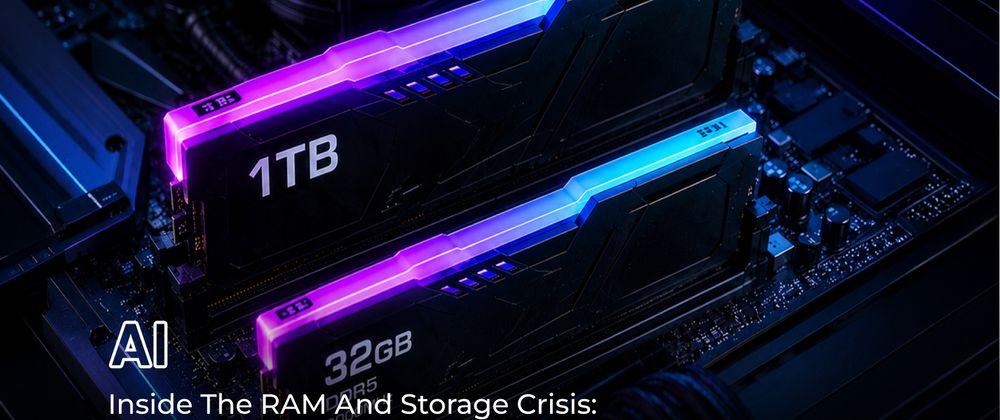

The rapid rise of artificial intelligence is transforming industries, but it is also placing unprecedented pressure on the global memory and storage supply chain. As AI companies and cloud providers expand their infrastructure, demand for high-bandwidth memory (HBM), DRAM, NAND flash, and enterprise storage has surged. To maximize profitability, manufacturers are allocating more production to AI-focused hardware, leaving fewer resources available for consumer devices.
This shift is impacting far more than data centers. PC manufacturers, smartphone brands, automotive companies, gaming firms, and enterprise IT providers are all dealing with rising component costs and tighter supplies. Consumers are already feeling the effects through higher prices for RAM modules, SSDs, laptops, smartphones, USB drives, and other storage products. Since building new semiconductor fabrication facilities takes several years, increasing supply is not an immediate solution.
The growing RAM And Storage Crisis is exposing how AI's rapid expansion is reshaping the broader technology ecosystem. As memory production continues to favor AI infrastructure, shortages are affecting traditional computing devices and everyday electronics, with analysts warning that these supply constraints could continue for several years before the market stabilizes.
Although leading chipmakers are investing heavily in new manufacturing capacity, meaningful relief is unlikely in the near future. AI adoption continues to accelerate faster than production can expand, ensuring that memory and storage remain valuable and expensive. Until supply catches up with demand, businesses and consumers should expect elevated hardware costs and ongoing pressure across the global technology market.







Top comments (0)