
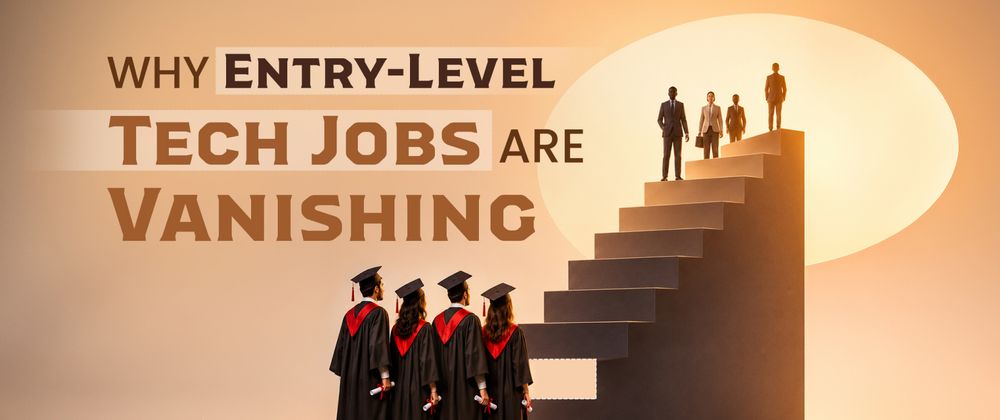

The technology industry is witnessing a significant shift in recruitment as entry-level opportunities continue to decline. AI automation, tighter hiring budgets, and changing business priorities are making it increasingly difficult for fresh graduates to secure their first jobs. Tasks such as writing basic code, testing software, debugging, and documentation are now being handled more efficiently with AI tools. Research using US payroll data through June 2026 found that employment among workers aged 22 to 25 in AI-exposed occupations was 19% below the expected level. In India, fresher recruitment's share of IT hiring also dropped from 32% to 24% in July 2026, despite overall technology recruitment growing by 10% year over year.
AI is changing the expectations companies have from junior developers and other fresh graduates. Employers increasingly prefer experienced professionals who can use AI tools to complete tasks faster, reducing the need to recruit large numbers of beginners. At the same time, many entry-level positions demand knowledge of programming languages, cloud infrastructure, databases, deployment pipelines, and AI-assisted development, sometimes alongside prior professional experience. This creates an experience gap for fresh graduates who need workplace exposure to qualify for opportunities but struggle to find companies willing to train them. The decline in junior hiring could also weaken the industry's talent pipeline, making it harder to develop future senior engineers, cybersecurity specialists, and technology leaders.
Despite these challenges, opportunities in Tech Jobs are evolving rather than disappearing completely. Fields such as AI engineering, cybersecurity, cloud computing, data engineering, and automation are attracting growing demand. Entry-level AI engineer hiring increased 68% year over year in the United States and 55% in India during the third quarter of 2026. Fresh graduates can improve their career prospects by building practical projects, learning AI-assisted development, strengthening programming fundamentals, and gaining experience through internships, freelance assignments, and open-source contributions. Demonstrating problem-solving abilities and the ability to evaluate AI-generated outputs can also help candidates stand out in an increasingly competitive recruitment market.
However, adapting to this changing job market is not solely the responsibility of fresh graduates. Technology companies must rethink their recruitment strategies by introducing AI-supported apprenticeships, structured mentorship programs, supervised automation projects, and gradual skill development opportunities. Universities can also prepare students by incorporating AI tools into coursework while maintaining a strong focus on independent thinking and practical knowledge. Ultimately, AI is transforming how companies hire and develop talent, but eliminating entry-level opportunities could create serious workforce shortages in the future. The technology industry needs experienced professionals, and that experience must begin somewhere.







Top comments (0)