
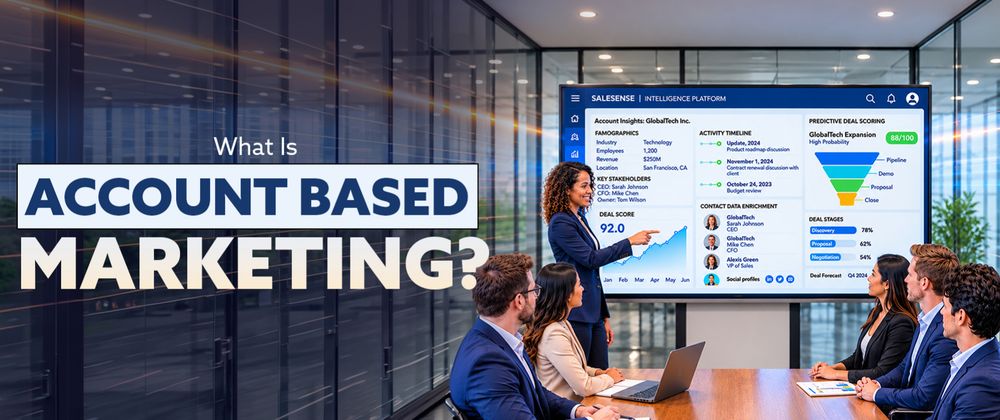

Imagine organizing an exclusive business meeting with ten carefully selected prospects instead of hosting a large event for hundreds of unfamiliar companies. Rather than sharing the same presentation with everyone, you understand each prospect's business challenges, interests, and objectives before approaching them. This personalized approach makes conversations more meaningful and increases the chances of building valuable business relationships. This is the basic idea behind account-based marketing (ABM), a strategy that focuses on engaging selected high-value businesses instead of targeting a broad audience.
Account-based marketing is widely used in business-to-business (B2B) marketing, where organizations identify companies that match their ideal customer profile (ICP) and develop campaigns specifically for them. Unlike traditional inbound marketing, which attracts potential customers through content, social media, and search engines, ABM starts by selecting priority accounts and identifying their key decision-makers. Businesses then use personalized emails, targeted advertisements, webinars, and coordinated sales outreach to build relationships. Depending on their objectives, companies can adopt one-to-one, one-to-few, or one-to-many ABM strategies to balance personalization and scalability.
The growing importance of account-based marketing comes from its ability to help businesses focus their marketing resources on prospects with stronger revenue potential. By aligning sales and marketing teams, organizations can deliver relevant messages, improve account engagement, strengthen customer relationships, and generate qualified sales opportunities. Businesses also use CRM platforms, marketing automation tools, and account intelligence solutions to research target companies, understand buying groups, coordinate campaigns, and track engagement. Its effectiveness can be measured through account engagement, buying group coverage, pipeline generation, conversion rates, and revenue contribution.
However, building a successful ABM strategy requires careful planning, accurate customer data, and consistent collaboration between sales and marketing teams. Businesses should begin by defining their ideal customer profile, selecting priority accounts, researching decision-makers, and developing personalized campaigns across channels such as LinkedIn, email, and webinars. Smaller B2B teams can start with 10–20 carefully selected accounts before expanding their efforts. By continuously monitoring campaign performance and refining their approach, organizations can improve targeting and create meaningful business opportunities. Ultimately, successful marketing is not always about reaching more companies but about connecting with the right ones.






Top comments (0)