
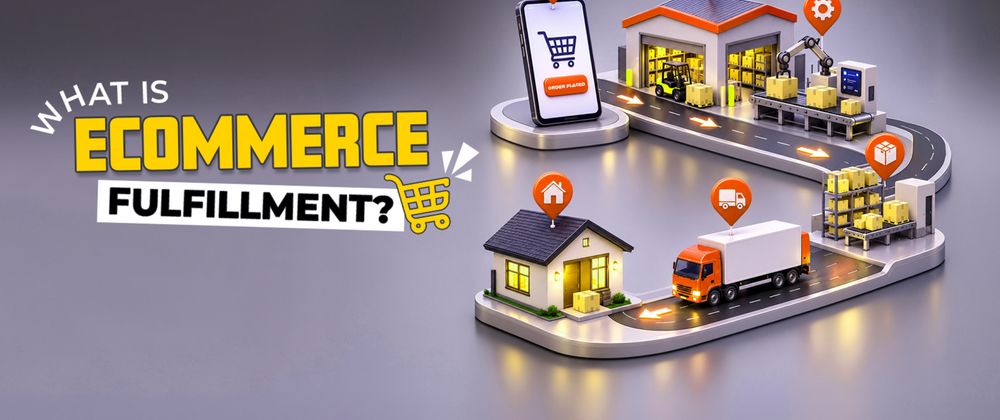

Every time a customer clicks the "Buy Now" button on an online store, a series of operations begins to ensure the purchased product reaches their doorstep safely and on time. This process involves several activities, including managing inventory, processing orders, picking and packing products, coordinating shipments, and handling returns. Collectively known as ecommerce fulfillment, these operations play an important role in delivering a smooth shopping experience while helping businesses maintain efficient supply chains.
Ecommerce fulfillment typically follows five key stages, starting with receiving and storing inventory, followed by processing customer orders, picking and packing products, shipping and delivery, and managing returns or exchanges. Businesses can handle these activities internally or choose different fulfillment models, such as in-house fulfillment, third-party logistics (3PL), dropshipping, and hybrid fulfillment. Each approach offers different levels of control, flexibility, investment, and operational responsibility depending on the company's requirements and business size.
For growing online businesses, Ecommerce fulfillment is essential for maintaining customer satisfaction, controlling operational expenses, and supporting long-term growth. The overall cost depends on several factors, including warehousing, inventory receiving, picking and packing, shipping, technology integration, and returns processing. As order volumes increase, businesses may find it difficult to manage these operations independently, making third-party logistics providers a practical option. However, choosing the right fulfillment partner requires evaluating warehouse locations, pricing transparency, technology compatibility, delivery capabilities, order accuracy, and scalability.
Ultimately, an effective fulfillment strategy helps businesses deliver products reliably while managing resources and customer expectations. Whether a company chooses in-house operations, outsourcing, dropshipping, or a hybrid model, the right approach depends on its budget, order volume, available infrastructure, and future expansion plans. By building an efficient fulfillment process and regularly reviewing operational performance, businesses can reduce unnecessary expenses, improve delivery experiences, and build stronger customer relationships.







Top comments (0)