
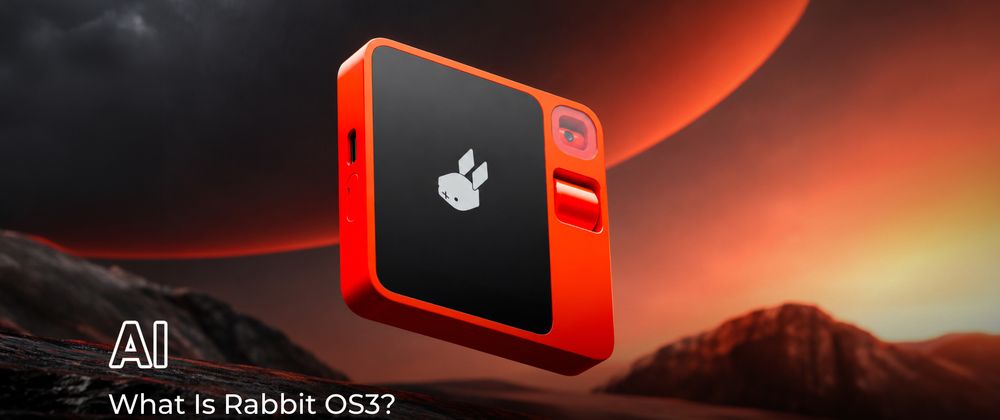

Rabbit is taking its original AI-agent vision beyond the R1 with a new software-focused approach. The company has launched Rabbit OS3, an agentic operating system designed to work across computers, the web, messaging platforms, connected devices, and the R1 itself. Instead of requiring users to perform tasks manually across different applications, the system is designed to understand an intended outcome and coordinate AI models, tools, files, skills, and connected machines to complete the work. Rabbit OS3 became generally available on September 22, 2026, following an invite-only beta, and users do not need an R1 to access it.
At the center of the platform is a conversational AI agent that can work with connected computers through Rabbit Agent, a local program available for Windows, macOS, and Linux. Depending on the task and permissions, the agent can interact with files, terminal commands, desktop applications, and websites. Rabbit says one account can connect up to five devices, allowing users to move tasks between machines without manually transferring their work. The platform also supports memory and third-party skills, while Rabbit's Direct Large Action Model can interact with graphical interfaces when a task requires visual interaction. The goal is to move beyond AI that simply provides instructions toward AI that can actually perform authorized tasks.
Rabbit OS3 also represents a significant change in the company's relationship with the R1. When Rabbit launched the $199 R1 in 2024, dedicated hardware was central to its vision of an AI agent capable of handling digital tasks. The device faced criticism over limited functionality and the gap between its promises and early capabilities. OS3 takes a different approach by making the agent available through existing computers, browsers, messaging services, and the web, with the R1 becoming one way to access the broader system rather than the required gateway. Rabbit is also using a Bring Your Own Key model, allowing users to connect supported AI providers while retaining Rabbit's memory, skills, and device connections. The company says OS3 itself is free, although users are responsible for API costs charged by their selected AI providers.
The shift does not mean Rabbit has completely moved away from hardware, but it does make the software layer more important to the company's strategy. Giving an AI agent access to files, applications, terminals, and connected computers also introduces greater risks than a conventional chatbot, particularly when an agent can perform actions on a user's behalf. Rabbit's terms warn that OS3 and Rabbit Agent are experimental and can produce unintended results, while the company advises against using the software for unattended, safety-critical, regulated, or production enterprise workloads. The broader idea behind Rabbit OS3 is straightforward: instead of buying a dedicated device for an AI assistant, users can bring that assistant to the devices they already own. Whether Rabbit can make that agent reliable enough for complex real-world work will determine how far this software-first strategy can go.







Top comments (0)