
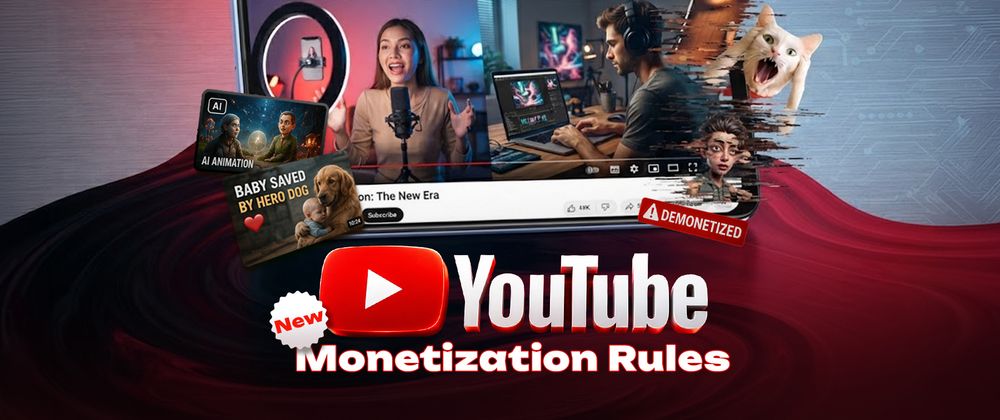

YouTube is drawing a clearer distinction between responsible AI-assisted creativity and automated content farming with its updated monetization guidance. The July 2026 clarification does not ban AI-generated videos or introduce an entirely new monetization standard. Instead, it reinforces the existing requirement that monetized content should be original, authentic, and provide meaningful value to viewers. The focus is now firmly on the quality and originality of the final viewing experience rather than whether AI was used during production.
The updated policy highlights three broad categories of inauthentic content that could lose access to monetization. These include generic and repetitive videos built from templates with minimal creative variation, emotionally manipulative or shock-driven content such as exaggerated rescue stories, and AI personas that present themselves as human experts on sensitive subjects including health, finance, legal matters, and politics. Channels that repeatedly publish interchangeable videos or use deceptive techniques primarily to generate views may therefore face greater scrutiny under the revised rules.
At the same time, YouTube is not shutting the door on AI-assisted creation, recurring formats, faceless channels, reaction videos, or reused footage. Creators can continue using AI for scripts, visuals, characters, editing, and production support as long as their final work demonstrates genuine originality and creative value. Reaction videos and reused clips can also remain eligible when they add meaningful commentary, criticism, substantial editing, education, or a fresh narrative. The key question is whether creators are contributing something distinctive rather than simply producing content at scale.
For creators, the message is clear: quality matters more than volume. Channels built around repetitive templates, synthetic experts, copied tutorials, automated slideshows, or manipulative emotional hooks may need to rethink their strategies, while creators who bring research, storytelling, commentary, editing, and a unique perspective can continue to thrive. For advertisers and viewers, the tighter approach could help create a more trustworthy ecosystem by reducing the presence of low-value and deceptive content. Ultimately, YouTube is not removing AI from the creator toolkit—it is drawing a firmer line between using AI to enhance creativity and using it to mass-produce content with little originality or value.







Top comments (0)