

Athletes train hard, sleep on planes, and play again before their bodies feel ready. Because of this, many pros now add a hyperbaric chamber for athlete recovery to their routine. They use it to support the body’s natural repair work and to feel more prepared for the next game or workout.
This blog explains how hyperbaric oxygen therapy (HBOT) works, how pros actually use it, what science says so far, and what to check before you try it. It is general education only, not medical advice. Always talk with a licensed healthcare professional before starting HBOT, especially if you have any health condition.
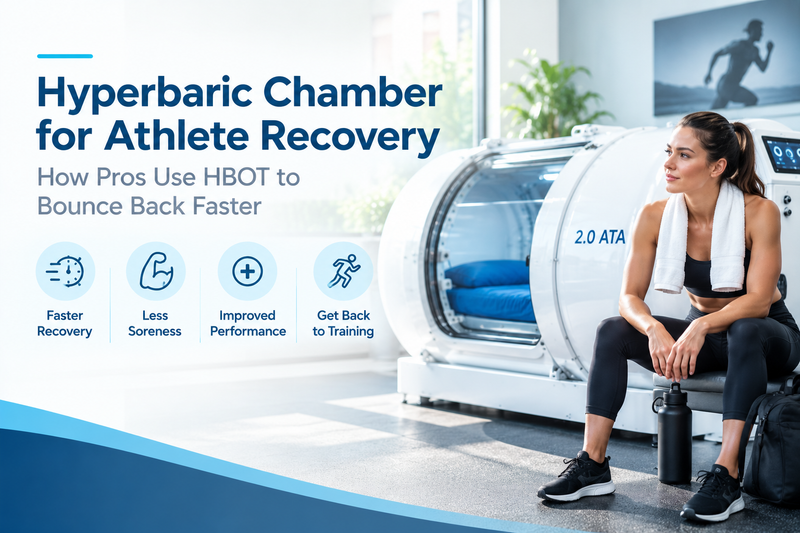
WHAT A HYPERBARIC CHAMBER DOES IN SIMPLE TERMS
At normal ground level, the air around you is at about 1 atmosphere of pressure (1 ATA). In a hyperbaric chamber, the pressure is raised above this level.
Common levels are:
- About 1.3 ATA in many soft, portable chambers
Around 1.5–2.0 ATA or more in many clinic hard chambers
Inside the chamber, you breathe air or oxygen while the pressure is higher. Under that higher pressure:Your lungs can take in more oxygen with each breath.
More oxygen dissolves into your blood plasma, not just into red blood cells.
That oxygen can reach body tissues through normal blood flow.
Medical HBOT in the USA is approved for certain problems such as decompression sickness, some serious infections, carbon monoxide poisoning, and some hard‑to‑heal wounds. Using a hyperbaric chamber for athlete recovery is usually an “off‑label” or wellness use. That means it must be done with care and honest expectations.
WHY ATHLETES USE A HYPERBARIC CHAMBER FOR RECOVERY
Elite athletes look for any safe edge that helps them recover between sessions. HBOT is one of several tools. The main goals are:
- Supporting normal tissue repair Hard training causes tiny muscle and tendon damage. This is normal and is part of how you get stronger. Some coaches believe that higher oxygen levels during HBOT may support the body’s natural repair work. Athletes often report:
- Less feeling of heavy or tired legs
- Feeling more refreshed before the next session But responses differ between people, and research is still growing.
Managing soreness and fatigue
A few small studies suggest HBOT may reduce delayed onset muscle soreness (DOMS) or speed the return of muscle force after hard training. Other studies show little effect. Because of this, many pros judge HBOT by how they personally feel and how they perform over time, not by one session.Helping recovery after some injuries
In some sports medicine settings, HBOT is used alongside normal rehab for certain injuries, such as muscle tears or bone stress problems. The idea is to support oxygen supply in tissues while they heal.
In these cases:
- A sports doctor or team doctor chooses the pressure and number of sessions.
- HBOT is one part of a full plan that also includes rest, rehab exercises, and load control.
- Coping with travel and tight schedules Pros often train, fly, play, then do it again days later. This can hurt sleep and recovery. HBOT sessions become scheduled “quiet time” where the athlete must lie down, rest, and breathe, away from screens and noise. Even this forced rest can help.
HOW PRO ATHLETES ACTUALLY USE HBOT
Most pro‑level HBOT happens in clinics, training centers, or team facilities, not in bedrooms. A typical setup can look like this:
- Chamber type: hard “monoplace” chamber for one person, or a larger multiplace hyperbaric chamber in a hospital or big center.
- Pressure: often between 1.5 and 2.0 ATA for sports recovery, sometimes higher for approved medical problems.
- Oxygen: many sessions use medical oxygen by mask or hood under supervision.
- Session length: commonly 60–90 minutes for clinical HBOT. Wellness centers may use shorter or lower‑pressure sessions.
- Frequency: from a few sessions per week during heavy training to daily sessions for a short time after certain injuries, always based on a medical plan. Some athletes also use lower‑pressure portable chambers (around 1.3 ATA) at home. These usually do not match clinic‑level HBOT, but they offer convenience. They may be used more often because they are always on site.
WHAT THE SCIENCE SAYS SO FAR
Research on HBOT for sports is still limited, but here is a simple overview:
- Muscle damage and soreness: some controlled studies have seen reduced soreness or faster recovery of strength; others did not.
- Aerobic performance: short HBOT courses usually do not give big changes in VO₂max or overall fitness, especially in healthy trained people.
- Injury healing: there is more promising evidence for certain injuries and bone or soft‑tissue problems, but protocols vary and should be doctor‑led. Overall, HBOT is best seen as a possible helper for recovery and healing, not a proven performance booster in all athletes.
IS HBOT ALLOWED IN SPORT?
As of the latest public rules, oxygen itself is not banned by major anti‑doping groups such as WADA. Hyperbaric oxygen therapy is generally allowed.
Still:
- Teams must follow their sport’s rules and medical policies.
- Any drugs used with HBOT must follow anti‑doping laws.
- Athletes should keep records of what treatments they receive.
RISKS AND SIDE EFFECTS ATHLETES NEED TO KNOW
Most healthy people tolerate mild HBOT well when it is done correctly, but risks do exist, especially at higher pressures.
More common issues:
- Ear pressure, popping, or pain
- Sinus pressure or headache
Feeling tired or light‑headed after a session
Less common but more serious risks:Barotrauma (pressure injury) to ears, sinuses, or lungs
Problems related to too much oxygen, mainly at higher pressures or long exposures
Fire risk if oxygen is used near flames, sparks, or unsafe oils and fabrics
You should get medical clearance before HBOT if you have:Lung disease or a past collapsed lung
Ear or sinus problems
Fever, cold, or heavy congestion
Uncontrolled seizures
Recent chest surgery
Pregnancy
Severe fear of closed spaces
WHAT AN HBOT RECOVERY DAY CAN LOOK LIKE
Here is an example schedule for an athlete in a clinic program, just to show how it fits into a day:
- Morning: light mobility work and rehab exercises
- Late morning: 60‑minute HBOT session at the clinic under staff supervision
- After session: snack, hydration, and 20–30 minutes of easy walking or stretching
- Afternoon: video review or tactical work, not hard training
- Evening: early bedtime and screen limits Notice that HBOT is only one part. Sleep, food, and smart training loads are still doing most of the work.
SHOULD NON‑PRO ATHLETES TRY A HYPERBARIC CHAMBER FOR RECOVERY?
It can make sense in some cases, but only after thinking through these points:
Goal
Is your goal general recovery and feeling fresher? Or are you trying to heal a real injury? For injuries, you need a sports doctor to guide you.Access
Clinic sessions with trained staff are safest, especially at higher pressures. Home or wellness‑center chambers usually use lower pressure and different oxygen setups.Cost
HBOT sessions can be expensive. A home chamber costs even more. Ask how many sessions are recommended and what the total cost would be.Basics first
If your sleep, food, and training plans are poor, HBOT will not fix that. Get the basics right before spending on advanced tools.
QUICK FAQ
Does HBOT make you instantly faster or stronger?
No. It may support normal recovery and healing but is not a direct strength or speed booster.
How many sessions do athletes usually need?
Programs vary. Some use a short block of daily or near‑daily sessions; others do 2–3 per week during heavy periods. This should be set by a healthcare professional.
Can I replace ice baths or massage with HBOT?
Most teams use HBOT in addition to other recovery tools, not as a replacement.
Is a portable chamber the same as a clinic chamber?
No. Portable soft chambers often run at lower pressure and may use different oxygen setups. They can still be useful for wellness routines but are not equal to full medical HBOT.
BOTTOM LINE
Using a hyperbaric chamber for athlete recovery is becoming more common among pros because it offers structured rest time and higher oxygen levels during sessions. Some athletes feel it helps them bounce back faster, especially when training and travel loads are high.
But HBOT is not magic. It works best when:
- A healthcare professional sets the pressure and schedule,
- It is used alongside good sleep, nutrition, rehab, and smart training, and
- Safety rules are followed every single time. If you are thinking about HBOT, start by talking with a sports doctor or trusted clinician. With clear goals and honest expectations, you can decide whether this recovery tool fits your own performance plan.







Top comments (0)