

Introduction to Sudoku
Sudoku is one of the most popular logic puzzles in the world. Millions of people enjoy Sudoku every day because it combines entertainment, concentration, and mental exercise. Unlike many traditional games, Sudoku does not rely on luck. Every puzzle can be solved through logical thinking and careful analysis.
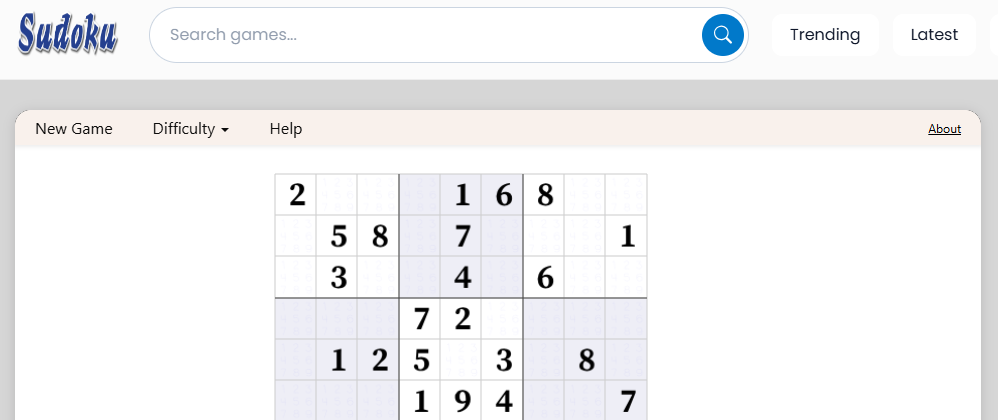
A standard Sudoku puzzle consists of a 9x9 grid divided into nine smaller 3x3 sections. The objective is simple: fill every empty cell with a number from 1 to 9. Each row, each column, and each 3x3 section must contain every number exactly once. While the rules are easy to understand, the challenge increases as puzzle difficulty rises.
Sudoku appeals to people of all ages. Students use it to improve focus, adults enjoy it as a relaxing hobby, and older individuals often use it to keep the mind active. This universal appeal has helped Sudoku become a favorite puzzle across different cultures and generations.
History and Growth of Sudoku
Early Origins of Number Puzzles
The concept behind Sudoku can be traced back to mathematical puzzles developed many years ago. Variations of number placement games appeared in newspapers and puzzle collections long before modern Sudoku became famous.
In the late twentieth century, puzzle creators refined these ideas into a structured format that emphasized logic rather than arithmetic. This approach made the puzzle accessible to a wider audience because solving Sudoku does not require advanced mathematical knowledge.
Global Popularity
Sudoku gained international recognition after appearing in newspapers around the world. Readers quickly became interested in the puzzle because it offered a unique balance of simplicity and challenge.
As internet access expanded, Sudoku reached even more players through websites, mobile applications, and online gaming platforms. Today, Sudoku can be found in newspapers, books, educational programs, and digital entertainment services.
How Sudoku Works
Understanding the Grid
A standard Sudoku grid contains eighty-one cells arranged in nine rows and nine columns. Some cells already contain numbers, while others remain empty.
The player must complete the puzzle by following three essential rules:
Every row must contain numbers from 1 to 9.
Every column must contain numbers from 1 to 9.
Every 3x3 section must contain numbers from 1 to 9.
These rules create a logical framework that guides every decision during gameplay.
Solving Through Logic
Sudoku is often misunderstood as a mathematics game. In reality, arithmetic plays no role in solving the puzzle. Success depends entirely on logical reasoning.
Players examine existing numbers and determine which values can fit into specific positions. As more cells are completed, additional clues become available, making it easier to identify the remaining numbers.
Careful observation and patience are more valuable than calculation skills when solving Sudoku.
Benefits of Playing Sudoku
Improved Concentration
Sudoku requires attention to detail. Players must monitor rows, columns, and sections simultaneously while avoiding mistakes.
Regular practice can strengthen concentration skills and encourage longer periods of focused thinking. This benefit often extends to other activities such as studying, reading, and problem-solving.
Enhanced Logical Thinking
Every Sudoku puzzle presents a logical challenge. Players analyze available information, eliminate impossible options, and identify correct solutions.
This process encourages structured thinking and helps develop analytical abilities that may be useful in daily life.
Mental Exercise
Many people view Sudoku as a workout for the brain. Solving puzzles regularly keeps the mind engaged and active.
Mental stimulation can be particularly valuable for individuals who enjoy intellectual challenges and wish to maintain cognitive sharpness over time.
Stress Relief and Relaxation
Sudoku provides a calm and enjoyable activity that can help reduce stress. Focusing on a puzzle allows the mind to shift attention away from daily concerns.
Many players include Sudoku in morning routines, lunch breaks, or evening relaxation periods because it offers entertainment without excessive pressure.
Popular Sudoku Strategies
Scanning Technique
Scanning is one of the most common methods used by beginners. Players examine rows, columns, and sections to identify missing numbers.
When only one number can logically fit into a particular cell, that value can be entered with confidence.
Elimination Method
The elimination method involves removing impossible options from consideration.
For example, if a number already exists in a row, that same number cannot appear elsewhere within that row. Repeating this process helps narrow possible choices and reveals correct placements.
Candidate Analysis
More advanced puzzles often require candidate analysis. Players note potential values for empty cells and compare relationships between different areas of the grid.
This technique helps uncover patterns that may not be immediately obvious and can be especially useful for difficult Sudoku challenges.
Different Types of Sudoku
Classic Sudoku
Classic Sudoku follows the traditional 9x9 format and remains the most widely played version.
Most newspapers, books, and online platforms feature classic Sudoku because the rules are familiar and easy to understand.
Mini Sudoku
Mini Sudoku uses smaller grids such as 4x4 or 6x6 layouts. These puzzles are often designed for beginners or players seeking a quick challenge.
The reduced grid size makes solving faster while preserving the core principles of Sudoku.
Killer Sudoku
Killer Sudoku combines traditional Sudoku rules with additional numerical constraints. Groups of cells are assigned target totals, creating a more complex puzzle experience.
This variation appeals to experienced players who enjoy advanced logical challenges.
Samurai Sudoku
Samurai Sudoku features multiple interconnected grids that overlap in specific areas.
The larger structure increases complexity and requires players to consider relationships across several puzzle sections simultaneously.
Tips for Sudoku Beginners
Start With Easy Puzzles
New players should begin with easy difficulty levels. These puzzles provide opportunities to learn solving techniques without becoming overwhelmed.
Confidence grows naturally as experience increases.
Avoid Guessing
Guessing can create confusion and lead to incorrect solutions. Instead, focus on logical deductions and verified information.
A properly designed Sudoku puzzle can always be solved through reasoning.
Practice Consistently
Regular practice is one of the most effective ways to improve Sudoku skills.
Even a few puzzles each week can help strengthen pattern recognition, concentration, and problem-solving abilities.
Why Sudoku Remains Popular
Sudoku continues to attract players because it offers an ideal combination of simplicity, challenge, and accessibility. The rules can be learned in minutes, yet mastering advanced techniques may take years.
The puzzle requires no special equipment, can be played almost anywhere, and provides meaningful mental stimulation. Whether enjoyed through newspapers, books, websites, or mobile devices, Sudoku remains a favorite choice for people seeking both entertainment and intellectual engagement.
Conclusion
Sudoku stands as one of the most successful logic puzzles ever created. Its straightforward rules, rewarding challenges, and cognitive benefits make it appealing to a broad audience. From beginners solving a first puzzle to experienced enthusiasts tackling complex grids, Sudoku delivers an engaging experience that combines focus, reasoning, and enjoyment.
With regular practice, players can improve concentration, strengthen logical thinking, and enjoy countless hours of stimulating entertainment. For anyone searching for a puzzle that is both relaxing and mentally rewarding, Sudoku remains an excellent choice.







Top comments (0)