

Most buyers evaluate a casting supplier on price, lead time, and certifications, and rarely ask a direct question about how the parts are finished. Yet shot blasting quality is one of the biggest hidden factors behind coating failures, dimensional surprises, and inconsistent batches that only surface after a shipment has already landed. PrecimetalCast works with procurement teams and engineers who increasingly ask about this stage upfront, precisely because it prevents problems that are far more expensive to fix later.
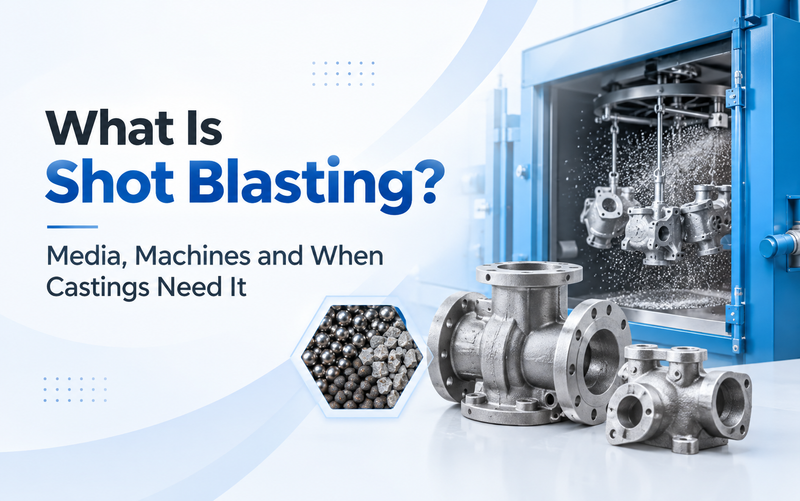
This checklist walks through why this stage deserves more attention, what questions to ask a supplier, which warning signs to watch for, and how to verify quality before a shipment leaves the foundry. It is written for procurement teams and engineers who want a practical way to evaluate a supplier's process without needing a metallurgy background.
Why Should Buyers Care About Shot Blasting Quality?
Surface finishing might happen early in production, but its effects carry through every stage that follows.
Impact on Coating and Corrosion Resistance
A poorly prepared surface causes paint, plating, and protective coatings to fail early, especially in humid or corrosive service environments. Once a coating starts peeling, the underlying metal surface treatment is exposed and corrosion follows quickly.
Impact on Dimensional and Machining Accuracy
Residual scale or uneven surface roughness can throw off machining allowances, leading to parts that fail tolerance checks even when the casting itself was dimensionally sound coming out of the mould.
Impact on Long-Term Component Reliability
Components with inconsistent surface preparation are more prone to fatigue cracking and premature wear, which matters enormously for parts used in pumps, valves, automotive, and aerospace applications where failure is costly. In some cases, a controlled shot peening step is added specifically to improve fatigue resistance on load-bearing parts, but this only works reliably when the preceding cleaning stage was consistent to begin with.
What Questions Should You Ask a Casting Supplier?
A short conversation about this stage often reveals more about a supplier's overall process discipline than a factory tour does.
What Blasting Equipment and Media Do They Use?
Ask whether they run wheel blasting, air blast, or tumble systems, and what media type and size they use for your specific alloy and geometry. A supplier who answers this in detail — down to which shot blasting machine handles which product line — is usually one who has thought it through rather than treating finishing as an afterthought.
*Do They Document Every Batch?
*
Reliable foundries log media type, cycle time, and pressure settings against each production run as part of a documented casting cleaning process, which supports traceability if an issue ever needs investigating.
*How Do They Handle Surface Roughness Verification?
*
Ask whether roughness is measured with calibrated instruments or judged visually. Instrument-based checks are far more reliable, particularly for parts headed into regulated supply chains.
*What Red Flags Signal Poor Shot Blasting Practices?
*
Some warning signs are visible even before a formal audit or inspection report is requested.
Inconsistent Finish Across a Batch
If sample parts from the same batch look noticeably different in texture or colour, that usually points to uncontrolled cycle times or worn abrasive blasting media that was never replaced on schedule.
No Traceability or Inspection Records
A supplier who cannot produce basic records for how a batch was finished is unlikely to catch problems before they leave the plant, regardless of how well they describe their process verbally.
*Visible Scale or Residual Sand
*
Any trace of oxide scale or embedded sand on a finished part suggests the descaling and blast cleaning stage was rushed, which almost always signals shortcuts elsewhere in production too.
How Can You Verify Shot Blasting Quality Before Shipment?
A few practical checks before goods leave the foundry can prevent most surprises at incoming inspection.
Requesting Sample Inspection Reports
Ask for surface roughness readings and visual inspection records from a recent batch similar to your order, rather than relying on a generic quality statement.
*Reviewing Certifications Like IATF 16949
*
Certification alone does not guarantee perfect finishing, but it does indicate a documented, auditable foundry finishing process is in place across the plant.
Running a Third-Party Pre-Shipment Check
For high-value or first-time orders, an independent inspection before shipment adds a layer of confidence, especially when sourcing internationally where returns and rework are far more costly.
Conclusion
Surface finishing rarely gets the same attention as alloy selection or dimensional tolerances during supplier evaluation, yet it quietly determines how well a casting performs once it is in service. Buyers who ask the right questions upfront, and suppliers who can answer them with documented evidence, both benefit from fewer disputes and more predictable outcomes. To see how this stage fits into a fully documented investment casting process, Visit Shot Blasting for a complete breakdown of how proper surface preparation protects casting quality from the mould to the final shipment.
Sourcing your next batch of castings? Ask your supplier for their surface finishing inspection records before you place the order.







Top comments (0)