
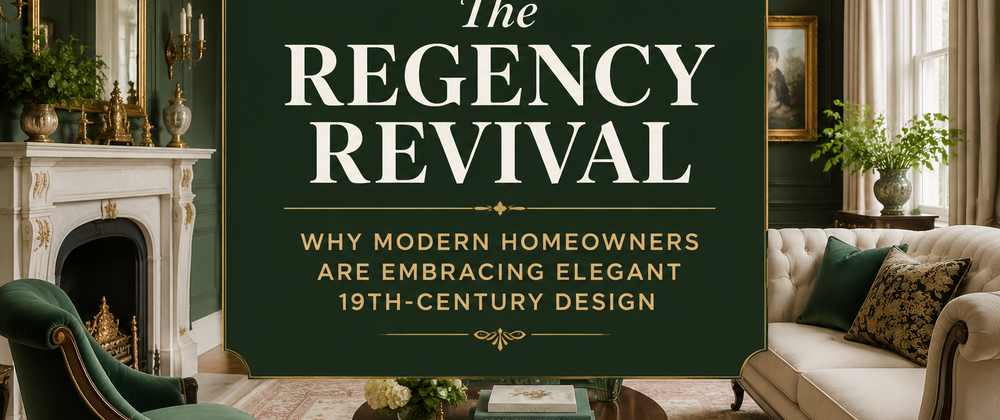

Walk into a contemporary luxury home and you might be surprised to find yourself surrounded by elegance that feels distinctly different from trendy minimalism or industrial chic. Clean lines, refined proportions, tall windows, and understated sophistication. What you're witnessing is the quiet revival of Regency architectural principles one of the most significant design movements among discerning homeowners who reject both heavy historical reproduction and cold contemporary minimalism.
This isn't nostalgia. It's a deliberate choice by architects and designers who understand that some design principles transcend their era because they're fundamentally right.
Why Regency Is Experiencing a Resurgence
For the past 15 years, interior design has swung between two extremes: the industrial warehouse aesthetic and the minimalist everything-must-be-hidden approach. Both have merit. But both also create spaces that feel deliberately austere designed to impress through restraint rather than creating genuine comfort.
Regency design occupies the thoughtful middle ground. It embraces elegance without pretension, incorporates classical principles without heavy ornamentation, and creates spaces that feel both refined and livable.
This is precisely what modern luxury homeowners increasingly seek: spaces that register as sophisticated and intentional without feeling like museum installations or performance pieces.
The Key Principles Driving the Revival
Modern designers adapting Regency principles aren't copying the past. They're extracting core design logic and applying it to contemporary living.
Proportion Over Decoration: Regency architecture understood that perfect proportions creates inherent elegance. Modern applications maintain these mathematical relationships while removing excessive ornamentation.
Light as Design Element: Regency design embraced tall windows positioned to optimize natural light. Contemporary applications floor-to-ceiling glazing, strategic fenestration create the same effect with modern materials.
Refined Simplicity: Regency incorporated classical elements at room-defining moments rather than overall decoration. Modern adaptations apply this restraint: feature walls, architectural molding at specific points, understated detail work.
Contemporary Applications: How Modern Homes Are Using Regency Principles
The revival manifests in specific, practical applications that feel both contemporary and timelessly elegant.
Entry Sequences: Modern Regency-inspired homes create deliberate entry experiences vestibules, foyers, or entry galleries positioned to reveal the interior gradually. Rather than opening directly into living areas, there's an architectural moment that sets tone. This isn't excessive formality; it's intention made visible.
Vertical Organization: Contemporary applications embrace the Regency principle of organizing rooms vertically. Tall windows (10+ feet when ceiling height permits), proportional door frames, and strategic ceiling details create visual height that makes spaces feel grander while remaining intimate.
Layered Lighting: Where Regency used candles and gaslight strategically, modern adaptations use layered LED systems primary ambient lighting with supplementary accent and task lighting. The effect is the same: light emerges from multiple sources, creating richness impossible with single overhead fixtures.
Restrained Palette: Modern Regency embraces limited color palettes applied with sophistication. Whites, creams, soft grays, with selective darker accents. The restraint creates elegance; the careful color placement creates sophistication. Nothing feels generic because nothing is arbitrary.
Spatial Hierarchy: Contemporary homes influenced by Regency principles organize spaces with clear hierarchies. Formal entertaining areas, private living zones, working spaces each gets proportional treatment without all areas demanding equal visual attention.
Why This Matters Beyond Aesthetics
The Regency revival reflects something important: recognition that certain design principles work because they align with how human beings experience space. Proportion, clarity, light, refined simplicity these aren't stylistic preferences. They're environmental factors that affect how we feel in spaces.
A room with proper proportions, good light, and refined detailing simply feels better. Not because it's fashionable, but because it's right.
The Design Challenge: Understanding What Makes It Work
The complexity of successfully applying Regency principles to modern spaces shouldn't be underestimated. It's not about installing period fixtures or reproducing historical rooms. It's about understanding the underlying design logic and translating it thoughtfully into contemporary contexts.
This is precisely why professional architectural visualization has become increasingly valuable. Before committing to specific design directions proportions, window placements, material selections, spatial organization exploring possibilities through detailed 3D rendering prevents expensive mistakes and clarifies design intent.
Many architects and high-end residential designers reference comprehensive guides on Regency architectural style, its history, and defining characteristics to understand the foundational principles before interpreting them in contemporary projects.
The Enduring Appeal
What makes Regency design survive across two centuries and counting? It's fundamentally about creating spaces where people actually want to live. Not spaces designed to impress through austerity or overwhelm through decoration, but thoughtfully proportioned, beautifully lit, materially authentic environments where form and function align seamlessly.
Modern homeowners choosing this direction aren't retreating to historical nostalgia. They're recognizing that design principles evolved through centuries of refinement often contain wisdom worth honoring. Adapted thoughtfully, that wisdom creates spaces that feel simultaneously current and timeless.
That's the real enduring value of Regency design not that it references history, but that it reveals principles about proportion, light, and space that remain profoundly true regardless of era.







Top comments (0)