

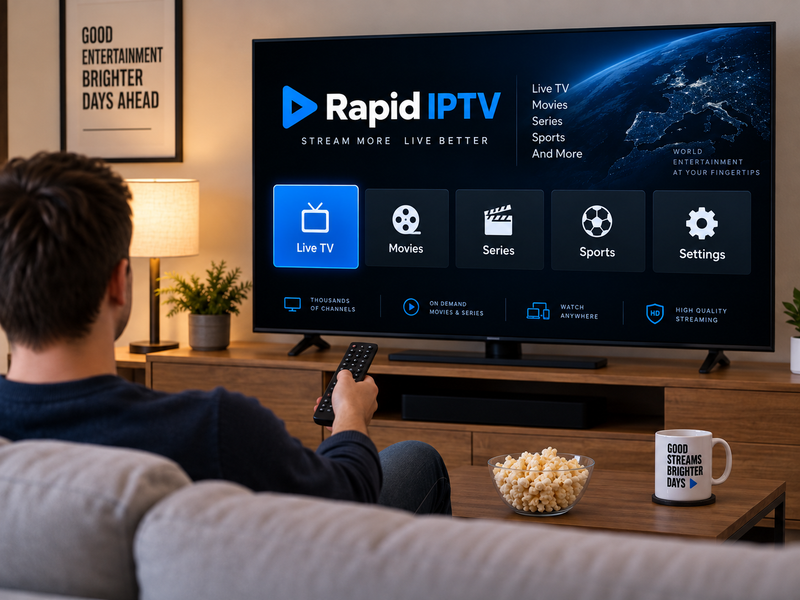
However, getting a good IPTV experience involves more than simply choosing a subscription. Your internet connection, streaming device, IPTV player, network configuration, and viewing habits can all affect playback quality.
This guide explains what to consider when choosing an IPTV service and how to prepare your devices and network for smoother streaming.
What Is IPTV and How Does It Work?
IPTV stands for Internet Protocol Television. It delivers television streams through internet protocols rather than conventional terrestrial, satellite, or cable broadcasting systems.
After subscribing to a compatible IPTV service, users typically receive information that allows them to access content through a supported IPTV player or device. Depending on the service and application, this may involve login credentials, a playlist, or another supported connection method.
The IPTV player then connects to the service through the internet and displays available live channels or on-demand content.
IPTV Compared With Traditional Television
Traditional television normally relies on a dedicated broadcasting infrastructure. IPTV uses an internet connection, which makes it possible to access compatible content on different types of connected devices.
Depending on the application and service, IPTV may be used with devices such as:
Smart TVs
Android TV devices
Streaming boxes
Smartphones
Tablets
Computers
Apple TV devices
Amazon Fire TV devices
Compatibility should always be checked before purchasing a subscription because supported applications and setup methods can vary.
What to Look for Before Choosing an IPTV Service
Choosing a service based only on price can lead to a disappointing streaming experience. Several other factors deserve attention.
Device Compatibility
Start by identifying where you intend to watch television.
A household using a Smart TV may require a different setup from someone streaming primarily on an Android phone or laptop. Confirm that the provider explains how its service can be configured on your preferred device.
Good setup documentation can make installation considerably easier, particularly for first-time IPTV users.
Subscription Flexibility
Not everyone needs the same subscription period. Someone testing IPTV for the first time may prefer a shorter commitment, while regular viewers may be interested in longer subscription options.
Review the available plans carefully and understand what is included before making a decision.
When comparing providers such as Rapid IPTV, users should consider device compatibility, available subscription options, setup information, and the type of support provided rather than focusing on a single feature.
Channel and Content Relevance
A large channel list is not necessarily useful if most of the content does not match your interests.
Think about what you actually watch. This may include:
Live sports
News
Entertainment channels
Movies
Television series
International programming
Family content
Review available channel information where possible and prioritize relevance over raw numbers.
Internet Speed Matters for IPTV Streaming
Because IPTV depends on an internet connection, network quality has a direct effect on playback.
Streaming higher-resolution video usually requires more bandwidth than standard-definition content. However, advertised internet speed is only one part of the picture.
Network congestion, Wi-Fi interference, router placement, simultaneous downloads, and other connected devices can also affect streaming.
Use Ethernet When Possible
A wired Ethernet connection generally provides a more consistent connection than Wi-Fi because it is less affected by wireless interference.
If your television or streaming device has an Ethernet port and your router is nearby, connecting them directly can be worth considering.
Improve Your Wi-Fi Setup
Ethernet is not practical in every room. If you use Wi-Fi, router placement becomes important.
Try to keep the router away from thick walls, large metal objects, and other sources of interference. Positioning it in a more central location can improve coverage throughout the home.
Modern dual-band or multi-band routers may also allow compatible devices to use less congested wireless frequencies.
Choosing the Right IPTV Player
An IPTV subscription and an IPTV player are not always the same thing.
The provider supplies access to the television service, while the player is the application used to display and manage streams on your device.
Different IPTV players may provide features such as:
Channel categories
Favorites
Search functions
Electronic Program Guide support
Playlist management
Multiple profiles
Parental controls
Playback settings
Before installing an app, confirm that it works with both your device and the connection method supported by your IPTV service.
How to Set Up IPTV
Exact installation steps vary depending on the device and application, but the general process is usually straightforward.
Step 1: Prepare Your Internet Connection
Make sure the device is connected to a stable network before beginning the installation.
If possible, test streaming performance before configuring IPTV.
Step 2: Install a Compatible IPTV Application
Download a suitable IPTV player from the official application store for your device whenever possible.
Avoid downloading applications from unfamiliar websites because unofficial files can introduce security and privacy risks.
Step 3: Enter Your Subscription Information
Your provider should supply the information needed to connect the IPTV player to the service.
Enter the information carefully. Even a small mistake in a username, password, server address, or playlist URL can prevent the service from loading correctly.
Step 4: Allow the Content to Load
After entering the required information, the IPTV player may need some time to load channels, categories, program information, or on-demand libraries.
Step 5: Test Different Streams
Test several channels rather than assuming that one playback issue represents the entire service.
Trying different content can help determine whether a problem is related to a particular stream, application, device, or network.
Common IPTV Streaming Problems
Even a correctly configured IPTV setup can occasionally experience problems.
Buffering
Buffering can result from an unstable internet connection, network congestion, Wi-Fi interference, device limitations, or temporary issues with a stream.
Start by checking your internet connection and closing unnecessary downloads or streaming sessions.
Restarting the router and streaming device may also resolve temporary network problems.
Channels Not Loading
If channels suddenly stop loading, confirm that the device still has internet access.
You can also restart the IPTV application and verify that the subscription information has not been changed accidentally.
If the issue continues across multiple channels and devices, contacting the service provider may be appropriate.
Poor Picture Quality
Video quality depends on several factors, including the source stream, internet connection, display settings, and device performance.
Higher resolution is not always the best choice when the connection is unstable. A consistent HD stream can provide a better viewing experience than a higher-resolution stream that repeatedly buffers.
Keep Your Streaming Device Updated
Regular software updates can improve stability, compatibility, and security.
Keep your:
Streaming device firmware updated
IPTV player updated
Router firmware current when appropriate
Operating system supported
Older applications or operating systems may eventually experience compatibility problems with newer streaming technologies.
IPTV Security and Responsible Use
Streaming devices are connected to the internet, so basic digital security practices remain important.
Use strong passwords for accounts associated with your devices, install applications from trusted sources, and avoid sharing subscription credentials publicly.
Users should also understand that content rights and IPTV regulations can differ between countries and services. Always make sure that the content and services you access comply with applicable laws and licensing requirements in your location.
Final Thoughts
A good IPTV experience depends on the combination of the service, device, application, and internet connection.
Before selecting a subscription, check whether the service works with your preferred devices, provides suitable content, offers clear setup information, and has subscription options that fit your viewing requirements.
Once the service is configured, improving your network connection, using a reliable IPTV player, keeping devices updated, and following basic troubleshooting practices can make everyday streaming considerably easier.
Taking a few minutes to evaluate these factors before subscribing can help you build a more practical and reliable IPTV setup for live television, sports, movies, and series.






Top comments (0)