

Digital landscape, customer communication has become a critical factor in determining business success. With over 2 billion WhatsApp users worldwide, businesses are increasingly recognizing the platform's potential as a powerful sales and customer service channel. When integrated with Customer Relationship Management (CRM) systems, WhatsApp Business API transforms into a comprehensive solution that not only enhances customer interactions but significantly boosts sales performance and customer loyalty. This article explores how this integration revolutionizes business communication and drives measurable results.
Understanding WhatsApp Business API and CRM Integration
What is WhatsApp Business API?
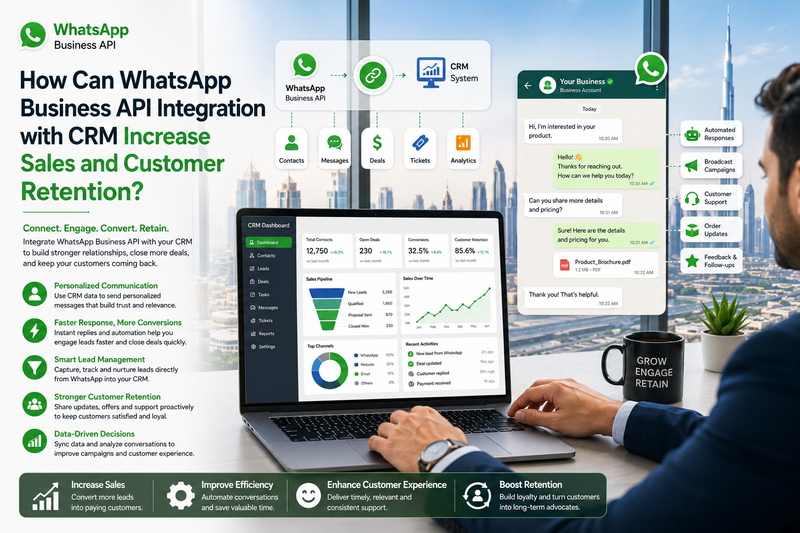
WhatsApp Business API is a dedicated platform designed specifically for enterprises to communicate at scale with their customers. Unlike the standard WhatsApp application, the API provides advanced features including automated messaging, template-based communications, and detailed analytics. It enables businesses to send and receive messages programmatically, allowing for seamless integration with existing business systems.
The Role of CRM Systems
CRM systems serve as the central hub for managing customer relationships and data. They store comprehensive customer information, interaction history, preferences, and behavioral patterns. When combined with WhatsApp Business API Integration with CRM systems become more powerful, enabling personalized and timely communications based on customer data and engagement history.
The Synergy of Integration
The integration of WhatsApp Business API with CRM creates a unified communication platform that bridges the gap between customer data and direct communication channels. This synergy allows businesses to deliver contextual, personalized messages at the right time, transforming customer interactions into meaningful business opportunities.
How WhatsApp Business API Integration Increases Sales
Real-Time Customer Engagement
Integrated systems enable businesses to engage customers instantly through WhatsApp, which has significantly higher open rates compared to email. When a customer shows interest in a product or service, sales teams can respond immediately through the customer's preferred communication channel. This real-time engagement reduces response times from hours to minutes, dramatically improving conversion rates.
Personalized Product Recommendations
By leveraging customer data stored in the CRM, businesses can send highly targeted product recommendations through WhatsApp. The integration allows systems to analyze purchase history, browsing behavior, and customer preferences, enabling sales teams to suggest relevant products that match individual customer needs. These personalized recommendations typically result in higher click-through rates and improved sales performance.
Automated Sales Workflows
WhatsApp Business API integration enables the automation of routine sales processes. Automated welcome messages for new leads, order confirmations, payment reminders, and follow-up sequences can be triggered based on specific customer actions or predefined conditions. This automation ensures no lead falls through the cracks while freeing sales teams to focus on high-value, relationship-building activities.
Order Status Updates and Transaction Management
Customers can receive real-time updates about their orders through WhatsApp, creating transparency and reducing support inquiries. When integrated with CRM systems, these updates are automatically generated based on order data, providing customers with accurate information about delivery timelines, order processing, and transaction status. This proactive communication builds trust and encourages repeat purchases.
Simplified Sales Funnel
The integration streamlines the entire sales process by consolidating customer interactions in a single platform. Sales representatives can access complete customer histories, previous conversations, and relevant CRM data without switching between applications. This unified view of customer information enables more effective sales conversations and faster decision-making, resulting in shortened sales cycles and increased conversion rates.
Enhancing Customer Retention Through Strategic Integration
Building Stronger Customer Relationships
WhatsApp conversations feel personal and direct, creating stronger emotional connections than traditional communication channels. When businesses use the API to send thoughtful, personalized messages based on CRM data, customers feel valued and understood. This personalization strengthens relationships and increases customer lifetime value.
Proactive Customer Support
Integrated systems allow businesses to anticipate customer needs and provide proactive support. By analyzing customer data in the CRM, businesses can identify potential issues before customers report them. For example, if a customer's product warranty is about to expire or they haven't made a purchase in a while, automated WhatsApp messages can be triggered to offer assistance or relevant solutions.
Loyalty Program Management
WhatsApp integration enables seamless communication regarding loyalty programs and exclusive rewards. Customers can receive personalized offers, points updates, and exclusive deals directly through WhatsApp. The integration ensures that loyalty communications are triggered based on customer behavior and preferences stored in the CRM, making these interactions relevant and timely.
Feedback and Satisfaction Surveys
Integrated systems can automatically send customer satisfaction surveys through WhatsApp at optimal times. These surveys, when combined with CRM data, provide valuable insights into customer satisfaction levels. By addressing concerns promptly, businesses can resolve issues before customers churn, significantly improving retention rates.
Consistent Omnichannel Experience
Integration ensures consistency across all customer touchpoints. Whether a customer interacts through WhatsApp, email, or in-person, their complete interaction history is available in the CRM. This consistency creates a seamless experience and prevents customers from having to repeat information, leading to higher satisfaction and improved retention.
Key Benefits and Measurable Outcomes
Improved Response Times
Integrated systems reduce communication delays, enabling businesses to respond to customer inquiries within minutes rather than hours. This responsiveness directly impacts customer satisfaction and sales conversion rates.
Enhanced Data Quality
Automated data capture through WhatsApp interactions ensures that customer information in the CRM remains current and accurate. This improved data quality leads to better decision-making and more effective marketing campaigns.
Cost Efficiency
By automating routine communications and reducing the need for manual data entry, businesses significantly reduce operational costs. The efficiency gained allows organizations to serve more customers without proportionally increasing staff requirements.
Better Analytics and Insights
The integration provides comprehensive analytics about customer interactions, engagement patterns, and conversion metrics. These insights enable continuous optimization of communication strategies and customer engagement approaches.
Increased Customer Lifetime Value
When sales increase and retention improves simultaneously, customer lifetime value naturally increases. Loyal customers who engage regularly through WhatsApp tend to make larger purchases and refer others, multiplying the business impact.
Implementation Best Practices
Ensure Data Privacy and Compliance
Before implementation, establish robust data security measures and ensure compliance with regulations like GDPR and local data protection laws. Transparent communication about data usage builds customer trust.
Segment Your Audience
Divide your customer base into meaningful segments based on CRM data. Different segments have different needs and preferences, so tailor your WhatsApp communications accordingly.
Create Valuable Message Templates
Develop message templates that provide genuine value rather than constant sales pitches. Balance promotional content with helpful information and customer support.
Monitor and Optimize
Continuously track metrics like engagement rates, conversion rates, and customer satisfaction scores. Use these insights to refine your messaging strategy and improve outcomes over time.
Train Your Team
Ensure that your sales and customer service teams understand how to effectively use the integrated system. Proper training maximizes the benefits of the integration.
Conclusion
The integration of WhatsApp Business API with CRM systems represents a significant evolution in customer communication strategy. By combining the reach and engagement potential of WhatsApp with the data-driven insights of CRM platforms, businesses can create highly personalized, timely, and relevant customer interactions. The results are measurable and substantial: increased sales through better engagement and personalization, improved customer retention through proactive support and meaningful interactions, and enhanced operational efficiency through automation.
As customer expectations continue to evolve, businesses that leverage this integration effectively will find themselves with a competitive advantage. The combination of real-time communication, personalized interactions, and data-driven insights creates a powerful formula for sales growth and customer loyalty. Organizations willing to invest in this integration today will reap significant benefits in customer satisfaction, revenue growth, and long-term business sustainability.
For businesses looking to stay ahead in an increasingly competitive market, WhatsApp Business API integration with CRM is not just a nice-to-have feature—it is becoming an essential component of modern customer engagement strategy.






Top comments (0)