
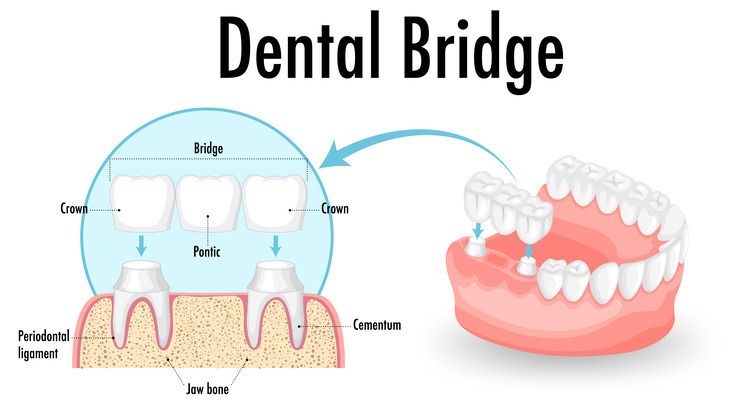

A gap in your smile does not have to be permanent. Whether a tooth was lost due to injury, decay, or extraction, modern dentistry offers a simple, effective way to fill that space and restore your bite. A dental bridge is one of the most trusted solutions for this exact problem, literally bridging the space where a tooth once stood. It looks natural, feels comfortable, and functions just like your original teeth.
What Is a Dental Bridge?
Dental bridges are fixed prosthetic replacements for one or more missing teeth. It joins an artificial tooth, known as a pontic, to the natural teeth or dental implants on either side of the gap. These supporting teeth are called abutment teeth. The pontic is typically made from porcelain, ceramic, or a combination of materials designed to blend naturally with your surrounding teeth.
Unlike removable dentures, these bridges are cemented in place, so you don't have to remove it to clean it. This makes it a convenient, long-lasting option for people looking to restore a complete, functional smile.
Types of Dental Bridges
Several types of dental bridge restorations exist, and each uses a different support method.
Traditional Bridges
This is the most common type of dental bridge. It involves placing a crown over the neighboring tooth or implant on both sides of the missing tooth, with a pontic in between. Traditional bridges are commonly made of porcelain fused to metal or ceramics and work well when healthy natural teeth remain on both sides of the gap.
Cantilever Bridges
Cantilever bridges are preferred when there is only one adjacent tooth available to support the bridge, rather than teeth on both sides. While effective, this type is less commonly recommended today because it can place additional stress on the supporting tooth.
Maryland Bridges
Maryland bridges use a framework or wings that attach to the back surfaces of nearby teeth. They are a more conservative option since they require less alteration of the neighboring teeth, though they may not be as strong as traditional bridges.
Implant-Supported Bridges
Implant-supported bridges rely on dental implants surgically placed in the jawbone. This type is often recommended when multiple teeth are missing in a row, as it offers excellent stability and does not put pressure on remaining natural teeth.
Benefits of a Dental Bridge
Choosing dental bridges can offer several benefits. One of the most noticeable is improved appearance. The artificial teeth can be designed to closely match your natural teeth, helping create a more complete smile.
A bridge can also improve chewing ability. Missing teeth can make biting and chewing certain foods uncomfortable. Replacing the missing teeth helps restore function and comfort.
Speech may also improve after tooth replacement. Gaps in the teeth can sometimes affect how certain sounds are produced. Filling the space may help you speak more naturally.
Another important benefit is maintaining tooth alignment. When you lose a tooth, neighbouring teeth may gradually shift into the empty space. A bridge can help maintain the position of surrounding teeth and support a more balanced bite.
Caring for Your Dental Bridge
Good oral hygiene helps keep your dental bridge and surrounding teeth healthy. Brush daily with fluoride toothpaste and clean between your teeth every day. Your dentist may recommend floss threaders, interdental brushes, or other tools to clean underneath the bridge.
Regular dental checkups are also important. Your dentist can monitor the bridge, supporting teeth, gums, and overall oral health. Avoiding habits like biting hard objects can also help protect the restoration.
Can Children Get a Dental Bridge?
Children with missing teeth may sometimes need a specialized dental restoration, but treatment depends on their age, dental development, and the reason for tooth loss. A kids dentist can evaluate the child's needs and recommend an appropriate option.
In many cases, dentists consider the child's developing permanent teeth before choosing a long-term replacement. A kids dentist can also discuss temporary solutions when appropriate.
Conclusion
Dental bridges are a proven, effective treatment for replacing missing teeth. From traditional to implant-supported bridges, this treatment can improve your quality of life no matter the type. Combined with preventive care, it can also help protect your dental health for years to come. If you are missing a tooth, consult your dentist to determine which type of bridge is right for you.







Top comments (0)