

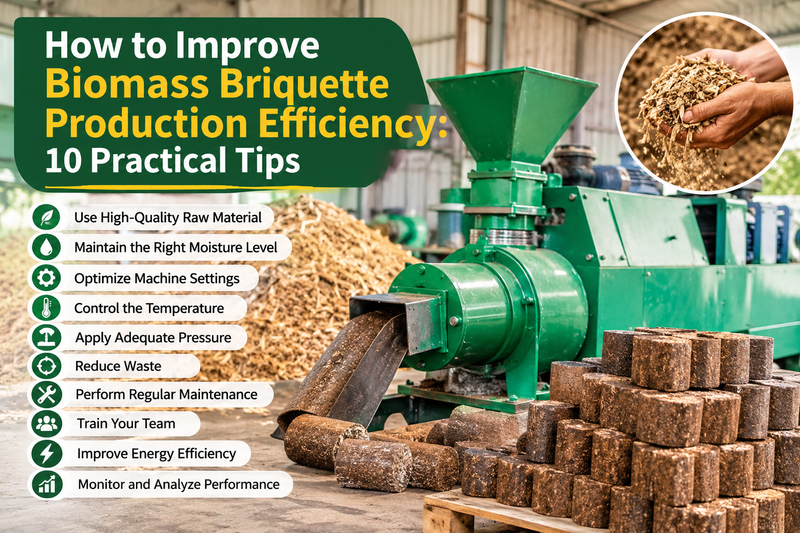
Biomass briquette production is becoming an important business opportunity for industries looking for affordable and eco-friendly fuel alternatives. Agricultural waste such as groundnut shells, rice husks, sawdust, cotton stalks, and other organic materials can be converted into useful solid fuel through the briquetting process.
However, running a successful biomass briquette manufacturing business requires more than just installing a briquetting machine. Manufacturers need to maintain consistent raw material quality, control moisture levels, use suitable machinery, and follow proper production practices.
Improving biomass briquette production efficiency helps manufacturers increase output, reduce material wastage, maintain product quality, and control operating costs.
What Is Biomass Briquette Production?
Biomass briquette production is the process of converting agricultural and organic waste into compact solid fuel using a briquetting machine. Different raw materials are processed, dried, and compressed under high pressure to produce briquettes.
These briquettes are commonly used in industrial boilers, furnaces, heating systems, and other applications as an alternative to traditional fossil fuels.
The typical biomass briquette manufacturing process includes:
- Raw material collection
- Raw material sorting and cleaning
- Size reduction using a hammer mill or crusher
- Moisture reduction through a drying machine
- Material feeding into the briquetting machine
- Briquette compression and formation
- Cooling and storage
- Packaging and distribution
Each stage plays an important role in maintaining production efficiency and product quality.
10 Ways to Improve Biomass Briquette Production Efficiency
1. Select the Right Raw Materials
Raw material quality directly affects the performance of a biomass briquetting plant. Different agricultural materials have different properties, moisture levels, and heating values.
Materials such as groundnut shells, sawdust, rice husks, cotton stalks, and other agricultural residues can be used for briquette manufacturing.
How to improve efficiency:
- Select clean and suitable biomass materials.
- Avoid materials containing stones, metal, and other unwanted particles.
- Maintain a consistent raw material supply.
- Check the quality of materials before processing.
- Choose raw materials according to machine compatibility.
Using suitable raw materials helps reduce processing difficulties and improves the consistency of the final briquettes.
2. Maintain the Correct Moisture Content
Moisture content is one of the most important factors in biomass briquette production. Excess moisture can affect compression, reduce briquette strength, increase drying requirements, and create production problems.
On the other hand, overly dry material may also affect the binding and compaction characteristics of certain biomass feedstocks.
Practical tips:
- Measure raw material moisture before processing.
- Use a suitable biomass drying machine.
- Maintain consistent moisture levels according to the feedstock and machine specifications.
- Avoid mixing materials with significantly different moisture levels without proper adjustment.
- Monitor moisture during different weather conditions.
The ideal moisture level depends on the raw material, machine design, and production requirements. Follow the equipment manufacturer's recommendations.
3. Use an Efficient Biomass Drying System
Drying is an essential stage before briquetting because raw agricultural waste often contains excess moisture.
An inefficient drying process can increase electricity or fuel consumption and reduce overall plant productivity.
Manufacturers can consider different drying systems depending on their production capacity and raw material requirements.
Common biomass drying equipment includes:
- Rotary dryer
- Flash dryer
- Industrial biomass dryer
How to improve drying efficiency:
- Select a dryer according to plant capacity.
- Maintain proper airflow and temperature.
- Avoid over-drying the raw material.
- Clean the drying system regularly.
- Monitor moisture levels before feeding material into the briquetting machine.
An appropriate drying system helps maintain consistent feedstock quality and supports smooth production.
4. Use the Right Hammer Mill for Size Reduction
Raw biomass materials often come in different sizes. Large particles can affect feeding, compression, and the final briquette structure.
A hammer mill reduces raw materials into smaller particles, making them easier to process.
Ways to improve hammer mill performance:
- Select suitable screen sizes.
- Check hammer condition regularly.
- Avoid overloading the machine.
- Maintain consistent material feeding.
- Replace damaged or worn components when required.
Proper size reduction improves material consistency and helps the briquetting machine operate more smoothly.
5. Choose the Right Briquetting Machine
Selecting the right briquetting machine is essential for improving production efficiency. A machine that does not match your raw material or production requirements can lead to inconsistent output and unnecessary maintenance.
Before purchasing a machine, manufacturers should consider:
- Required production capacity.
- Type of biomass raw material.
- Power consumption.
- Machine design and technology.
- Maintenance requirements.
- Availability of spare parts.
- Expected production hours.
For example, a small manufacturing unit may require a different machine configuration compared with a large industrial briquette production plant.
Choosing suitable machinery helps improve productivity and supports long-term business growth.
6. Maintain Consistent Material Feeding
Irregular feeding is a common reason for production interruptions. When too much or too little material enters the briquetting machine, the production process may become unstable.
Consistent feeding helps maintain smooth machine operation.
Follow these practices:
- Use an appropriate feeding system.
- Maintain a steady flow of raw material.
- Avoid sudden overloading.
- Monitor feeding speed.
- Keep the feeding area clean.
- Check for blockages regularly.
A properly managed feeding system reduces interruptions and helps maintain consistent production.
7. Perform Regular Machine Maintenance
Machine maintenance is necessary for maintaining long-term production efficiency. Continuous operation without proper inspection can cause component wear, unexpected breakdowns, and production delays.
Manufacturers should create a regular maintenance schedule.
Important maintenance activities include:
- Inspecting bearings and moving parts.
- Checking belts and motors.
- Cleaning machine components.
- Inspecting hydraulic or mechanical systems, where applicable.
- Checking electrical connections.
- Replacing worn-out components.
- Following the manufacturer's lubrication schedule.
Preventive maintenance helps reduce unexpected downtime and improves equipment reliability.
8. Improve Briquette Cooling and Storage
After compression, freshly produced briquettes may require sufficient cooling and stabilization before packaging and storage.
Poor handling can cause breakage, cracks, and unnecessary material losses.
Tips for better cooling and storage:
- Allow briquettes to cool properly.
- Avoid excessive handling immediately after production.
- Store briquettes in a dry and covered area.
- Protect finished products from rain and moisture.
- Use suitable packaging and storage arrangements.
- Maintain proper ventilation where required.
Good storage practices help preserve briquette quality during transportation and distribution.
9. Train Workers and Improve Production Management
Machine performance is important, but trained workers also play a major role in improving manufacturing efficiency.
Operators who understand the production process can identify problems early and prevent unnecessary interruptions.
Training should cover:
- Machine operating procedures.
- Raw material handling.
- Moisture measurement.
- Safety precautions.
- Basic troubleshooting.
- Equipment cleaning and maintenance.
- Quality inspection.
Manufacturers should also maintain production records to identify areas that need improvement.
10. Monitor Production Performance Regularly
Measuring production performance helps manufacturers understand how efficiently their biomass briquette plant is operating.
Instead of focusing only on daily output, businesses should monitor several important performance indicators.
| Performance Indicator | Why It Matters |
|---|---|
| Production output | Measures total briquette production |
| Raw material consumption | Helps control material usage |
| Moisture content | Supports consistent feedstock quality |
| Machine downtime | Identifies production interruptions |
| Power consumption | Helps monitor operating costs |
| Rejected briquettes | Measures product quality issues |
| Maintenance expenses | Helps control equipment costs |
Regular monitoring helps identify production problems and supports better decision-making.
Common Problems That Reduce Biomass Briquette Production Efficiency
Even a well-designed biomass briquette plant can experience production problems if raw materials, machinery, or operating conditions are not properly managed.
Here are some common issues and their possible solutions.
| Common Problem | Possible Reason | Practical Solution |
|---|---|---|
| Low production output | Irregular feeding or unsuitable machine settings | Check feeding consistency and machine specifications |
| Weak briquettes | Incorrect moisture or unsuitable raw material | Check moisture and feedstock quality |
| Frequent machine blockage | Oversized particles or foreign materials | Improve screening and size reduction |
| High power consumption | Poor machine condition or inefficient operation | Inspect equipment and operating conditions |
| Briquette breakage | Inadequate cooling or handling | Improve cooling and storage practices |
| Frequent machine downtime | Lack of preventive maintenance | Follow a regular maintenance schedule |
Identifying the actual cause of a problem is important before making adjustments to machinery or production settings.
Benefits of Improving Biomass Briquette Production Efficiency
Improving production efficiency offers several advantages to biomass manufacturing businesses.
1. Higher Production Output: Better material preparation and machine operation can help increase productive operating time.
2. Reduced Production Costs: Proper raw material management and maintenance can reduce avoidable expenses.
3. Better Briquette Quality: Consistent moisture, particle size, and compression conditions help maintain product quality.
4. Less Material Wastage: Proper handling and storage reduce unnecessary material losses.
5. Reduced Machine Downtime: Preventive maintenance helps minimize unexpected breakdowns.
6. Improved Business Profitability: Better production management can support improved operating margins and customer satisfaction.
How Ronak Engineering Supports Biomass Briquette Manufacturing
Choosing suitable machinery is an important step in establishing an efficient biomass manufacturing plant. Ronak Engineering focuses on biomass processing and machinery solutions designed to support briquette and pellet manufacturing requirements.
From raw material preparation to the final production stage, selecting appropriate equipment helps manufacturers manage their operations more effectively.
When planning a biomass briquette plant, businesses should evaluate their raw material availability, required production capacity, moisture conditions, and operational requirements before selecting machinery.
Ronak Engineering aims to support biomass manufacturers with practical machinery solutions for their production needs.
Frequently Asked Questions (FAQs)
1. How can I increase biomass briquette production?
You can improve biomass briquette production by selecting suitable raw materials, maintaining proper moisture levels, using efficient drying equipment, ensuring consistent material feeding, and performing regular machine maintenance.
2. What is the ideal moisture content for biomass briquettes?
The ideal moisture content depends on the raw material and machine specifications. Many briquetting processes work with feedstock moisture around 8%–12%, but manufacturers should follow the equipment supplier's recommendations and test their specific material.
3. Which raw materials are best for biomass briquette production?
Common raw materials include sawdust, groundnut shells, rice husks, cotton stalks, mustard stalks, and other suitable agricultural residues. The best option depends on local availability and material properties.
4. Why is drying important in biomass briquette manufacturing?
Drying reduces excess moisture in raw materials, helping improve compression, briquette quality, and production consistency.
5. How does a hammer mill improve biomass production?
A hammer mill reduces large biomass particles into smaller and more uniform sizes, making raw materials easier to process in the briquetting machine.
6. How often should a briquetting machine be maintained?
Maintenance frequency depends on machine design, operating hours, and manufacturer recommendations. Daily inspections and scheduled preventive maintenance are important for reliable operation.
7. What factors affect biomass briquette production efficiency?
Important factors include raw material quality, moisture content, particle size, machine capacity, feeding consistency, operator skills, and equipment maintenance.
Conclusion
Improving biomass briquette production efficiency requires proper planning, suitable machinery, quality raw materials, and regular monitoring. Every stage, from raw material preparation to final briquette storage, contributes to overall production performance.
By following these 10 practical methods, biomass manufacturers can reduce avoidable downtime, improve product consistency, manage operating costs, and build a more reliable manufacturing process.
If you are planning to establish a biomass briquette plant or improve your existing production setup, choosing the right machinery is an important first step.
Contact Ronak Engineering to explore suitable biomass processing and briquetting machinery solutions for your business.





Top comments (0)