
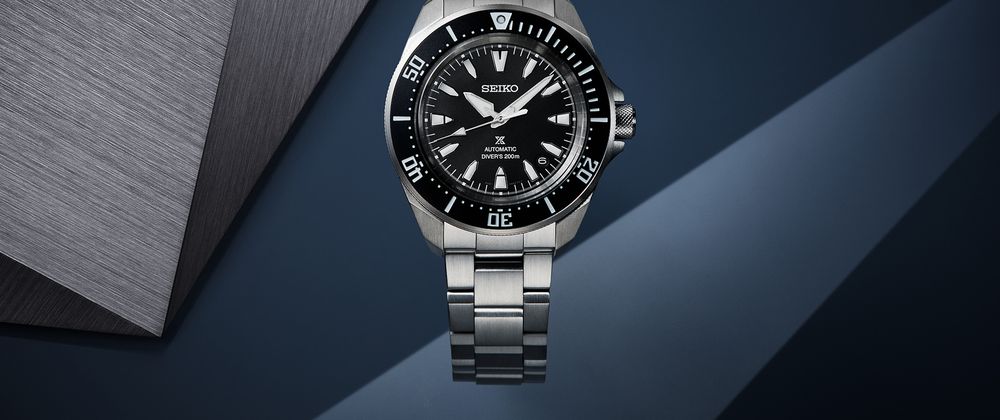

Few watch brands can trace as long and eventful a history as Seiko Watches. What began as a single watch-repair shop in 19th-century Tokyo has evolved, through waves of innovation and reinvention, into a company that helped redefine how the entire world measures time. Tracing that evolution decade by decade reveals just how much of modern watchmaking owes a debt to Seiko's willingness to experiment.
1881–1920s: Humble Beginnings
The Seiko story begins in 1881, when Kintaro Hattori opened a small shop in Tokyo dealing in watch and clock repairs. Within nine years, Hattori had transitioned from repairing timepieces to manufacturing them, establishing the Seikosha factory in 1892 to produce clocks. The company's first wristwatch, the Laurel, arrived in 1913, marking Japan's entry into wristwatch manufacturing at a time when pocket watches still dominated. These early decades were defined by steady expansion and a growing reputation for precision within the domestic Japanese market.
1930s–1950s: Building Technical Credibility
By the 1920s and 1930s, the seikowatch.co.uk company had adopted the Seiko name on its dials, a term meaning "precision" or "exquisite" in Japanese, foreshadowing the brand identity that would follow. Production continued through difficult economic periods and the disruptions of the Second World War, after which Seiko rebuilt its manufacturing capacity and began setting its sights on international markets. In 1956, Seiko released Japan's first self-winding watch, signaling the company's growing technical ambitions and setting the stage for the innovations to come.
1960s: Precision Takes Center Stage
The 1960s marked a turning point in Seiko's identity as a serious contender in global watchmaking. In 1960, the Grand Seiko line launched, aiming to produce the most accurate and well-finished mechanical watches Japan had ever made, directly challenging Swiss chronometer standards. Seiko also entered the world of professional sports timing during this decade, serving as official timekeeper at the 1964 Tokyo Olympics, a role that showcased the brand's precision on a global stage. In 1965, Seiko introduced its first diver's watch, engineering it to withstand serious underwater pressure, an early sign of the rugged Prospex lineage that would follow decades later. The decade closed with arguably Seiko's most consequential release: the 1969 debut of the Astron, the world's first quartz wristwatch, which offered dramatically improved accuracy over mechanical movements and triggered what the industry would later call the Quartz Crisis.
1970s–1980s: Quartz Dominance and Global Expansion
Following the Astron's success, Seiko pushed quartz technology further, introducing increasingly compact and affordable quartz movements throughout the 1970s. This period saw Seiko expand aggressively into international markets, becoming a household name across the United States, Europe, and beyond. Seiko also continued refining its multifunction watches, introducing early digital displays, chronograph functions, and eventually the world's first watch with a digital display and analog quartz combination. The brand's unofficial connection to space exploration also dates to this era, with reports of a Seiko chronograph being used aboard NASA's Apollo 17 mission in 1972.
1990s–2000s: Diversification and Refinement
As quartz technology matured and became widely adopted across the industry, Seiko turned its innovative energy toward new frontiers. In 1999, the company introduced Spring Drive, a hybrid movement combining mechanical energy generation with quartz-level electronic regulation, producing an unusually smooth sweeping second hand. This technology represented years of internal development and demonstrated Seiko's continued commitment to mechanical watchmaking even in a quartz-dominated era. During this period, Seiko also began developing solar-powered and kinetic movements, further expanding the ways its watches could be powered without traditional battery replacement.
2010s–Present: A Dual Identity
In recent years, Seiko has formalized a distinction between its mainline collections and its most prestigious offerings. In 2017, Grand Seiko was spun off as an entirely independent luxury brand, allowing it to compete directly against Switzerland's most established names while Seiko's core lineup, including Seiko 5, Prospex, and Presage, continued serving broader, more accessible markets. This restructuring allowed each side of the business to sharpen its identity: Grand Seiko doubling down on hand-finished luxury craftsmanship, and mainline Seiko continuing its tradition of dependable, well-engineered watches at accessible prices.
Looking Forward
More than 140 years after Kintaro Hattori opened his small repair shop, Seiko's story remains one of continuous reinvention. From mechanical pocket watches to quartz revolutions, from Olympic timekeeping to space missions, the company has repeatedly demonstrated an ability to anticipate where watchmaking needs to go next. As the industry continues evolving, with renewed interest in mechanical craftsmanship alongside advances in smart technology, Seiko's long track record suggests it will remain a driving force in shaping whatever comes next for how the world tells time.





Top comments (0)