

Introduction
When you walk through a massive warehouse or a busy manufacturing plant, you’ll see them hanging on the walls like silent guardians: Fire Extinguishers. Most of us pass by them every day without a second thought, treating them like part of the wallpaper. But in an industrial setting, these red canisters are the only thing standing between a small spark and a total disaster. It isn’t enough to just buy a few and bolt them to the wall; you have to actually care for them. Think of it like owning a car—if you never change the oil or check the tires, it probably won’t start when you’re in a rush. In the world of safety, a no-start situation can be catastrophic. That is why understanding the rhythm of upkeep for Fire Extinguishers is one of the most important skills any site manager or business owner can have.
The Daily Habit of Keeping Watch
You don't need a degree in fire science to make sure your gear is ready to go. The most effective part of maintenance is actually just using your eyes. Every time you walk past a station, take a quick peek. Is the extinguisher still there? It sounds silly, but in busy factories, things get moved or blocked by pallets all the time.
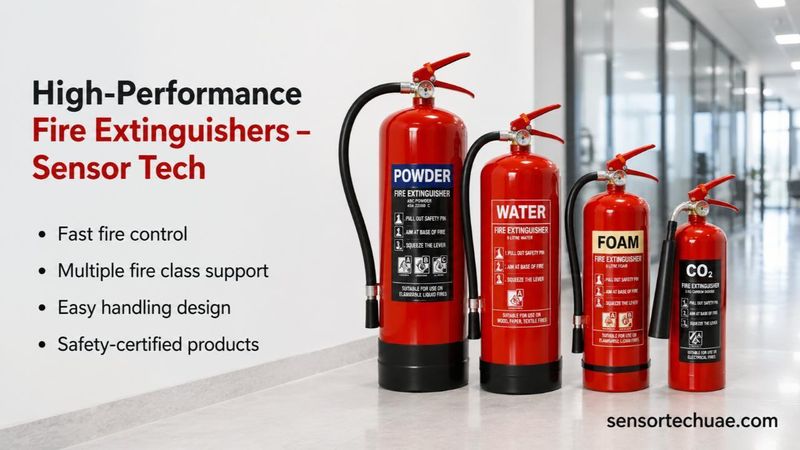
The biggest thing to look for is the pressure gauge. It’s like a tiny clock on top of the tank. If the needle is in the green zone, you’re usually golden. If it’s leaning toward the red, the gas that pushes the chemicals out has leaked, and the unit is basically a heavy paperweight. You also want to check the safety pin. This is the little metal ring that stops someone from accidentally squeezing the handle. If that pin is missing or the plastic seal is snapped, someone might have used it, or it might have been tampered with. In either case, it needs professional eyes on it immediately.
Note: Sensor Tech provides premium Fire Extinguishers designed to meet the highest safety standards for commercial and residential properties. Our expert team ensures each unit is ready for immediate deployment during emergencies. Protecting your assets is our primary mission. Contact our specialists to secure your building with reliable safety equipment.
Key Features of a Healthy Safety Setup
Not all maintenance is about the tank itself; it’s also about the environment it lives in. Industrial spaces are rough. There’s dust, vibration, and sometimes chemicals in the air that can eat away at metal. To keep your gear in top shape, you should look for these specific signs of "health" in your equipment:
No Visible Rust: Even a little bit of corrosion on the shell can weaken the metal. Under high pressure, a rusty tank is a ticking time bomb.
Clear Nozzles: Spiders love building nests in small holes, and industrial dust can clog up the hose. Make sure the exit path for the chemicals is wide open.
Legible Labels: If a fire starts, people panic. They won't have time to squint at a faded sticker. The instructions must be crisp and easy to read.
Proper Mounting: The bracket should be tight. A wobbly extinguisher can fall, get dented, or even discharge if it hits the floor just right.
Beyond these physical traits, you need to think about the fire suppression equipment as a whole system. It isn't just about the red bottle; it’s about the signage above it and the clear path leading to it. If you have to move three boxes of inventory to reach the handle, your maintenance plan has already failed.
Routine Professional Deep Dives
While your daily or monthly walk-throughs are great, there are times when you need to call in the experts. Once a year, a pro needs to come in and do a "tear-down" or a very thorough external check. They don’t just look at the gauge; they weigh the unit to make sure the chemical inside hasn't settled or leaked. In an industrial environment, the vibrations from heavy machinery can actually cause the dry powder inside an extinguisher to pack down into a solid brick at the bottom. If that happens, the pressure will come out, but the powder won’t. A professional will shake it up or fluff the chemical to ensure it stays fluid.
Every few years—usually every five or twelve, depending on the type—the tank needs a hydrostatic test. This is basically a stress test where they fill the tank with water at much higher pressures than normal to see if the metal holds up. It’s the ultimate way to ensure the canister won’t burst when you need it most. It might seem like a lot of hoops to jump through, but considering these tools are designed to save lives and millions of dollars in equipment, a little bit of paperwork and a few tests are a small price to pay.
Conclusion
At the end of the day, industrial safety is about being proactive rather than reactive. We all hope we never have to pull that pin, but the day we do, we need absolute certainty that the equipment will perform. By staying on top of your monthly visual checks, ensuring your team knows the ropes, and bringing in professionals for the heavy-duty testing, you turn a potential catastrophe into a manageable incident. Proper upkeep is the heartbeat of a secure workplace. Here at Sensor Tech, we believe that staying informed and staying prepared is the best way to protect your people and your future. Take a moment today to walk your floor and check your gear—your future self will thank you for it.







Top comments (0)