

Power electronics plays a vital role in the development of renewable energy technologies. As the world moves towards cleaner and more sustainable energy sources, advanced power conversion systems are becoming increasingly important. Technologies such as solar power, wind energy, and energy storage systems depend on efficient power electronics to convert, control, and distribute electricity.
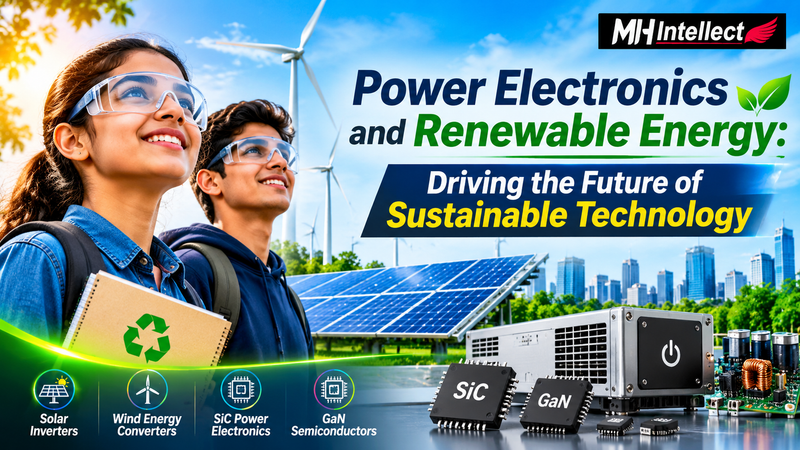
Power electronics helps improve energy efficiency, reduce power losses, and ensure a stable electricity supply. Innovations in semiconductor technology are also making renewable energy systems more compact, reliable, and cost-effective.
The Role of Power Electronics in Renewable Energy
Renewable energy sources generate electricity in different forms and at varying levels. Power electronic converters help transform this electricity into a suitable form for practical use.
For example, solar panels generate direct current (DC), while most homes and electrical grids use alternating current (AC). Power electronic devices convert DC into AC through inverters, making solar-generated electricity suitable for everyday applications.
Similarly, wind energy systems use power converters to manage variable electrical output and maintain grid stability.
Solar Inverters and Efficient Energy Conversion
Solar inverters are essential components of solar power systems. They convert the DC electricity produced by solar panels into AC electricity that can be used by homes, businesses, and industries.
Modern solar inverters also provide monitoring, voltage regulation, and maximum power point tracking (MPPT). These features help solar installations generate electricity more efficiently and improve overall system performance.
Wind Energy Converters
Wind turbines generate electricity based on changing wind speeds. This creates variations in voltage and frequency that must be controlled before electricity can be supplied to the grid.
Wind energy converters help regulate electrical output, improve power quality, and support stable grid integration. Advanced converter technologies also allow wind energy systems to operate more efficiently under different environmental conditions.
The Importance of SiC Power Electronics
Silicon Carbide (SiC) is an advanced semiconductor material that offers several advantages over traditional silicon-based devices. It can operate at higher temperatures, voltages, and switching frequencies.
SiC power electronics is increasingly used in renewable energy applications because it helps reduce energy losses and improve power conversion efficiency. SiC-based devices are particularly useful in solar inverters, electric vehicle charging systems, and industrial power converters.
GaN Semiconductors and Advanced Power Systems
Gallium Nitride (GaN) is another important semiconductor material transforming modern power electronics. GaN devices support high-speed switching and efficient power conversion.
GaN semiconductors enable smaller and lighter power electronic systems while maintaining high performance. They are useful in compact power supplies, renewable energy applications, and advanced electronic devices.
As semiconductor technology continues to develop, GaN and SiC devices are expected to support more efficient and reliable energy systems.
The Future of Semiconductors in Renewable Energy
The growing demand for renewable energy is encouraging innovation in semiconductor materials and power conversion technologies. Advanced semiconductor devices are helping improve the efficiency, reliability, and performance of modern energy systems.
Learn more about The Future of Semiconductors and how emerging technologies are shaping the next generation of electronic applications.
Conclusion
Power electronics is a key technology supporting the global transition towards renewable energy. From solar inverters and wind energy converters to SiC and GaN semiconductor devices, these innovations are improving energy conversion and reducing power losses.
As renewable energy adoption increases, advanced power electronics will continue to play an important role in building efficient, reliable, and sustainable energy systems.
Explore more educational technology insights and industry-related content at MH Intellect.







Top comments (0)