

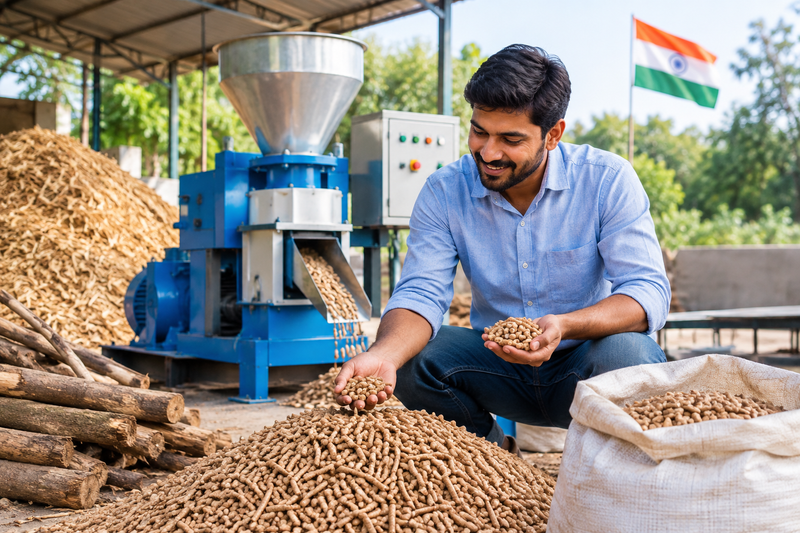
The demand for renewable energy and alternative fuels is increasing across India. Many industries are looking for affordable and eco-friendly fuel options to reduce their dependence on conventional fuels. Biomass pellets are becoming a popular choice because they are manufactured from agricultural waste, wood residues and other organic materials.
Starting a biomass pellet production business can be an interesting opportunity for entrepreneurs, farmers and small manufacturers who want to enter the renewable energy sector. With proper planning, suitable raw materials and the right machinery, even a small production unit can serve local industrial and commercial customers.
A small pellet machine plays an important role in starting this type of business. It helps convert processed biomass materials into compact pellets that are easier to store, transport and use as fuel.
In this guide, we will explain how to start a small biomass pellet production business in India, what machinery you need, how to select raw materials and which factors to consider before investing.
1. Understand the Biomass Pellet Production Business
Before starting a business, it is important to understand how biomass pellets are manufactured and where they are used.
Biomass pellets are small, compressed fuel products made from organic materials such as sawdust, groundnut shells, rice husk, agricultural residues and wood waste.
These materials are processed and compressed using a pellet machine to produce uniform fuel pellets.
Common applications of biomass pellets
- Industrial boilers and heating systems
- Food processing industries
- Textile manufacturing units
- Brick kilns and other industrial heating applications
- Commercial heating systems
- Selected power and energy generation applications
The demand for biomass pellets depends on local fuel requirements, raw material availability, product quality and transportation costs.
2. Conduct Market Research Before Investing
Market research is one of the first steps in establishing a successful biomass pellet manufacturing business.
Before purchasing machinery, identify potential customers and understand the demand for biomass fuel in your target market.
Consider the following factors:
Identify potential buyers: Contact industrial boiler operators, manufacturing units, food processing businesses and other potential biomass fuel consumers.
Study local competition: Research existing biomass pellet manufacturers and compare their product quality, pricing, production capacity and delivery services.
Check raw material availability: Identify nearby agricultural areas, sawmills and biomass suppliers that can provide consistent raw materials.
Understand transportation costs: Biomass materials can be bulky, so transportation expenses may affect your overall production cost.
Evaluate selling prices: Compare local biomass pellet prices and understand the quality specifications expected by buyers.
Proper research helps you select the right production capacity and avoid unnecessary investment.
3. Choose the Right Raw Materials for Biomass Pellets
Raw materials are the foundation of biomass pellet production. India has many agricultural and forestry residues that can be used for manufacturing biomass pellets.
Some commonly used materials include:
| Raw Material | Potential Application |
|---|---|
| Sawdust | Biomass fuel pellets |
| Groundnut shells | Industrial biomass pellets |
| Rice husk | Biomass fuel production |
| Cotton stalks | Agricultural waste pellets |
| Mustard stalks | Biomass pellet manufacturing |
| Wood chips | Wood-based fuel pellets |
| Sugarcane bagasse | Biomass fuel production |
Choose raw materials according to their local availability, moisture content, particle size and suitability for your pellet machine.
It is also important to maintain consistent raw material quality. Excessive moisture, soil, stones and other unwanted materials can affect the production process and final pellet quality.
4. Select a Suitable Small Pellet Machine
Choosing the right machinery is an important investment decision when starting a small biomass pellet production business.
A small pellet machine is suitable for businesses that want to begin with a relatively limited production setup. The appropriate machine depends on the raw material, required output, operating hours and available investment.
What is a mini pellet machine?
A mini pellet machine is a compact pellet-making unit designed for smaller-scale pellet production. It can be considered by entrepreneurs who want to start with a limited production capacity or test the local market before expanding.
Before purchasing a mini pellet machine, evaluate:
- Production capacity per hour
- Motor power and electricity requirements
- Raw material compatibility
- Pellet diameter and size
- Machine maintenance requirements
- Spare parts availability
- Installation and after-sales support
Important factors when selecting a machine
A suitable machine should match your production requirements and the characteristics of your raw materials.
For example, a business processing sawdust may have different preparation requirements from one using groundnut shells or agricultural stalks.
Compare machine specifications and conduct a practical production trial before making a final purchasing decision.
5. Understand the Biomass Pellet Manufacturing Process
A biomass pellet machine converts prepared biomass materials into compressed pellets through a controlled manufacturing process.
Here are the main production stages.
Step 1: Raw Material Collection
Collect suitable biomass materials from agricultural suppliers, sawmills or other local sources.
Ensure that the materials are free from stones, metal pieces, plastic and other unwanted substances.
Step 2: Drying the Raw Materials
Raw materials may contain excess moisture, which can affect pellet formation and final quality.
Use a suitable drying system to bring the material within the moisture range recommended for your feedstock and machine.
Step 3: Grinding and Size Reduction
Large biomass materials need to be reduced into smaller particles before pelletizing.
A hammer mill or suitable grinding machine can help prepare materials with a more uniform particle size.
Step 4: Pelletizing
The prepared biomass material is fed into the pellet machine.
Inside the machine, pressure forces the material through specially designed openings in the die, forming compact cylindrical pellets.
Step 5: Cooling the Pellets
Freshly produced pellets can be warm and may need cooling before storage.
A suitable cooling system helps reduce pellet temperature and stabilise the finished product.
Step 6: Screening and Packaging
After cooling, pellets can be screened to separate excessive fines and broken pieces.
The finished pellets are then packed in suitable bags or bulk packaging according to customer requirements.
6. Understand the Investment and Operating Costs
The investment required for a small biomass pellet production business depends on production capacity, machinery selection, raw material availability and the type of manufacturing setup.
Instead of considering only the machine purchase price, prepare a complete business budget.
| Investment Area | Expenses to Consider |
|---|---|
| Machinery | Small pellet machine, grinder and supporting equipment |
| Raw Materials | Agricultural waste, sawdust and other biomass |
| Infrastructure | Production space, storage and basic facilities |
| Electricity | Power connection and operating expenses |
| Labour | Machine operators and production workers |
| Packaging | Bags, labels and packing materials |
| Transportation | Raw material collection and finished product delivery |
| Maintenance | Spare parts, servicing and repairs |
Your business plan should also include working capital for daily operations.
Do not estimate profitability only from the machine's advertised production capacity. Actual output depends on raw material quality, moisture, machine performance, operating conditions and downtime.
7. Arrange Space and Infrastructure
A small biomass pellet production unit needs sufficient space for machinery, raw material storage, processing and finished pellet storage.
Consider the following infrastructure requirements:
- A suitable industrial or commercial production location
- Proper ventilation and dust management
- Reliable electricity supply
- Separate areas for raw materials and finished pellets
- Safe machine installation and operating space
- Suitable arrangements for loading and unloading
Keep biomass materials dry and protected from rain and excessive moisture.
You should also consider fire prevention, dust control and safe electrical installations because biomass processing can create combustible dust and fire risks.
8. Complete Business Registration and Legal Requirements
Before starting commercial production, check the applicable business registration and regulatory requirements.
Depending on your business structure, location and production activities, you may need to consider:
- Business registration or proprietorship documentation
- GST registration, where applicable
- Udyam registration for eligible MSMEs
- Local trade or factory licences, where applicable
- State Pollution Control Board permissions or consent requirements
- Fire safety and electrical safety requirements
- Applicable labour and industrial regulations
Requirements can vary depending on the state, manufacturing capacity and type of installation. Confirm the applicable permissions with the relevant government authorities before starting operations.
9. Focus on Biomass Pellet Quality
Producing biomass pellets is not only about operating machinery. Maintaining consistent product quality is equally important.
Industrial buyers generally evaluate pellets based on their fuel properties and suitability for their equipment.
Important quality parameters include:
Moisture Content: Excessive moisture can affect storage, combustion and fuel performance.
Ash Content: Ash levels depend on the raw material and can influence the suitability of pellets for different applications.
Calorific Value: This indicates the amount of energy released during combustion.
Pellet Durability: Strong pellets are generally easier to handle, store and transport.
Pellet Size: Uniform pellet dimensions help meet specific customer and equipment requirements.
Conduct appropriate quality tests and discuss customer specifications before supplying commercial orders.
10. Find Customers and Promote Your Biomass Pellet Business
After establishing production, the next step is to build a reliable customer base.
A good marketing strategy helps your business connect with industries that need alternative fuel sources.
Here are some useful marketing methods:
- Contact industrial boiler operators and manufacturing units.
- Connect with local biomass fuel distributors.
- Build relationships with agricultural waste suppliers.
- Create a professional website showcasing your products.
- Publish informative blogs about biomass pellets and renewable energy.
- Create business profiles on relevant industrial directories.
- Share product specifications, photographs and quality information.
- Attend industrial exhibitions and renewable energy events.
Digital marketing can also help your business reach potential buyers searching for biomass fuel suppliers and pellet manufacturers in India.
11. Common Mistakes to Avoid When Starting a Small Pellet Business
New entrepreneurs should understand the common challenges before investing in machinery.
Ignoring Raw Material Quality: Poor-quality materials can create production problems and inconsistent pellets.
Choosing the Wrong Machine: Selecting machinery without checking feedstock compatibility can increase operating difficulties.
Underestimating Electricity Costs: Power consumption should be included in your production cost calculations.
Ignoring Market Demand: Purchasing machinery without identifying potential customers can create selling difficulties.
Poor Storage Management: Exposure to moisture can damage finished pellets and reduce their quality.
Neglecting Maintenance: Regular inspection and preventive maintenance help reduce unexpected machine breakdowns.
Avoiding these mistakes can help create a more organised and sustainable manufacturing operation.
12. Future Opportunities for Biomass Pellet Manufacturing in India
India has significant agricultural residue resources that can support the development of biomass-based energy solutions.
Biomass pellets can help convert certain agricultural and forestry residues into useful fuel products. Their use may also support better utilisation of locally available biomass resources.
Entrepreneurs can explore opportunities in:
- Industrial biomass fuel supply
- Agricultural waste processing
- Renewable energy projects
- Biomass pellet distribution
- Contract manufacturing and bulk supply
- Expansion into larger pellet production facilities
However, business growth depends on consistent raw material sourcing, competitive production costs, reliable buyers and product quality.
Why Choose SK Briquettes for Biomass Pellet Machinery?
Selecting suitable machinery is an important step when planning a biomass pellet production unit.
SK Briquettes focuses on biomass briquetting and pellet-related machinery solutions for businesses interested in biomass fuel production.
Before selecting any machine, evaluate your raw materials, production requirements, available space and investment capacity.
The right machinery selection and proper production planning can help establish an efficient manufacturing setup.
Contact SK Briquettes to discuss your biomass processing requirements and explore suitable machinery options for your business.
Frequently Asked Questions (FAQs)
1. What is a small pellet machine?
A small pellet machine is a compact machine used to convert prepared biomass materials into compressed pellets. It is suitable for smaller production requirements, depending on the machine's specifications.
2. Can I start a biomass pellet business with a mini pellet machine?
Yes, a mini pellet machine can be considered for a small-scale production setup. However, you should evaluate its actual production capacity, raw material compatibility and operating costs before purchasing it.
3. Which raw materials are used for biomass pellet production in India?
Common raw materials include sawdust, rice husk, groundnut shells, cotton stalks, mustard stalks, wood chips and other suitable agricultural residues.
4. How does a biomass pellet machine work?
A biomass pellet machine compresses prepared biomass particles through a die to form compact cylindrical pellets. The finished pellets are then cooled, screened and packaged.
5. Is biomass pellet manufacturing profitable in India?
Profitability depends on raw material costs, electricity expenses, labour, transportation, machine efficiency, pellet quality and selling prices. Entrepreneurs should prepare a detailed financial plan before investing.
6. What machinery is required for a small biomass pellet plant?
Depending on the raw material and production requirements, a small plant may require a pellet machine, grinder, dryer, conveyor, cooling system and screening equipment.
7. How can I find buyers for biomass pellets in India?
You can approach industrial boiler operators, manufacturing units, fuel distributors and other businesses that use biomass fuel. A professional website and targeted B2B marketing can also help attract potential buyers.
Conclusion
Starting a small biomass pellet production business in India requires proper market research, suitable raw materials, reliable machinery and a clear understanding of production costs.
A small pellet machine or mini pellet machine can be a starting point for entrepreneurs who want to explore biomass pellet manufacturing on a smaller scale.
By focusing on raw material quality, efficient production, customer requirements and proper business planning, entrepreneurs can build a foundation for long-term growth in the biomass fuel industry.
SK Briquettes can be a starting point for exploring suitable biomass machinery solutions and planning your pellet production requirements.






Top comments (0)