

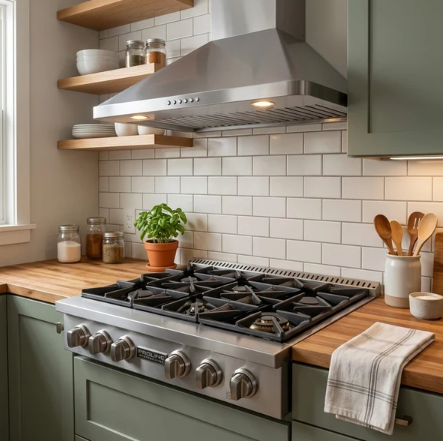
Selecting gas stovetops requires more than comparing appearance and burner count. The right cooktop should suit your cooking habits, available counter space, fuel connection, cookware, ventilation setup, and preferred level of temperature control. Gas remains useful for cooks who value immediate flame adjustment, but different models vary considerably in burner configuration, surface material, pan support, ignition, and safety features. Understanding these differences can help you select equipment that works efficiently and safely within your kitchen.
Consider Burner Configuration and Cooking Habits
The number and arrangement of burners should reflect how you actually cook. Gas stovetops are available with different burner layouts, and a higher burner count does not automatically mean better usability. Closely positioned burners can make it difficult to use several large pots simultaneously.
Consider the cookware you regularly use and whether you prepare multiple dishes at once. A household that frequently cooks with large pans may benefit more from wider spacing than from simply adding another burner. Burner sizes also matter because larger burners can accommodate larger cookware, while smaller burners can provide better control for simmering.
The position of the controls is equally important. Knobs should remain accessible without requiring your hands to pass directly over active flames or hot cookware.
Compare Stainless Steel and Other Surfaces
Surface material affects durability, cleaning, appearance, and everyday maintenance. Gas stovetops may use stainless steel, glass, enamel, or combinations of different materials, so the best choice depends on how heavily the appliance will be used.
Stainless steel stove tops are particularly practical for kitchens where durability is a priority. Stainless steel generally resists staining and is relatively straightforward to clean, although fingerprints, grease, and water marks can remain visible. A suitable cleaning routine can help maintain the finish.
Glass surfaces can provide a streamlined appearance and may be easier to wipe after cooking, but they require appropriate care and cookware handling. Regardless of material, spills should be cleaned promptly because residue around burner openings can interfere with gas flow and contribute to uneven flames.
Look for Practical Safety Features
Safety should be evaluated before aesthetics when comparing gas stovetops. One important feature is flame-failure protection, which can shut off the gas supply if the flame unexpectedly goes out. This can help reduce the risk of unburned gas continuing to flow.
Ignition type is another consideration. Automatic ignition can eliminate the need for a separate lighter, while manual ignition remains mechanically simple. Whichever system is selected, controls should operate smoothly and the burners should produce a stable flame.
Cookware should also be appropriately sized for the burner. Manufacturer guidance commonly recommends keeping flames beneath the cookware rather than allowing them to extend around the sides.
Match the Cooktop to Your Kitchen
Before purchasing gas stovetops, measure the available counter area and verify the required installation opening. A cooktop that fits the available width may still require additional clearance around cabinets, walls, ventilation equipment, or other appliances.
You should also confirm whether the appliance is designed for the gas supply available in your home. Gas type, connection requirements, electrical requirements for ignition, and installation specifications should be checked against the manufacturer's instructions before installation.
If replacing an existing cooktop, compare the new unit's dimensions with the existing cutout rather than assuming similarly sized models will fit identically.
Conclusion
Routine maintenance can influence how well gas stove tops perform over time. Burner openings can become obstructed by food residue, while wet or improperly cleaned burner components may produce an uneven flame. Removable grates and burner components can make cleaning easier. Cast-iron supports are durable but may require more care to prevent staining or corrosion. Stainless steel surfaces should generally be cleaned with appropriate products rather than abrasive materials that can damage the finish. Ultimately, the best stovetop balances burner layout, surface material, safety features, installation requirements, and maintenance needs. Rather than choosing based solely on appearance or burner count, evaluate how the appliance will perform during your normal cooking routine.






Top comments (0)