

When we talk about strong infrastructure, most people focus on visible elements like concrete, steel, and design. However, one of the most important factors that truly defines the life of any structure lies beneath the surface—how well water is managed.
Water might seem harmless, but in construction, uncontrolled water can quietly damage even the strongest structures. From weakening soil to increasing pressure behind walls, poor drainage is often the hidden reason behind many infrastructure failures.
This is why engineers today are focusing more on advanced drainage systems. Among the most effective solutions available, drainage geocomposites have become a preferred choice due to their efficiency, durability, and smart design.
Why Water Control Is Critical in Construction
Every construction project interacts with water in some way. Whether it’s rainwater, groundwater, or seepage, water naturally finds its way into soil and structural layers.
If not properly managed, it can cause:
- Soil erosion and loss of stability
- Increased hydrostatic pressure in retaining systems
- Cracks and damage in roads and pavements
- Moisture-related issues in underground structures
These problems often develop slowly, making them difficult to detect early. Over time, however, they can lead to major repairs and increased maintenance costs.
That’s why modern infrastructure design gives as much importance to drainage as it does to structural strength.
Understanding Drainage Geocomposites
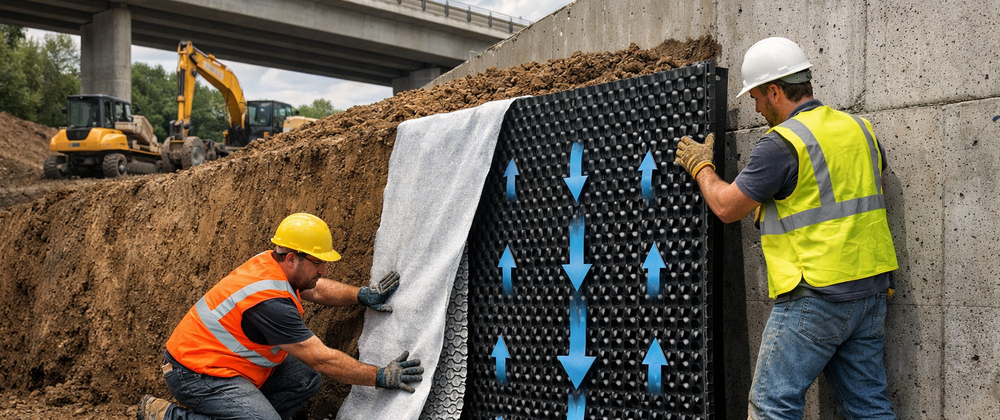
Drainage geocomposites are specially engineered materials designed to handle water efficiently within soil and construction systems. They combine multiple layers into a single product, usually consisting of:
A drainage core that allows water to flow
Geotextile filters that prevent soil particles from entering
This integrated system ensures that water is collected, filtered, and safely transported away from the structure.
Unlike traditional drainage methods that rely on thick layers of gravel or sand, drainage geocomposites offer a more compact and efficient solution.
How Drainage Geocomposites Work
The functionality of drainage geocomposites is simple yet highly effective.
When water enters the system:
- The outer geotextile layer filters out fine soil particles
- Water passes into the drainage core
- The core channels the water away from the structure
This continuous flow prevents water accumulation and reduces pressure within the system.
Because the materials are engineered to resist clogging, the system maintains its performance over time without significant maintenance.
Common Applications in Real Projects
Drainage geocomposites are used in a wide range of infrastructure and environmental projects.
Retaining Walls
Water buildup behind retaining walls can lead to structural stress and failure. Drainage geocomposites help release this pressure, ensuring stability.
Landfill Systems
In waste management projects, controlling leachate is critical. These systems help collect and transport liquids safely, protecting the environment.
Roads and Highways
Water is one of the main causes of pavement damage. Proper drainage helps maintain road quality and extend its lifespan.
Basements and Underground Structures
Water infiltration can cause serious issues in underground spaces. Drainage geocomposites help keep these areas dry and secure.
Landscaping and Green Infrastructure
They are also used in landscaping projects to manage water flow while maintaining soil stability.
Why Engineers Are Choosing This Solution
Drainage geocomposites are gaining popularity because they solve multiple problems at once.
Better Water Flow Management
They provide a controlled path for water, reducing the risk of buildup and pressure.
Space Efficiency
Their thin design makes them ideal for projects where space is limited.
Faster Installation
Lightweight and easy to handle, they reduce labor time and project delays.
Long-Term Performance
Made from durable materials, they maintain their efficiency over time.
Reduced Maintenance
Their resistance to clogging ensures consistent performance with minimal upkeep.
A Shift Toward Smarter Infrastructure
The construction industry is moving toward solutions that are efficient, sustainable, and reliable. Drainage geocomposites align perfectly with this trend.
They reduce the need for natural materials like gravel, minimize environmental impact, and improve overall construction efficiency.
By integrating these systems into projects, engineers can create structures that are more resilient and long-lasting.
The Role of Material Quality
Not all drainage systems perform the same. The effectiveness of a drainage geocomposite depends on the quality of materials and design.
High-quality products ensure:
- Better durability
- Consistent water flow
- Resistance to environmental conditions
Choosing the right solution is essential for achieving long-term results.
Companies like A&T Engineering Pvt. Ltd. are known for offering drainage geocomposite systems designed to meet real-world infrastructure needs. Their focus on quality helps ensure reliable performance across various applications.
What Lies Ahead for Drainage Technology
As infrastructure projects become more complex, the demand for advanced drainage systems will continue to grow.
Drainage geocomposites are expected to play a major role in this future. With improvements in material technology, these systems will become even more efficient and adaptable.
Engineers are also exploring innovative ways to use these materials in new applications, further expanding their role in construction.
Conclusion
Water management is one of the most critical aspects of modern infrastructure, and drainage geocomposites provide a smart and effective solution.
Their ability to manage water efficiently, reduce pressure, and improve structural stability makes them an essential component of today’s construction practices.
As the industry continues to evolve, adopting advanced drainage solutions will be key to building infrastructure that is not only strong but also sustainable and long-lasting.





Top comments (0)